
Tokenization Platform Development for Real Racing Horses: Opening the Sport of Kings to Everyone
From Millionaire's Playground to Everyone's Portfolio

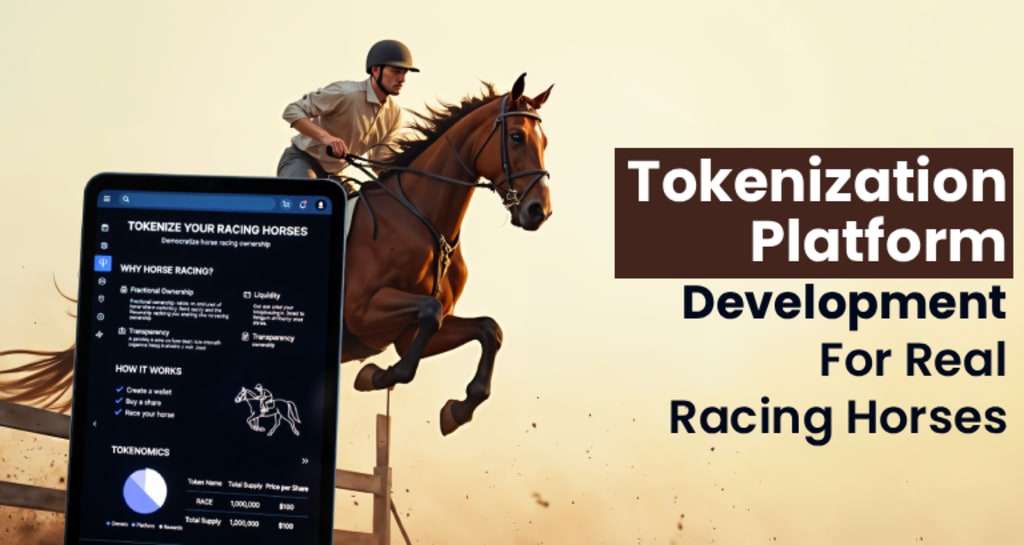
Horse racing has always been seen as a world for the wealthy. Expensive auctions, million dollar racehorses, and high maintenance costs made ownership something only the rich could enjoy. But today, technology is changing that. Tokenization platforms are turning racehorse ownership into something ordinary people can participate in, even with small amounts of money.
I still remember the first time I attended a thoroughbred auction at Keeneland. A single yearling sold for 2.3 million dollars. The buyer stood calmly and raised his hand without a second thought. For him, it was probably routine. For me, it felt like watching someone buy a house as casually as buying groceries. It made me realize how impossible horse ownership felt for most people.
But times are changing. Recently, I spoke with a 28 year old graphic designer from Portland who owns a share in a Kentucky Derby contender. She did not have to invest tens of thousands of dollars. She bought her share for only 500 dollars through a tokenization platform. She now earns her share of prize money and can even sell her stake whenever she wants.
This is the power of tokenization platform development for real racing horses. It is turning one of the oldest and most elite sports into an open investment opportunity for everyone.
What Is Horse Racing Tokenization?
Horse racing tokenization means converting the ownership of a real racehorse into digital tokens on a blockchain. Each token represents a small percentage of the horse. Instead of buying the entire horse, people can buy a fraction of it.
It works in a simple way. Imagine a horse worth 500,000 dollars is divided into 10,000 tokens. Each token represents 0.01 percent ownership. If one token is sold for 50 dollars, then buying 100 tokens gives you 1 percent ownership. When the horse wins a race, you get 1 percent of the prize money after expenses.
If the horse becomes more valuable, your tokens become worth more too. You can hold your tokens, sell them on the platform, or buy more. The blockchain records everything securely, tracks payments, and ensures fair and transparent ownership.
Why Horse Racing Needs Tokenization
Horse racing ownership has many problems. Tokenization platforms help solve them.
1. High Entry Costs
Buying a competitive horse is extremely expensive. Even a basic racehorse costs tens of thousands of dollars. Maintaining the horse costs another large amount every year. Traditional partnerships still require investments that many people cannot afford.
Tokenization makes ownership possible for as little as 100 dollars. This opens the doors to a much wider group of people.
2. No Liquidity
If someone invests in a horse traditionally, they often cannot sell their share easily. They must wait years until the horse retires or is sold.
Tokenized shares can be sold instantly on a secondary marketplace. This gives investors control over their money.
3. Lack of Transparency
Owners in traditional syndicates usually do not have clear insight into expenses, purse distributions, or decisions made by managers.
Blockchain technology records every transaction openly. Smart contracts automatically divide prize money among owners. This builds trust.
4. Limited Global Participation
Horse racing happens around the world, but cross border ownership is complicated. Different countries have unique rules, paperwork, and currencies.
Tokenization allows anyone from anywhere to invest in a horse racing in another country. Payments use crypto or stablecoins, which makes participation simple and global.
Real Use Cases in the Market Today
Tokenization in horse racing is already happening. Several platforms have been launched, each offering unique features.
Fractional Ownership of Elite Horses
Some platforms tokenize high value champion bloodlines. Investors can own a share in horses sired by famous champions. When these horses retire and start earning breeding income, token holders earn a portion of those revenues.
Tokenizing Young Prospects
Other platforms focus on yearlings or young horses that have not yet raced. These horses are cheaper but can significantly increase in value if they perform well on track.
Breeding Stallions and Retired Horses
Platforms also tokenize stallions that earn steady income from breeding fees. This creates a stable income opportunity for token holders.
Community Voting and Governance
Some platforms give investors voting rights. They can vote on decisions like which races the horse should enter or whether to accept purchase offers. This gives fans a deeper connection to the sport.
How the Technology Works
Creating a tokenization platform for racing horses requires advanced technology.
Smart Contracts
Smart contracts manage ownership, distribute prize money automatically, and enforce rules. They make sure that prize money goes to owners instantly without manual calculations.
Choosing the Blockchain
Platforms choose blockchains like Ethereum, Polygon, Binance Smart Chain, or Solana. Each has trade offs related to cost and speed. Many use Polygon to reduce transaction fees.
Oracles for Real World Data
Blockchains cannot access racing results by themselves. They need oracles to feed accurate race results, prize money, and horse updates into the system.
Wallets and Custody
Users need secure wallets to store tokens. Platforms often offer simple built in wallets for beginners and external wallet support for advanced users.
Secondary Marketplaces
Marketplaces allow users to buy and sell tokens. This creates the liquidity that traditional horse ownership lacks.
KYC and Compliance
Platforms must follow financial regulations, verify user identities, and prevent illegal activities.
Regulatory Challenges
Tokenization touches multiple industries including finance, gambling, and horse racing. This creates regulatory complexity.
Securities Regulations
In many countries, fractional shares are treated as securities. Platforms must follow strict rules to avoid legal problems.
Racing Commission Rules
Horse racing authorities have rules about ownership. Platforms need to comply so the horses remain eligible to race.
Anti Money Laundering
Platforms must monitor suspicious transactions and follow AML rules.
Taxes
Prize money and token sales involve taxes. Platforms should help users understand their tax responsibilities.
How Tokenization Platforms Make Money
Platforms earn revenue in multiple ways.
1. Initial Token Sale Fees
Platforms take a percentage from the initial sale of tokens.
2. Annual Management Fees
These fees cover operations, reporting, and prize money distribution.
3. Marketplace Transaction Fees
Every time tokens are traded, the platform earns a small fee.
4. Breeding Management Fees
Platforms earn fees on horses that generate breeding income.
5. Premium Features
Some platforms offer special analytics, early access to offerings, or exclusive events.
The Bigger Benefits Beyond Money
Tokenization offers more than financial returns.
Stronger Community
Owners from around the world come together and share the excitement of racing.
Education
Platforms teach users about racing, bloodlines, training, and strategy.
Preservation of the Sport
Bringing more people into ownership helps keep horse racing alive and relevant for future generations.
Better Data and Insights
Blockchain provides clean and detailed data that helps improve decision making across the industry.
The Future of Horse Racing Tokenization
The tokenization of racing horses is still in its early stages, but the future looks promising.
Fantasy Sports and Gaming
Platforms may bring gaming elements and virtual competitions linked to real horses.
AI Powered Insights
AI could help investors choose horses using data driven predictions.
Cross Platform Trading
Tokens from different platforms may eventually be traded on shared marketplaces.
Expansion into Other Equine Sports
Tokenization may expand to show jumping, dressage, polo, and more.
Better Horse Welfare
Transparent health and care records on blockchain could improve the lives of horses.
Building Your Own Tokenization Platform
Anyone planning to build such a platform needs:
• Skilled blockchain developers
• Experienced securities lawyers
• Partnerships with racing stables and trainers
• Strong marketing campaigns
• Proper insurance coverage
• A small initial launch to test the concept
The Democratization of Horse Racing
I recently saw a video of a single mother from Ohio celebrating as her horse won a stakes race at Saratoga. She owned only three tokens worth around 150 dollars, and her prize share was just 22 dollars. But her happiness showed that ownership is not only about money. It is about feeling connected to a sport that once felt distant and elite.
Tokenization platform development is turning horse racing into a sport where everyone can join. It brings new investors, new energy, and new optimism into an old industry. With clear rules, strong technology, and growing interest, this movement is turning the Sport of Kings into a sport for everyone.
And as more platforms explore what blockchain can do, it is becoming clear that asset tokenization development is not only about owning digital assets. It is about giving people the chance to experience things that were once out of reach.
About the Creator
Matthew Haws
Blockchain and AI enthusiast sharing insights, ideas, and honest takes on the fast-evolving world of tech. I write to simplify complex concepts and spark meaningful conversations.
Keep reading
More stories from Matthew Haws and writers in 01 and other communities.
Blockchain AI Agents: The Future of Autonomous On-Chain Intelligence
Last month, I attended a Web3 conference in Singapore where something remarkable happened. A developer demonstrated an AI agent that autonomously managed a DeFi portfolio, rebalanced liquidity positions across three chains, and even negotiated better gas fees, all while he slept. The kicker? The agent had been running for 47 consecutive days without a single manual intervention.
By Matthew Haws2 months ago in 01
🔋 Hydrogen Fuel: Powering the Future of Clean Energy
As the world searches for cleaner, more sustainable energy sources, hydrogen fuel has emerged as one of the most exciting contenders ⚡. Often described as the fuel of the future, hydrogen promises zero emissions at the point of use, high energy efficiency, and versatility across multiple industries. But what exactly is hydrogen fuel, how does it work, and can it truly replace fossil fuels? Let’s explore 🚀.
By Toader Adelin3 days ago in 01
House Cleaning Scopes That Keep Results Consistent
A clean home feels simple until you try to keep it that way during a busy month. Work deadlines, school schedules, pets, and visitors stack up. Dust returns faster than expected. Bathrooms show water spots. Kitchen grease builds around the stove. Many homeowners hire cleaning help, then feel unsure about what to request and how to judge quality.
By Jared Benning5 days ago in 01



Comments
There are no comments for this story
Be the first to respond and start the conversation.