
Timeless Tradition: Making 30,000 Olive Oil Soap Bars in Lebanon
Experience the olive oil magic the old-school way!

Hey there! Ever wondered how traditional olive oil soap is made in the Middle East? It's a fascinating process that dates back to at least the 14th century! Let me take you on a journey to Masbanat Awaida, the oldest Soap Factory in Lebanon, where this ancient family business is still going strong.

So, what's the secret recipe for this traditional soap? Believe it or not, it only consists of three ingredients: olive oil, caustic soda, and water. In the Middle East, olive oil is like magic oil, and here, electricity powers the 143-year-old vat that cooks the soap. The workers skillfully cover the floor with powdered soap flakes to ensure the liquid doesn't stick to the cement.
After three days of cooking, the soap reaches a honey-like consistency and turns a beautiful dark green color. These huge buckets of soap, each weighing about 30 pounds, are carried by a human chain to the pouring area. Can you imagine? They do this about 700 times for just one batch!
The soap is still super hot at this point, around 140 degrees Fahrenheit! The workers need three hours to turn the floor into a green blanket, and in the past, it was quicker with a pump. Unfortunately, it's broken, and finding spare parts in Lebanon is proving to be a challenge.
Meet Walid Dhaybi, who's been working here for 30 years, following in his father Ali's footsteps. Ali, who worked here for 50 years, may be retired, but he still helps out. Today, he's using a comb to ensure the soap is the perfect 2.4 inches deep.
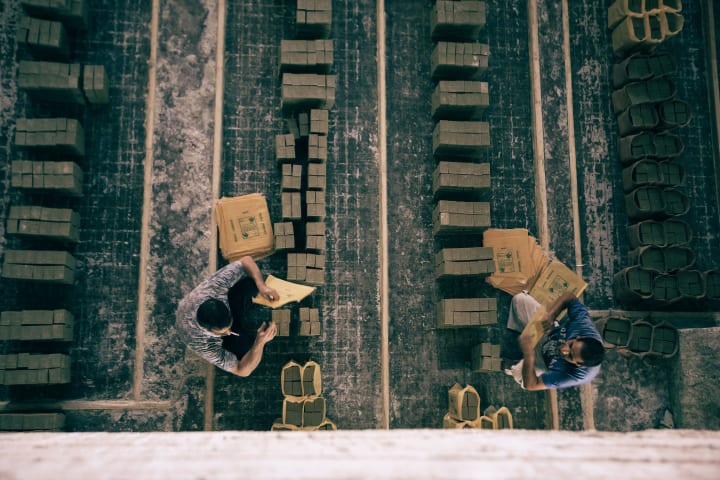
The soap now cools and hardens for a whole 48 hours, and any humidity or heat can ruin the batch. Once it's ready, Bassam Ahid skillfully smoothes the surface, and nothing goes to waste. Any leftover soap is recycled into the next batch. Bassam has an impressive 50 years of experience working here.
They take special care to prevent any accidents, sprinkling stone powder to avoid slipping while shaping the soap into perfect 2.8-inch squares. They even use a cord soaked in dye to mark the boundaries before cutting.
Now comes the fun part – stamping 30,000 soap bars! They've got to do it in one go to prevent the soap from hardening. The stamps they use are made of wood and copper. Meet Khalil, who's 77 years old but can handle this job like a pro!
Cutting the soap is a real team effort! It takes five people to operate the rake cutter that's been used for generations. They carefully follow the red markings, making sure not to crush the soap.
Husni is always on hand to supervise and capture the process on social media. He's super passionate about educating people about traditional soap making and encouraging tourists to visit the factory.
Did you know that soap making with olive oil has been a tradition in the Middle East since at least the 10th century? Three cities – Aleppo in Syria, Nablos in the West Bank, and Tripoli here in Lebanon – became renowned for their exceptional soap production.
Isn't it amazing how this age-old craft is still thriving in the heart of Lebanon? As cheaper liquid soaps flood the market, it's heartwarming to see Masbanat Awaida keeping the tradition alive and creating truly unique olive oil soap.
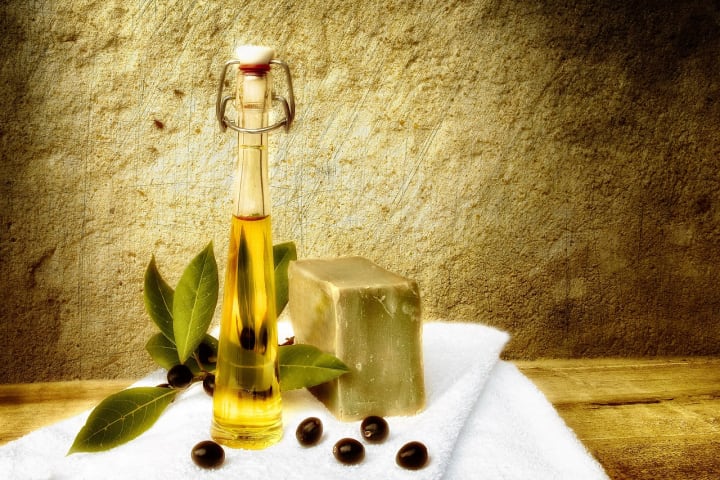
Oh, the soap-making legacy in Tripoli, Lebanon, has quite a colorful history! Back in the first half of the 20th century, dozens of factories were in full swing, exporting their traditional olive oil soap worldwide. But as time went on, many Olive Groves were sacrificed for modern development in the 1960s.
Then came the devastating civil war in 1975, lasting 15 long years, wreaking havoc on Lebanon's economy. The aftermath was tough – most factories had to shut down, and countless people fled the country. However, Husni's family business, Masbanat Awaida, somehow managed to survive the turmoil. They dipped into their savings to keep the factory running and even introduced new methods, like adding fragrances to their soap, making them a hit with customers.
Nowadays, scented soap is their star product, but they haven't forgotten their roots. About four times a year, they still make the traditional olive oil soap. To dry it, they stack the soap bars in a cylindrical tower, allowing them to breathe for up to six months. This classic method attracts tourists from all around, but you know what? Husni would continue making the traditional soap even if he had no visitors because it's not just a business; it's a cherished family legacy.
Across the Middle East, traditional olive oil production has seen better days. In Nobles, a Palestinian City in the Israeli occupied West Bank, only three factories remain, including the Al-Jamal Soap Factory. The tough competition from mass-produced soap brands and the ongoing conflict with Israel forced many similar factories to close down. However, Al-Jamal Soap Factory has defied the odds for 130 years, and the owner is determined to carry on his ancestors' legacy.
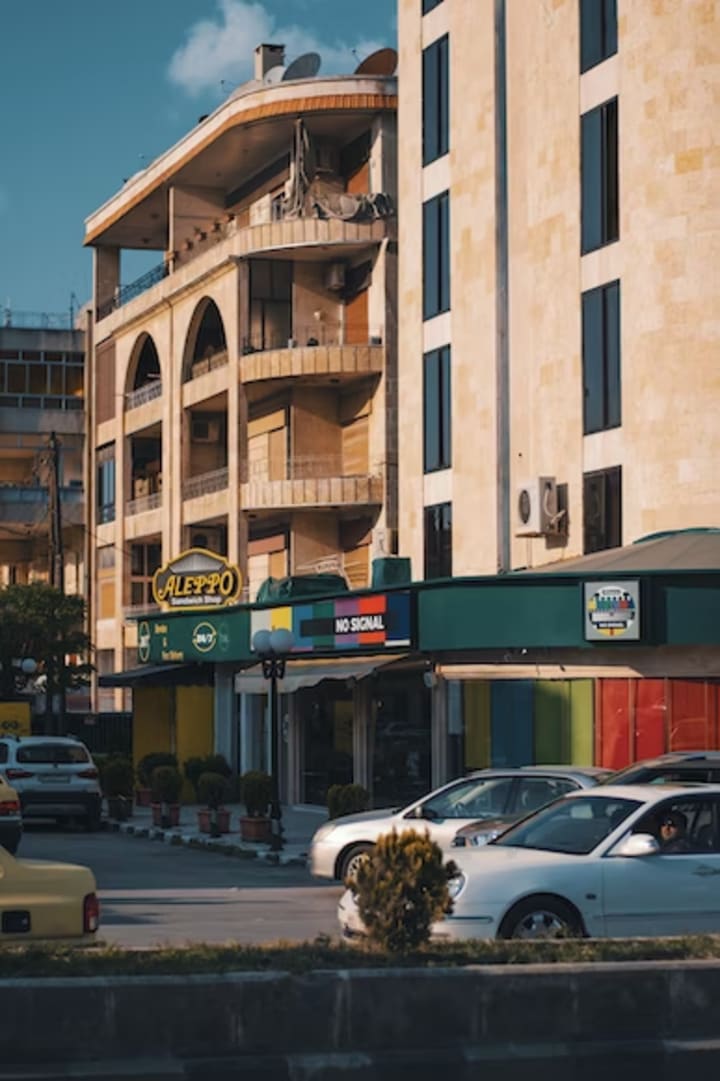
Now let's talk about Aleppo, Syria, once the heart of the olive oil soap industry. Sadly, years of civil war nearly obliterated the thriving business. There were over 200 factories at one point, but today, fewer than 20 remain, including the power soap Factory. The war claimed the lives of many workers, and others fled the country. Nevertheless, the owner of the power soap Factory is fighting to keep this cherished tradition alive.
But back to Lebanon, where Husni, a determined young man, took over his family's business despite having a degree in electrical engineering. He's the great-great-grandson of Haj Hussein Awaida, who built the Factory way back in 1880! Talk about a rich history!
Husni's got big plans for the future. He's not only selling glycerine soap and aromatherapy oil online, to organic shops, and hotels, but he also wants to turn the factory into a school. As he looks ahead, he's not entirely sure if his two young sons will carry on the legacy, but he's grateful to be part of the remarkable story of his family's business.
In a world where mass production is king, it's heartwarming to see these traditional soap makers fighting to preserve their craft. They're not just making soap; they're keeping their ancestors' dreams and hard work alive!
About the Creator
Keep reading
More stories from writers in 01 and other communities.
TikTok Outages
## What Are TikTok Outages and Why Are They Happening TikTok outages refer to times when the TikTok app or its features stop working properly for users around the world. These issues can range from parts of the app not loading correctly to complete service interruptions where users cannot access their accounts, load videos, comment, search, or interact with the platform. Recently, thousands of users reported problems early Sunday morning with TikTok not functioning as expected, leaving many confused and frustrated about whether the problem was widespread or just affecting their device. Reports indicated significant user complaints about feeds not refreshing, comments and bookmarks failing to load, and difficulty accessing content across major U.S. cities during the disruption.
By America today about 7 hours ago in 01
Native vs Cross Platform Mobile App Development in 2026
Google has officially decoupled app visibility from traditional indexing and moved toward a model of Authority Validation through neural weightings. This tectonic shift means your choice of development framework now serves as a primary signal for Entity Accountability.
By Devin Rosario5 days ago in 01




Comments
There are no comments for this story
Be the first to respond and start the conversation.