
The Unwritten Rules of Structural BIM Coordination That Save Projects from Delays
The Unwritten Rules of Structural BIM Coordination That Save Projects from Delays

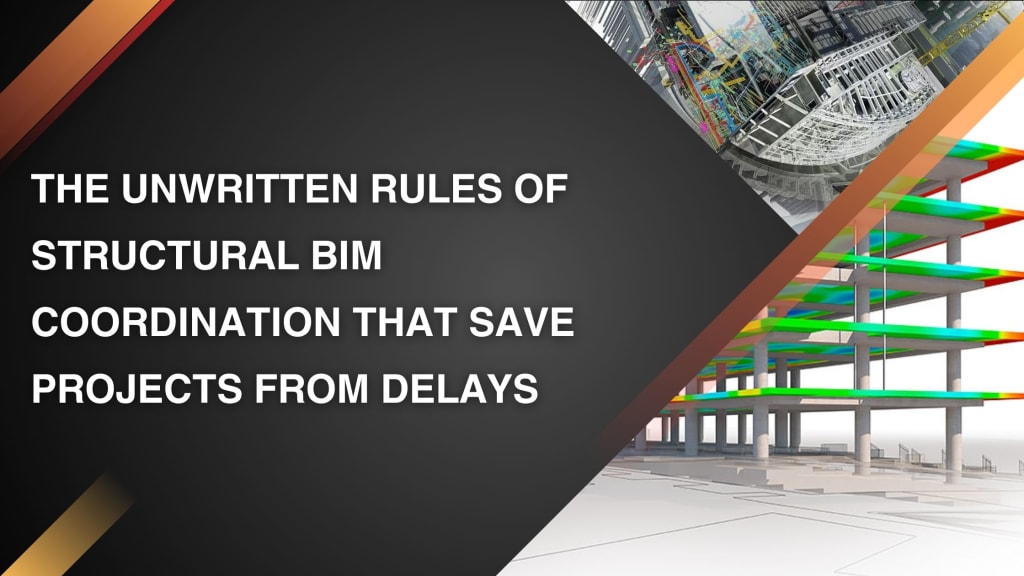
There’s a rhythm to every successful construction project, a quiet coordination that keeps design, structure, and execution moving in sync. Projects that flow smoothly rarely make headlines, but those that stumble due to miscommunication or last-minute design clashes leave behind lessons that every Structural Engineer, BIM Modeler, and contractor remembers.
Hidden behind these successful outcomes lies an invisible code, the unwritten rules of Structural BIM Modeling Services that transform chaos into clarity. These are not guidelines you’ll find in manuals; they are habits, decisions, and patterns that determine whether your project stays on schedule or drifts into delay.
Coordination Begins Before Modeling
Most professionals associate Structural BIM Coordination Services with clash detection and model reviews, but the real coordination starts much earlier — before a single line is drafted. Early collaboration meetings, often overlooked, set the foundation. When structural teams communicate intent with architectural and MEP disciplines before modeling, half the coordination challenges disappear later.
An unspoken truth in Structural Engineering is that the best models come from shared understanding, not just shared files. A quick review of load paths, beam layouts, and design logic before modeling often prevents rework. The earliest alignment meetings may not feel urgent, but they save weeks down the line.
Every Model Tells a Story | Keep It Readable
A Structural BIM Model is more than 3D geometry; it’s a language of coordination. Yet, many models become so dense that even skilled engineers lose time interpreting them. One unwritten rule that separates experienced BIM modelers from others is “model clarity over model complexity.”
Maintain a logical naming convention, consistent layers, and clear family parameters. Keep your Structural Drafting sheets readable and logically grouped. Every label and tag should speak directly to someone who wasn’t in the design meeting. A clean model accelerates decisions, reduces confusion, and keeps the project momentum intact.
Rule 3: Respect the Sequence of Construction
A perfect digital model means little if it ignores how the structure will actually rise on site. The best Structural BIM Modeling Services follow the rhythm of construction. Sequencing elements, from foundations to framing, allows all disciplines to visualize dependencies in real-world order.
This sequencing mindset avoids scheduling conflicts that often cause project delays. When engineers think like builders, coordination becomes more than just detecting clashes; it becomes predicting progress. The virtual structure, when aligned with the actual timeline, acts as a living roadmap for contractors.
Clash Detection Is a Conversation, Not a Report
Clash detection meetings can quickly become routine — a checklist to clear rather than a platform to collaborate. But this is where experienced BIM coordinators follow a silent rule: treat clashes as discussions, not data.
A report may list hundreds of conflicts, but true coordination means understanding why those conflicts exist. Sometimes it’s not about moving an element but adjusting design intent or material assumptions. The best Structural BIM Coordination Services translate these conflicts into solutions that respect every trade’s priorities. Communication, not software, is what actually resolves clashes.
Keep Structural Intent Intact During Coordination
Coordination often demands compromise, but structural integrity should never be one of them. Every modification to accommodate architecture or MEP must still protect the design’s strength and stability.
In many projects, small adjustments made during BIM coordination, moving columns, changing slab thickness, or adjusting beam locations, create ripple effects in load distribution. Seasoned Structural Engineers know this and guard the intent of their models carefully. They communicate these changes transparently, balancing coordination needs with safety and design logic.
Never Model Faster Than You Can Communicate
Speed is a silent enemy of coordination. When deadlines push teams to model ahead of discussions, rework becomes inevitable. The rhythm of BIM coordination is communication first, modeling second.
Professionals who’ve managed large-scale Structural BIM Modeling Services know that syncing model progress with meeting outcomes saves both time and credibility. When everyone updates models only after alignment, coordination becomes predictable and stable. Delays are rarely caused by slow modeling — they come from modeling in isolation.
Document Decisions, Not Just Designs
Projects evolve daily, and so do the decisions that shape them. One overlooked rule of successful Structural Drafting and coordination is documentation discipline. Every design revision, approval, or conflict resolution should live somewhere traceable.
Many delays occur not because of wrong designs, but because of forgotten ones — when a detail agreed upon two months ago is lost in emails. Using shared folders, revision histories, and documented model comments turns BIM into a transparent communication tool. Future team members can understand past logic without endless explanations.
Treat the Model as a Living Contract
The coordinated model isn’t just a design representation — it’s a shared commitment between teams. When all disciplines agree that the model reflects the current, approved state of work, it becomes a single source of truth.
In Structural BIM Coordination, this mindset changes how people work. Instead of checking multiple drawing sets, teams rely on a unified model that drives trust and consistency. Treating the model as a contract keeps everyone accountable, reduces disputes, and keeps schedules realistic.
Build Relationships, Not Just Models
Coordination runs on human connection as much as it does on data. A well-structured BIM workflow means little if architects, engineers, and contractors don’t trust each other’s input.
When Structural BIM Coordination Services operate within a culture of respect and openness, information flows naturally. Teams respond faster, conflicts reduce, and design decisions stick. In every project that finishes on time, there’s usually a network of professionals who choose collaboration over competition.
The Unwritten Rhythm of Success
The quiet success of a coordinated project rarely draws attention. There are no dramatic recoveries or last-minute saves, just a steady pace of progress, where every professional knows what comes next. That’s the real power of mastering the unwritten rules of Structural BIM Coordination.
These rules don’t replace standards or software; they refine how professionals think and work together. Each meeting, model update, and design adjustment carries the same purpose, to keep construction predictable, transparent, and delay-free.
Projects succeed not because they avoid problems, but because they anticipate them through thoughtful coordination. In the end, the most efficient structures aren’t just built with concrete and steel, they’re built with discipline, communication, and shared understanding.
About the Creator
lisa Brown
Building Information Modelling delivers high quality out performing designs in Electrical BIM Services. We collectively work as a team and we believe in delivering end to end solutions in electrical designs and drawings.
Keep reading
More stories from lisa Brown and writers in 01 and other communities.
Five Steps to Turn Prospects into Lifetime Customers
Introduction Every business owner knows that acquiring new customers costs significantly more than retaining existing ones. Studies consistently show that it's five to twenty-five times more expensive to attract a new customer than to keep a current one. Yet many businesses focus their energy and resources almost exclusively on customer acquisition, treating each sale as a one-time transaction rather than the beginning of a potentially lifelong relationship.
By Start My Business5 days ago in 01
Best React Datetime Pickers for 2026: Top Libraries
Look, I get it. You're staring at your React project right now, wondering why picking a stupid date has to be this complicated. Should've been simple, yeah? But here we are in 2026, and somehow we've got more datetime picker options than there are days in a bloody year.
By Sherry Walkera day ago in 01


Comments
There are no comments for this story
Be the first to respond and start the conversation.