
"The Ultimate Guide to Car Detailing: A Step-by-Step Process"
I. Introduction The benefits of car detailing Different levels of detailing services Importance of choosing a reputable company II. Step 1: Pre-Detailing Preparation Pre-vacuuming the interior Washing the exterior Drying the car III. Step 2: Clay Bar Treatment What is a clay bar treatment? How it removes contaminants from the paint IV. Step 3: Paint Restoration What is paint restoration? How it removes scratches and blemishes V. Step 4: Waxing Types of waxes How waxing protects the paint and adds shine VI. Step 5: Interior Detailing Cleaning and conditioning the seats and upholstery Cleaning and protecting the dashboard and trim Shampooing the carpets and mats VII. Step 6: Engine Bay Cleaning Why it's important to clean the engine bay How to safely clean the engine bay VIII. Step 7: Final Touch-Ups and Inspection Checking for missed spots and touch-ups IX. Conclusion The importance of regular detailing
I. Introduction:
The benefits of car detailing.
There are many benefits to car detailing, including:
Improved appearance: Detailing helps to restore the shine and luster of your car's paint, as well as clean and condition the interior, giving it a fresh, new look.
Increased value: A clean, well-maintained car is more valuable than one that is dirty and neglected. Detailing can help to increase the resale value of your vehicle.
Protection: Detailing helps to protect your car's finish from the elements and from damage caused by contaminants such as bird droppings, tree sap, and road salt.
Longevity: Properly maintaining your car through detailing can help to extend its lifespan by protecting its various systems and components.
Health benefits: A clean car is a healthier car, as it can reduce allergens and improve air quality. Detailing can also help to eliminate odors, making your car more pleasant to drive.
Personal enjoyment: Driving a clean, well-maintained car is simply more enjoyable. Detailing can help you take pride in your vehicle and make driving a more enjoyable experience.
Different levels of detailing services.
There are several different levels of detailing services, ranging from a basic wash and wax to a full interior and exterior restoration. Here is a general breakdown of the different levels of detailing services:
Basic wash and wax: This is the most basic level of detailing and includes a wash and wax of the exterior, tire shine, and interior vacuuming.
Intermediate detailing: This level of detailing typically includes everything in the basic package, as well as additional services such as clay bar treatment and paint restoration.
Full detailing: A full detailing package is the most comprehensive option and typically includes everything in the intermediate package, as well as additional services such as fabric protection and more thorough interior detailing.
Custom detailing: Some detailing companies offer custom packages that allow customers to choose from a list of individual services to create their own detailing package. This can be a good option for people who have specific needs or who want to focus on certain areas of their car.
Importance of choosing a reputable company.
Choosing a reputable company for your car detailing needs is important for several reasons. First and foremost, a reputable company will use high-quality products and techniques to ensure that your car is properly cleaned and protected. Poor quality products or improper techniques can damage your car's finish or interior, leading to costly repairs in the long run.
A reputable company will also have trained and experienced professionals who are knowledgeable about the best methods for cleaning and detailing your specific make and model of car. They will be able to identify any potential problems and address them before they become bigger issues.
In addition to the quality of the work, a reputable company will also have good customer service. They will be responsive to your needs and concerns and will work with you to create a detailing package that meets your specific needs and budget.
Overall, choosing a reputable company for your car detailing needs can save you time, money, and stress in the long run. It's worth taking the time to research and compare different companies to find the one that is the best fit for you.
II. Step 1: Pre-Detailing Preparation:
Pre-vacuuming the interior.
Pre-vacuuming the interior of your car is an important step in the detailing process. It helps to remove loose dirt and debris from the surfaces and crevices of the interior, making it easier to fully clean and detail the car.
To pre-vacuum the interior of your car, start by removing any trash and loose items from the car. Then, using a high-quality automotive vacuum, thoroughly vacuum the floors, seats, and all other surfaces of the interior. Pay special attention to crevices and tight spaces, as these areas tend to accumulate dirt and debris.
If your car has removable floor mats, take them out and vacuum them separately. You may also want to use a crevice tool or a brush attachment to help remove dirt and debris from hard-to-reach areas.
Pre-vacuuming the interior of your car is an important first step in the detailing process and will help to ensure that the rest of the interior detailing goes smoothly.
Washing the exterior.
Washing the exterior of your car is an important step in the detailing process. It helps to remove dirt, grime, and contaminants from the surface of the car, making it easier to wax and polish the finish.
To wash the exterior of your car, you will need a bucket of soapy water, a hose or pressure washer, a sponge or wash mitt, and a drying towel or chamois cloth.
Here is a step-by-step guide for washing the exterior of your car:
Rinse off the car with a hose or pressure washer to remove loose dirt and debris.
Mix a small amount of car wash soap with water in a bucket.
Dip the sponge or wash mitt into the soapy water and start washing the exterior of the car, starting at the top and working your way down. Be sure to wash all sides of the car, including the wheels and tires.
Rinse the car thoroughly with a hose or pressure washer to remove all soap and dirt.
Dry the car with a towel or chamois cloth, starting at the top and working your way down. Be sure to dry all surfaces, including the wheels and tires.
By following these steps, you can effectively wash the exterior of your car and remove dirt and contaminants that can dull the finish.
Drying the car.
It helps to remove water from the surface of the car, preventing water spots and streaks that can dull the finish.
There are several different methods you can use to dry your car, including:
Towel drying: This is the most basic method and involves using a large, absorbent towel or chamois cloth to blot the water from the surface of the car. Start at the top of the car and work your way down, using a clean, dry section of the towel for each pass.
Air drying: If you have time and the weather is warm, you can simply let the car air dry. This method is the least likely to leave water spots, but it can take longer for the car to completely dry.
Blower drying: Some car washes have high-powered blowers that can be used to blow water off the surface of the car. This method is fast and effective, but it can be noisy and may not be as thorough as towel drying.
Automatic drying: Some high-end car washes have automatic drying systems that use a combination of blowers and heat to quickly and effectively dry the exterior of the car.
No matter which method you choose, be sure to dry all surfaces of the car, including the wheels and tires. Proper drying is an important step in the detailing process and will help to prevent water spots and streaks that can dull the finish of your car.
III. Step 2: Clay Bar Treatment:
What is a clay bar treatment?
A clay bar treatment is a process that is used to remove contaminants from the surface of a car's paint. It is typically done as part of the detailing process to prepare the car for waxing and polishing.
A clay bar is a small, pliable bar of clay that is used to gently remove contaminants from the surface of the paint. The clay bar is worked over the surface of the paint using a back-and-forth motion, pulling the contaminants away from the paint and onto the clay.
Contaminants that can be removed with a clay bar treatment include:
Tar and asphalt
Overspray
Industrial fallout
Tree sap
Bug remains
Using a clay bar treatment can help to restore the smoothness and shine of a car's paint, as it removes contaminants that can dull the finish. It is an important step in the detailing process and is typically followed by waxing and polishing to further protect and enhance the car's finish.
How does Clay Bar treatment remove contaminants from the paint?
During a clay bar treatment, the clay bar is worked over the surface of the paint using a back-and-forth motion. The clay bar is gently pressed against the paint and then pulled away, pulling the contaminants off the paint and onto the clay.
The clay bar is able to remove contaminants from the paint because it has a highly porous surface that is able to absorb and trap the contaminants as it is worked over the paint. The clay bar is able to pick up contaminants that are too small to be removed by washing alone, such as industrial fallout and tree sap.
After the clay bar treatment, the paint surface is left smooth and clean, with no trace of the contaminants that were previously present. The clay bar treatment is typically followed by waxing and polishing to further protect and enhance the car's finish.
IV. Step 3: Paint Restoration:
What is paint restoration?
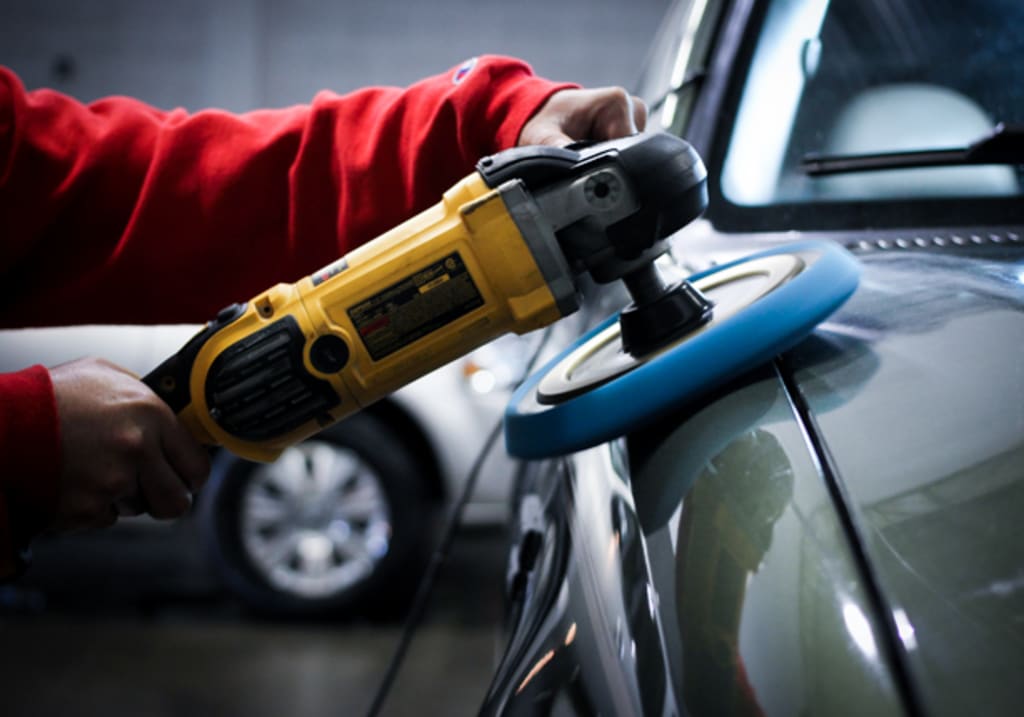
Paint restoration is a process that is used to restore the appearance of a car's paint. It involves removing scratches, blemishes, and other imperfections from the paint surface, leaving it looking smooth and shiny.
There are several different methods that can be used for paint restoration, including:
Machine buffing: This method involves using a high-speed rotary buffer and specialized buffing compounds to remove scratches and blemishes from the paint.
Wet sanding: This method involves using fine-grit sandpaper and water to gently sand away scratches and imperfections from the paint.
Compound polishing: This method involves using a compound, or heavy-duty cleaner, to remove scratches and blemishes from the paint.
Touch-up: This method involves using a small amount of paint to cover up minor scratches and blemishes.
Paint restoration can be a time-consuming and labor-intensive process, but it can greatly improve the appearance of a car's paint and restore its shine. It is typically done as part of a full detailing package and is followed by waxing and polishing to further protect and enhance the finish.
V. Step 4: Waxing:
Types of waxes:
There are several different types of waxes that can be used to protect and enhance the finish of a car's paint. Here are some of the most common types of waxes:
Carnauba wax: This is a natural wax that is derived from the leaves of the Brazilian palm tree. It is known for its deep, warm shine and its ability to protect the paint from the elements.
Synthetic wax: This is a man-made wax that is made from a variety of synthetic ingredients. It is typically easier to apply and remove than natural wax and offers good protection for the paint.
Liquid wax: This is a wax that comes in a liquid form and is applied using a foam applicator or a microfiber towel. It is typically easier to apply than paste wax and is less likely to leave residue.
Paste wax: This is a wax that comes in a solid form and is applied using a foam applicator or a microfiber towel. It tends to offer longer-lasting protection than liquid wax and can produce a deeper, more lustrous shine.
Hybrid wax: This is a wax that combines natural and synthetic ingredients to create a product that offers the benefits of both types of wax. It is typically easier to apply than paste wax and offers good protection for the paint.
No matter which type of wax you choose, be sure to follow the manufacturer's instructions for application and removal to get the best results.
How waxing protects the paint and adds shine:
Waxing protects the paint on a car by creating a barrier between the paint and the environment. When applied to the paint, wax forms a thin film that helps to protect the paint from damaging elements such as UV rays, road salt, and bird droppings.
Waxing also helps to enhance the shine of the paint by filling in microscopic imperfections in the paint surface. As the wax dries, it hardens and creates a smooth, shiny finish.
There are several different types of waxes that can be used on a car's paint, each with its own specific benefits. Carnauba wax, for example, is known for its deep, warm shine and its ability to protect the paint from the elements. Synthetic waxes, on the other hand, are typically easier to apply and remove and offer good protection for the paint.
No matter which type of wax you choose, be sure to follow the manufacturer's instructions for application and removal to get the best results. Properly waxing your car's paint can help to protect the finish and enhance its shine, making it look its best.
VI. Step 5: Interior Detailing:
Cleaning and conditioning the seats and upholstery:
It helps to remove dirt and stains from the surfaces, as well as condition the materials to keep them soft and supple.
Here is a step-by-step guide for cleaning and conditioning the seats and upholstery of a car:
Vacuum the seats and upholstery thoroughly to remove loose dirt and debris.
Mix a small amount of upholstery cleaner with water according to the manufacturer's instructions.
Using a microfiber towel or a soft-bristled brush, apply the upholstery cleaner to the seats and upholstery. Be sure to work the cleaner into any stains or heavily soiled areas.
Wipe the seats and upholstery clean with a microfiber towel or use a wet/dry vac to remove the cleaner.
If desired, apply a conditioner to the seats and upholstery. Conditioner helps to keep the materials soft and supple and can help to prevent cracking and fading.
By following these steps, you can effectively clean and condition the seats and upholstery of your car, keeping them looking fresh and new.
Cleaning and protecting the dashboard and trim:
It helps to remove dirt and grime from these surfaces and protect them from fading and cracking.
Here is a step-by-step guide for cleaning and protecting the dashboard and trim of a car:
Vacuum the dashboard and trim to remove loose dirt and debris.
Mix a small amount of dashboard cleaner with water according to the manufacturer's instructions.
Using a microfiber towel or a soft-bristled brush, apply the dashboard cleaner to the dashboard and trim. Be sure to work the cleaner into any stains or heavily soiled areas.
Wipe the dashboard and trim clean with a microfiber towel or use a wet/dry vac to remove the cleaner.
If desired, apply a protectant to the dashboard and trim. Protectant helps to create a barrier that protects these surfaces from fading and cracking due to UV rays and other environmental factors.
By following these steps, you can effectively clean and protect the dashboard and trim of your car, keeping them looking fresh and new.
Shampooing the carpets and mats:
It helps to remove dirt and stains from these surfaces, leaving them looking clean and fresh.
Here is a step-by-step guide for shampooing the carpets and mats of a car:
Remove all loose dirt and debris from the carpets and mats by vacuuming thoroughly.
Mix a small amount of carpet cleaner with water according to the manufacturer's instructions.
Using a carpet cleaning machine or a scrub brush, apply the carpet cleaner to the carpets and mats. Be sure to work the cleaner into any stains or heavily soiled areas.
Allow the cleaner to dwell on the carpets and mats for the recommended amount of time, then extract the cleaner using a wet/dry vac or a carpet cleaning machine.
If desired, apply a fabric protector to the carpets and mats. Fabric protector helps to create a barrier that protects the fibers from future stains and soiling.
By following these steps, you can effectively shampoo the carpets and mats of your car, leaving them looking clean and fresh.
VII. Step 6: Engine Bay Cleaning:
Why it's important to clean the engine bay?
Cleaning the engine bay of a car is important for several reasons. First and foremost, a clean engine bay looks more aesthetically pleasing and can add to the overall value of the car.
In addition to the cosmetic benefits, cleaning the engine bay can also help to improve the performance of the car. A dirty engine bay can be a breeding ground for dirt and grime, which can clog filters and hinder the performance of the engine. By cleaning the engine bay, you can help to ensure that the engine is running at its best.
Cleaning the engine bay can also help to identify any potential problems with the engine or other components. By removing the dirt and grime, you can more easily see any leaks, loose parts, or other issues that may need to be addressed.
Overall, cleaning the engine bay is an important part of maintaining a car and ensuring that it is running at its best.
How to safely clean the engine bay?
To safely clean the engine bay of a car, you will need a few supplies, including:
A hose with a high-pressure nozzle
A bucket of soapy water
A variety of brushes (toothbrush, wire brush, etc.)
A small amount of degreaser
A towel or rags
Protective gear (gloves, goggles, etc.)
Here is a step-by-step guide for safely cleaning the engine bay of a car:
Before you begin cleaning, make sure the engine is cool. You should not attempt to clean the engine bay if the engine is hot, as this can cause burns or other injuries.
Put on protective gear, including gloves and goggles.
Using a hose with a high-pressure nozzle, thoroughly rinse off the engine bay to remove loose dirt and debris.
Mix a small amount of degreaser with water in a bucket. Dip a toothbrush or other small brush into the degreaser and use it to scrub away any stubborn dirt or grime.
Using a hose or a bucket of soapy water, rinse off the engine bay to remove the degreaser.
Dry off the engine bay with a towel or rags. Be sure to get into all the nooks and crannies to remove as much moisture as possible.
VIII. Step 7: Final Touch-Ups and Inspection:
Checking for missed spots and touch-ups:
After completing the detailing process, it is important to check for any missed spots or areas that may need touch-ups. This can help to ensure that the car is thoroughly cleaned and polished, and that all areas of the car are looking their best.
Here are a few tips for checking for missed spots and touch-ups:
Inspect the car from all angles: Walk around the car and inspect it from all angles, looking for any areas that may have been missed or that may need touch-ups.
Use a flashlight: If you are having trouble seeing certain areas, use a flashlight to help highlight any missed spots or areas that may need touch-ups.
Pay attention to small details: Don't forget to check for missed spots in small areas such as around the door handles, in the crevices of the dashboard, and under the seats.
Use a detailing clay: If you are unable to remove certain contaminants from the paint using traditional cleaning methods, try using a detailing clay to remove them.
By following these tips, you can ensure that your car is thoroughly cleaned and polished, and that all areas of the car are looking their best.
IX. Conclusion:
In conclusion, regular detailing is an important part of maintaining the appearance and value of a car. It helps to remove dirt, grime, and contaminants from the exterior and interior of the car, and can help to protect the paint and other surfaces from damage.
Regular detailing also helps to restore the shine and luster of a car's paint and other surfaces, making it look its best. And by keeping the car clean and well-maintained, you can help to preserve its value and extend its lifespan.
Overall, regular detailing is an important investment in your car and can help to keep it looking its best for years to come.
About the Creator
Selvakumar Mohan
Blogger
Keep reading
More stories from writers in 01 and other communities.
2026 Platform Choice Mobile App Development Native vs Hybrid
In 2026, mobile app development native vs hybrid is no longer a framework debate. It reflects a tectonic shift inside the Google ecosystem where AI Retrieval, Zero Click discovery, and entity-level evaluation now shape risk exposure, authority loss, and strategic realignment for every mobile product.
By Samantha Blake6 days ago in 01
How James Kodrowski Builds Scalable Businesses and Long-Term Investments
James Kodrowski is widely recognized as an Entrepreneur, Business Leader & Investor known for building scalable businesses while maintaining a disciplined, long-term investment mindset. His approach combines financial intelligence, operational excellence, and leadership-driven strategy, making his work highly relevant across Finance & Financial Services, Business Strategy & Operations, and Entrepreneurship & Leadership.
By James Kodrowski6 days ago in 01



Comments
There are no comments for this story
Be the first to respond and start the conversation.