
The Silent Invasion: How Mobile Phones Are Destroying Our Lives
From Tools of Connection to Traps of Distraction

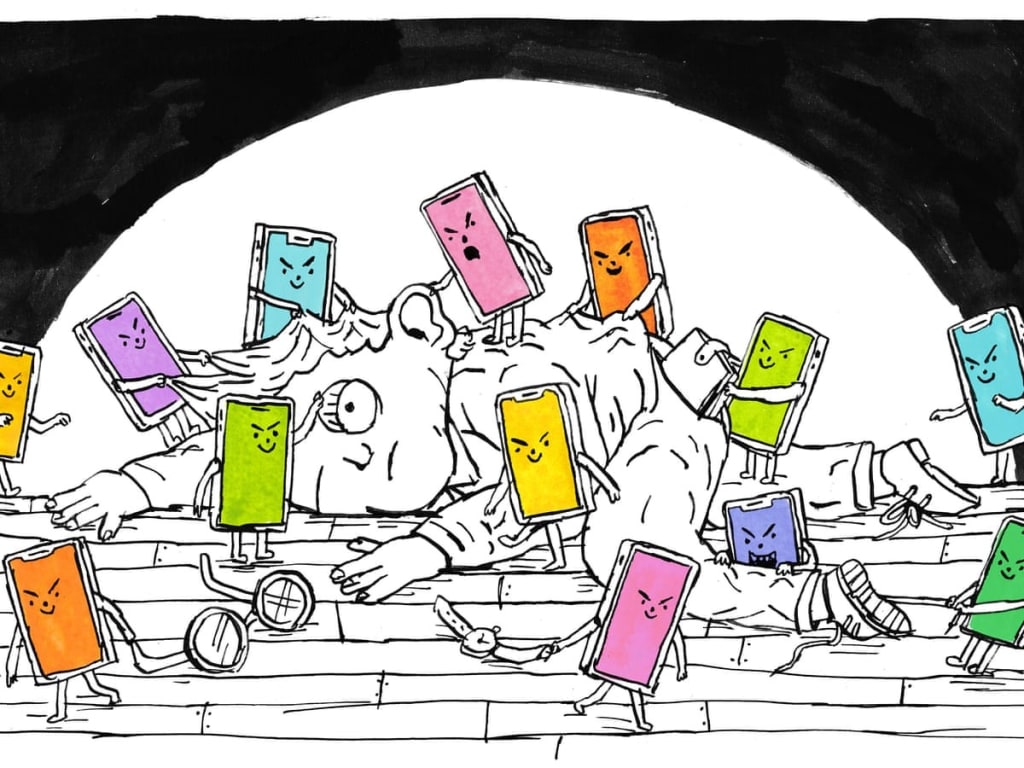
Not long ago, the mobile phone was celebrated as one of humanity’s greatest inventions. It brought families closer, made communication instant, and gave us access to knowledge at our fingertips. But like many powerful tools, its gift has turned into a burden. The device that once promised freedom has quietly become our chain. Today, mobile phones do not simply connect us they control us.
The Illusion of Connection
Mobile phones were meant to bridge distances. With a single tap, you can speak to someone across the world. But ironically, the same device has built invisible walls between people sitting just inches apart.
Look around any café, living room, or family gathering. Conversations are interrupted by glowing screens. Parents scroll through social media while their children wait for attention. Friends sit together, yet each is lost in a digital world. What was once a symbol of connection has created an epidemic of loneliness and disconnection? The illusion is cruel: we feel “connected” online, yet in real life, relationships starve for genuine presence.
Stolen Time, Stolen Lives
The average person spends more than **4–6 hours a day** on their mobile phone. Multiply that over weeks, months, and years, and the cost becomes terrifying. Time that could be used for learning, creating, bonding, or resting is consumed by endless scrolling.
Mobile phones don’t just take our time they take our attention. Every ping, vibration, or notification pulls us away from meaningful tasks. Slowly, we lose the ability to focus deeply. We become restless, unable to sit in silence, addicted to the constant rush of digital dopamine. Time is life, and mobile phones are quietly stealing both.
Mental Health Under Siege
Behind every glowing screen is a darker truth. Mobile phones feed comparison, envy, and anxiety. Social media apps are designed to show the highlights of others’ lives the vacations, successes, filtered smiles. The result is a generation drowning in insecurity, constantly measuring themselves against impossible standards. Research has shown that excessive phone use correlates with depression, stress, and poor sleep. The blue light disrupts natural rhythms, leaving minds restless and bodies exhausted. Teenagers, in particular, face alarming risks: cyber bullying, body-image pressure, and online isolation. Our mental health is paying the price for the convenience of constant connection.
Physical Health in Decline
The damage is not just mental. Physically, mobile phones leave invisible scars:
Poor posture from endless scrolling causes back and neck pain (“text neck”).
Eye strain from staring at screens leads to blurred vision and headaches.
Sleep disorders arise when late-night scrolling delays rest.
Reduced fitness occurs when hours are lost to screens instead of movement. Even more alarming is the rise in accidents caused by mobile distraction drivers glued to screens, pedestrians lost in notifications. Lives are literally ending because of a device we can’t seem to put down.
The Death of Real-World Skills
Before mobile phones, people memorized numbers, navigated streets, and asked strangers for help. Today, these small acts are disappearing. GPS tells us where to go, search engines answer every question, and notes apps replace memory. While convenient, this dependency is eroding natural skills. Children struggle to write by hand, hold conversations, or play without devices. Adults feel anxious without their phones, as if they’ve lost a part of themselves. The truth is more chilling: we are not mastering mobile phones they are mastering us.
Relationships in Ruins
Perhaps the greatest casualty of mobile addiction is love and relationships. Couples argue over “screen time,” children grow up competing with devices for their parents’ attention, and friendships dissolve into nothing more than “likes” on a timeline.
Studies show that simply having a phone on the table even when not in use reduces the depth of conversation. Why? Because the silent presence of the device reminds us that at any moment, a message could interrupt. The phone demands loyalty, and real people come second.
The Business of Addiction
It would be comforting to believe mobile phone addiction is accidental, but it isn’t. Tech companies design apps and notifications to keep us hooked. Every vibration, every red alert bubble, every “infinite scroll” is engineered to exploit human psychology. We are not customers we are products. Our attention is sold to advertisers, and our data is harvested for profit. In this system, the more time we waste on our phones, the richer these corporations become. It is not just a device it is a trap.
The Way Out
Despite the destruction, hope remains. Mobile phones are tools, not masters, if we learn to reclaim control. Here are some steps forward:
1. Digital Boundaries: Set daily limits, keep phones out of bedrooms, and turn off unnecessary notifications.
2. Device-Free Spaces: Establish zones (like dining tables and family time) where no phones are allowed.
3. Mindful Use: Ask yourself before unlocking your phone: *Why am I doing this?* Is it necessary or just a habit?
4. Rebuild Skills: Memorize numbers, read physical books, and spend time in nature without screens.
5. Reconnect in Reality: Prioritize face-to-face conversations and experiences that no screen can replace.
Conclusion: Freedom or Slavery
The mobile phone is not inherently evil it is a mirror of human intention. It can connect, inform, and empower, but it can also distract, control, and destroy. The danger lies not in the device itself, but in our surrender to it. If we do nothing, mobile phones will continue to erode our health, relationships, and humanity. But if we act with awareness, discipline, and courage, we can reclaim what has been lost. The real question is simple: do we want to live as masters of technology or as slaves to it? The answer lies not in our phones, but in our hands.
By: Article Writing Master
About the Creator
Keep reading
More stories from Article Writing Master and writers in 01 and other communities.
Whispers of a Warming Earth
If Earth could speak what would it say? Perhaps it would whisper in the crackle of dry forests in the thunder of rising seas or in the silent retreat of glaciers. Perhaps it would remind us that we are not separate from it we are of it. Global warming is not just about numbers charts or predictions; it is the story of a living world struggling to breathe under the weight of human ambition.
By Article Writing Master4 months ago in Earth
How to Choose the Best Mobile App Development Company in Canada 2026
Choosing the right app development partner in 2026 isn’t just a procurement decision—it’s a strategic move that can define whether your digital product scales or stalls. The Canadian tech ecosystem has matured rapidly, with agencies offering everything from rapid MVP builds to enterprise-grade platforms powered by AI and cloud-native architectures.
By alan michael2 days ago in 01
Replica Designer Handbags and Luxury Designer Purses: A Cultural Perspective
Handbags are among the most consistently used personal items in modern life. While often discussed in relation to fashion, their significance extends far beyond visual appeal or brand recognition. Handbags function as everyday tools, supporting routine activities such as work, travel, and social engagement. Within this broader context, conversations around Replica Designer Handbags and Luxury Designer Purses reflect changing attitudes toward access, value, and practicality rather than simple questions of trend or status.
By charliesamuel7 days ago in 01



Comments
There are no comments for this story
Be the first to respond and start the conversation.