


When people discover I'm "into AI", they often transform into hostile interrogators: "What exactly do you do with it?" The tone is demanding. I am called upon to justify my interest in this controversial technology.
And my honest answer to their question? Not much... yet.
The Uses
I stay informed about it. I don't use AI for writing or generating images, although trying AI-writing is a hoot. It's like watching a robot doing stand-up comedy with Wikipedia as its only reference.
I often use AI as a coding sidekick. Sparingly. It's a powerfully efficient labor-saver when used right.
Example: I recently wanted to add a simple web game to a project I was working on. It's the kind of thing I've done hundreds of times by hand. Claude whipped it up in 30 seconds. I'm not washing my dishes when there's a gleaming dishwasher sitting right there.
The danger of AI coding assistance lies in using it without understanding the code. I already knew HTML, JavaScript, CSS. I feel fortunate to have learned the coding basics well before AI came along. AI will wreck many a coding beginner before they even get started.

Still, I'm cautious about letting my development skills atrophy. Having digital crutches come with a price.
I occasionally toss ambitious coding projects at the latest AI models just to test them. Sometimes - almost terrifyingly, I'll admit - they can deliver. The instances of this happening are slowly creeping up and up, as weeks and months go by and new models emerge.
This is why creatives across industries are justifiably sweating.
In 3-4 production cycles, these systems might genuinely become the existential threat the hype suggests.
The statement "AI will never be able to [whatever]" is always a hope, never a fact.
As a writer, I stand to lose just as much as any artist or developer. Visual arts are merely the first domino. Writing is next on the chopping block.
Manufactured Dissent
At the time of writing, Audible is in the middle of an AI controversy that has started to seem very familiar indeed. AI controversies come along with such predictable regularity that we might suspect the companies are doing it deliberately. Outrage is engagement, after all.
My personal AI interests involve experimenting with local language models through tools like OpenWebUI and Ollama. I have my own personal suite of benchmarks that I take a model through.
There are thousands of models that can be run on home computers. Many of them are capable of going toe-to-toe with the online big guns like Claude, Gemini, MistralAI - and ChatGPT.
I have an evil private game that I play with someone loudly denouncing AI. "What do you think of Claude?" I ask them.
In 99% of cases, they've never heard of anything but ChatGPT. To them, ChatGPT = AI technology as a whole.
Recently, I used Claude to help a colleague with her resume.
She watched, amazed, as a polished document emerged from minimal input.
"This is how AI will help us," I explained. "By automating tedious tasks."
I guarantee she won't recall that moment the next time her peers on social media collectively groan "ew, AI".
Such is our current discourse. Those of us who don't actively despise the technology must qualify our interest with the kind of oh-so-careful disclaimers that this article is packed with.
My approach is simple: remain curious, maintain healthy skepticism, use these tools when they genuinely improve life. Without either apology or evangelism.
The future of AI will unfold regardless of our opinions.
I pay no attention to questions of whether AI is humanity's salvation or doom.
How about neither?
About the Creator
Jack McNamara
I feel that I'm just hitting my middle-aged stride.
Very late developer in coding (pun intended).
Been writing for decades, mostly fiction, now starting with non-fiction.
Keep reading
More stories from Jack McNamara and writers in 01 and other communities.
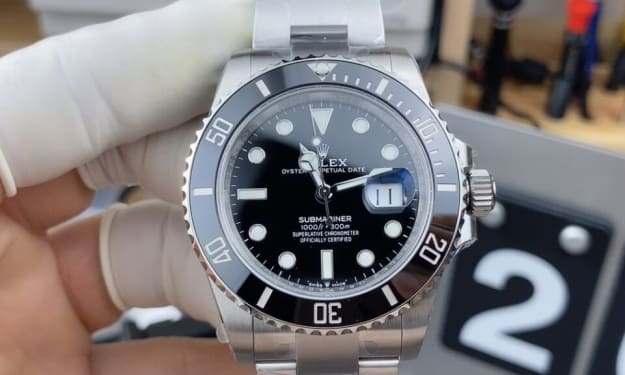
The Growing Interest in VSF Super Clone Watches
Luxury watches have long been associated with prestige, craftsmanship, and engineering excellence. Iconic watchmakers spend decades refining their movements, materials, and designs to create timepieces that are admired around the world. However, the extremely high prices of authentic luxury watches place them far beyond the reach of many enthusiasts. Because of this, conversations about alternative ways to experience luxury watch design have grown in online watch communities.
By charliesamuel3 days ago in 01
7 Gamification Patterns That Boost EdTech Retention
The challenge for Education Technology in 2026 is high. It is no longer about just delivering content. The real goal is to sustain the "will to learn." Digital fatigue has reached new heights this year. The focus keyword is 7 Gamification Patterns That Boost EdTech Retention. This phrase represents a vital strategic shift. Product leaders must move from points and badges. They must embrace deep psychological engagement instead. Passive learning is now a dead concept. To survive the current market, platforms must change. They must become active and habit-forming environments.
By Del Rosario4 days ago in 01



Comments
There are no comments for this story
Be the first to respond and start the conversation.