
The Role of Augmented Reality (AR) in Transforming Real Estate Apps
The Role of Augmented Reality (AR) in Transforming Real Estate Apps

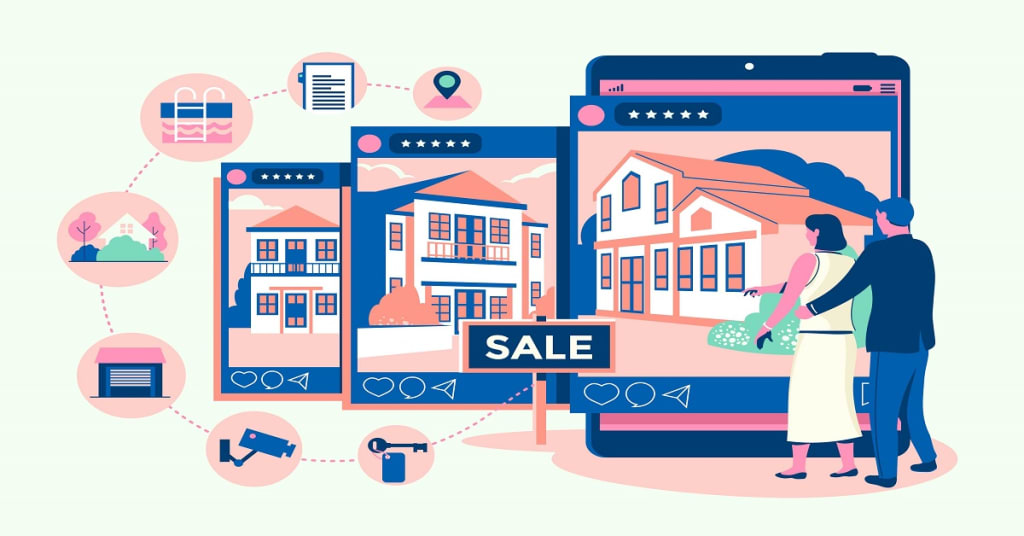
In the ever-evolving real estate market, staying ahead of the competition requires leveraging cutting-edge technologies.we specialize in real estate app development solutions that integrates advanced features like Augmented Reality (AR), AI, and smart home integrations. Our team builds user-friendly, scalable apps designed to enhance property searches, offer virtual tours, and provide real-time market insights. Whether you’re a real estate agent, a property developer, or a buyer, our custom solutions ensure an immersive and seamless experience. Contact us today to transform your real estate business with an innovative, tech-driven mobile app!
What is Augmented Reality (AR)?
Augmented Reality (AR) is a technology that overlays computer-generated images, sounds, and other sensory inputs on the real-world environment in real time. Unlike Virtual Reality (VR), which immerses users in a completely virtual environment, AR enhances the physical world by superimposing digital elements on it. With the help of smartphones, tablets, or AR glasses, users can interact with digital objects and information in a way that feels natural and intuitive.
In the context of real estate, AR allows potential buyers and renters to explore properties without physically visiting them. It can also be used to visualize changes to a space, such as renovations or interior design updates.
1. Virtual Property Tours
Traditionally, viewing properties required physical visits, which can be time-consuming and inconvenient, especially for international or long-distance buyers. However, AR technology allows prospective buyers to take virtual property tours from the comfort of their own homes.
Through a real estate app equipped with AR, users can explore homes in 3D, walking through different rooms, viewing them from different angles, and even zooming in on intricate details. This technology gives buyers a far more immersive experience than static images or 2D floor plans.
Why it matters: Virtual property tours powered by AR save time and effort for both buyers and real estate agents. They allow prospective buyers to get a true feel of the property, making it easier to narrow down choices before scheduling in-person visits.
2. Property Visualization and Customization
One of the biggest challenges buyers face is visualizing how a space will look after changes or renovations. Whether it’s imagining new furniture in a room, deciding on wall colors, or reconfiguring a layout, it can be difficult to picture these changes in your mind alone.
AR overcomes this by allowing users to visualize different design options in real time. For example, a buyer can use an AR app to see how a sofa or artwork would look in a specific room. Alternatively, homebuyers can visualize how structural changes, like removing a wall or adding an extension, would impact the space.
Why it matters: AR helps users make more informed decisions by allowing them to see potential modifications without the need for costly and time-consuming prototypes or mock-ups. This also enhances the customization process, providing a better experience for clients who want to personalize their future home.
3. Incorporating Virtual Staging
Staging a home is a well-known tactic in real estate to make properties more appealing to potential buyers. Traditionally, staging involved physically moving furniture and decor into the space, which could be both expensive and time-consuming. However, with AR, real estate agents and sellers can create virtual staging by digitally adding furniture, art, rugs, and other elements to an empty space.
Through the use of AR, prospective buyers can visualize a fully furnished home even if the space is empty or sparsely decorated. This gives them a sense of how the space can be used and how different design elements fit within the layout.
Why it matters: Virtual staging is cost-effective, time-saving, and flexible. It allows homes to appear more appealing without the need for physical furniture. For real estate agents, it’s a great tool to make listings stand out with minimal investment.
4. Interactive Neighborhood Exploration
While property features are crucial, the surrounding neighborhood plays an equally important role in a buyer’s decision-making process. AR can extend beyond just the interior of a property and allow users to explore the neighborhood interactively.
Through AR-enabled real estate apps, users can point their phones at the area surrounding a property to view nearby schools, parks, restaurants, and even crime statistics. Information like public transport routes, commute times, and shopping centers can also be overlayed onto the map in real-time.
Why it matters: This feature provides potential buyers with valuable insights into their future surroundings, helping them make well-rounded decisions based not only on the property but also on the neighborhood’s suitability for their lifestyle.
5. Improved Real-Time Property Information
AR is capable of displaying real-time data about a property, such as its market value, recent renovations, and historical pricing trends, directly onto the phone screen. When a user points their device at a property, it can pull up this data through the real estate app, giving them an instant overview of important information.
Additionally, AR can offer useful contextual data like property tax rates, inspection history, and even environmental features, such as the property’s energy efficiency or nearby green spaces.
Why it matters: Real-time data provides buyers with all the necessary information to make an informed decision, which not only enhances the user experience but also accelerates the property-buying process. Buyers don’t need to look up separate data on websites or contact agents repeatedly for the same information.
6. Integration with Smart Home Features
The increasing demand for smart homes means that many buyers are now considering properties with integrated smart devices. AR can be used to demonstrate the functionality of these smart devices, such as smart thermostats, lighting systems, security cameras, and home assistants.
For instance, when visiting a home, an app with AR can highlight the various smart features in the house and allow users to interact with them virtually. Buyers can visualize how each smart feature works within the property and see how it enhances the living experience.
Why it matters: With smart home technology on the rise, buyers want to be assured of how these devices integrate into the property. AR makes it easy to showcase these features in a tangible and interactive way, making the property more appealing.
7. Enhanced Marketing and Advertising
For real estate agents and developers, AR offers a powerful tool for marketing properties. By integrating AR into real estate app development cost, agents can create interactive advertisements that allow potential buyers to visualize properties before visiting in person.
For example, virtual property tours and 3D models can be shared on social media, allowing clients to engage with listings directly. Furthermore, AR can help sellers and agents stand out from the competition by offering a more modern and engaging way to showcase properties.
Why it matters: AR-driven marketing provides an innovative way to capture the attention of potential buyers. It helps agents create a memorable experience, boosting engagement, interest, and ultimately sales.
Conclusion
Augmented Reality is no longer a futuristic technology—it’s here and it’s transforming the real estate industry. By integrating AR into real estate apps, agents, buyers, and sellers gain access to a more interactive, engaging, and efficient process for buying, selling, and renting properties. From virtual tours and customization options to neighborhood exploration and smart home integration, AR adds immense value to the property journey, improving decision-making and saving time and money for all parties involved.
As technology continues to evolve, AR is set to be a cornerstone of real estate app development, reshaping the way people buy and sell properties for years to come. For real estate professionals looking to stay ahead of the curve, investing in AR-powered apps is no longer optional—it’s a necessity.
About the Creator
shane cornerus
Shane Corn is the SEO Executive at Dev Technosys, a Flower Delivery App Development company with a global presence in the USA, UK, UAE, and India.
Keep reading
More stories from shane cornerus and writers in 01 and other communities.
Top 10 IT Tech Companies for Building Sustainable Travel Apps
In today’s world, sustainability is becoming a key factor in travel choices. As more travelers seek eco-friendly options, the demand for travel app development services focused on sustainability continues to rise. From carbon footprint tracking to promoting greener alternatives, businesses are turning to innovative technology to help travelers make responsible decisions. Whether you’re a startup or an established brand, integrating sustainable features into your app not only boosts customer satisfaction but also contributes to a greener future. Discover how travel app development services can help you build apps that support eco-conscious travel, benefiting both users and the environment.
By shane cornerus3 months ago in 01
Data-Driven Configuration Suggestions for Batch Asphalt Plants
Asphalt mixing plant manufacturers can significantly enhance client satisfaction by providing data-driven configuration suggestions for batch asphalt plants. By analyzing factors such as production scale, material types, and operational goals, manufacturers can tailor recommendations that align equipment performance with client needs. This approach not only optimizes production efficiency but also helps clients maximize their investments in asphalt mixing technology.
By Macroad Asphalt Plant2 days ago in 01
How Tax Outsourcing Companies Are Helping U.S. Businesses Stay Compliant and Profitable
Taxes are one of the most unavoidable parts of doing business in the United States. Whether you’re running a small startup or managing a growing company, tax compliance can quickly turn into a major headache. This is where Tax Outsourcing Companies have become a game-changer for businesses across the USA. By handing over complex tax responsibilities to professionals, companies are finding smarter ways to save time, reduce errors, and stay compliant with ever-changing tax laws.
By Outsourced Bookkeeping Solutions5 days ago in 01




Comments
There are no comments for this story
Be the first to respond and start the conversation.