
The Rise of Automation: A World at Work in Transition
How Technology is Redefining Jobs and Shaping the Future of Employment
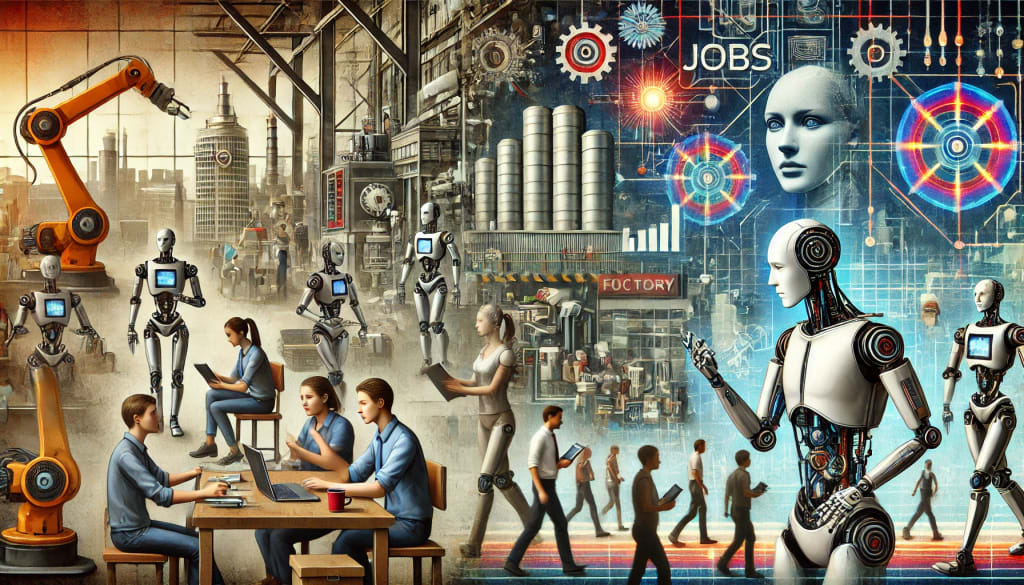
The Rise of Automation: A World at Work in Transition
In a bustling factory on the outskirts of Detroit, the hum of machinery fills the air, accompanied by the rhythmic dance of robotic arms. These machines, tireless and precise, have replaced the once-lively conversations of assembly-line workers who used to fill the cavernous space. This scene is emblematic of a global shift that has rippled through industries far and wide: the rise of automation.
Automation, the use of technology to perform tasks without human intervention, has profoundly reshaped the modern workforce. From manufacturing and logistics to customer service and even creative industries, machines powered by artificial intelligence (AI) and machine learning are taking on roles traditionally performed by humans. The implications of this shift are both exciting and unsettling, promising efficiency and innovation while sparking fears of widespread job displacement.
A Historical Perspective on Automation
The relationship between humans and machines is not a new phenomenon. The Industrial Revolution in the late 18th and early 19th centuries marked the beginning of mechanized labor, transforming agriculture and manufacturing. Steam engines and mechanical looms revolutionized production, creating unprecedented economic growth but also displacing countless workers in traditional crafts.
Fast forward to the 20th century, and automation began to evolve beyond mechanical processes. The advent of computers introduced a new era, enabling automation in clerical and administrative tasks. With the rise of digital technology, businesses could handle massive amounts of data, streamline operations, and optimize efficiency.
Today, we find ourselves in the age of the Fourth Industrial Revolution, driven by AI, robotics, and the Internet of Things (IoT). Machines are no longer confined to repetitive tasks; they can now learn, adapt, and make decisions. This seismic shift brings immense potential—but also profound challenges.
The Benefits of Automation
For businesses, automation offers unparalleled advantages. Machines can work 24/7, without fatigue or error. In sectors like manufacturing, this translates into increased productivity and reduced costs. Automated systems can also perform hazardous tasks, enhancing workplace safety. For example, robots are used in mining and construction to handle dangerous materials or operate in extreme conditions, minimizing risks to human workers.
Automation also plays a critical role in addressing labor shortages. In aging societies like Japan, where the working-age population is declining, robots are stepping in to fill gaps in healthcare, logistics, and even hospitality. Similarly, during the COVID-19 pandemic, automated systems helped maintain supply chains and perform essential services when human workers were unavailable.
Moreover, automation has the potential to unlock human creativity. By taking over mundane and repetitive tasks, it frees individuals to focus on higher-order activities such as problem-solving, innovation, and strategic thinking. For instance, AI tools assist architects in designing sustainable buildings or help doctors diagnose diseases more accurately, enabling professionals to make better decisions.
The Dark Side: Job Displacement and Inequality
Despite its benefits, automation raises significant concerns about job displacement. A 2020 report by the World Economic Forum estimated that while automation could create 97 million new jobs, it might displace 85 million workers by 2025. For many, this transition is not seamless. Workers in industries such as manufacturing, retail, and transportation are particularly vulnerable, as their roles are often repetitive and easily automated.
The impact of automation is uneven, with low-skilled workers bearing the brunt of displacement. High-skilled workers in tech-driven fields may thrive, but those without access to education and reskilling programs risk being left behind. This growing divide exacerbates income inequality, creating a polarized workforce of "haves" and "have-nots."
Moreover, automation disproportionately affects developing countries, where low-cost labor drives economic activity. In regions like Southeast Asia and Sub-Saharan Africa, the adoption of robotics in manufacturing threatens millions of livelihoods, potentially stalling economic progress.
Adapting to the New Reality
The rise of automation does not signal the end of work but rather a transformation of it. History shows that while technological advancements disrupt certain roles, they also create new opportunities. For example, the mechanization of agriculture in the 20th century led to a decline in farming jobs but spurred growth in manufacturing and services.
To navigate this transition, governments, businesses, and individuals must work together. Investment in education and reskilling programs is paramount. Workers need access to training in digital literacy, programming, and other skills that align with the demands of the automated economy. Countries like Germany have implemented successful apprenticeship programs that bridge the gap between traditional industries and emerging technologies.
Policymakers must also consider social safety nets to support displaced workers. Universal basic income (UBI) has been proposed as a solution, providing financial stability while individuals reskill or transition to new careers. While controversial, such measures could mitigate the social and economic impacts of widespread automation.
Businesses, too, have a role to play. Ethical adoption of automation requires considering the human impact. Companies should prioritize redeployment over layoffs, using automation to augment rather than replace human labor. For instance, some firms have embraced "co-bots" (collaborative robots) that work alongside employees, enhancing productivity without eliminating jobs.
The Future of Work
As automation continues to reshape the workforce, new industries and roles are emerging. Jobs in AI development, cybersecurity, and renewable energy are on the rise, reflecting the priorities of a tech-driven and sustainable future. Creative industries, too, are experiencing a renaissance, as AI tools enable novel forms of expression in art, music, and storytelling.
The future of work will likely be defined by human-machine collaboration. While machines excel at processing data and performing repetitive tasks, humans bring creativity, empathy, and critical thinking to the table. This synergy has the potential to unlock new possibilities, from personalized healthcare to groundbreaking scientific discoveries.
However, achieving this vision requires proactive planning and cooperation. If managed poorly, automation could exacerbate inequality and social unrest. If managed wisely, it could usher in a new era of prosperity and innovation.
Conclusion
The rise of automation is a double-edged sword, offering both promise and peril. It challenges us to rethink the nature of work and adapt to a rapidly changing world. While the path forward is uncertain, one thing is clear: the future of work will be shaped not only by technology but by the choices we make today.
As we stand on the precipice of this transformation, we must ask ourselves: How can we harness the power of automation to build a future that works for everyone? The answer lies in our ability to balance progress with compassion, innovation with inclusivity, and efficiency with equity. Only then can we ensure that the rise of machines elevates humanity, rather than leaving it behind.
About the Creator
How Can Kaito Project Marketing Guide Community Decision-Making in 2026?
By 2026, community decision-making has become one of the most critical determinants of success for decentralized projects. As protocols scale and governance participation widens, the ability of communities to interpret information, evaluate trade-offs, and act collectively has taken center stage. Kaito, as an intelligence-driven platform that aggregates, structures, and contextualizes crypto discourse, plays a pivotal role in shaping how decisions are formed rather than merely how opinions spread.
By Jack santo5 days ago in 01
Five Steps to Turn Prospects into Lifetime Customers
Introduction Every business owner knows that acquiring new customers costs significantly more than retaining existing ones. Studies consistently show that it's five to twenty-five times more expensive to attract a new customer than to keep a current one. Yet many businesses focus their energy and resources almost exclusively on customer acquisition, treating each sale as a one-time transaction rather than the beginning of a potentially lifelong relationship.
By Start My Businessa day ago in 01



Comments
There are no comments for this story
Be the first to respond and start the conversation.