
The Most Common SaaS Pentesting Use Cases Every Security Team Should Know
How Pentesting Helps Identify Hidden Risks in SaaS Platforms


In today’s interconnected cloud landscape, SaaS applications have become the backbone of digital operations for organizations across industries. But as businesses scale, so does the attack surface — every new API, integration, and tenant connection introduces potential vulnerabilities.
That’s where penetration testing comes in, giving SaaS teams the ability to identify and patch weaknesses before attackers exploit them.
Let’s explore the most impactful pentesting use cases for SaaS applications, how they protect against real-world attacks, and why regular testing is vital to maintaining customer trust and compliance.
Why Every SaaS Platform Needs Regular Pentesting
For SaaS businesses handling sensitive customer data, uptime and trust go hand-in-hand. Penetration testing validates not just configurations but the true resilience of your application under attack.
It exposes weaknesses beyond what vulnerability scanners detect — testing how real-world exploits could unfold in your SaaS environment. More importantly, pentesting offers tangible proof of security readiness, a requirement for compliance standards like SOC 2 and ISO 27001.
By combining manual testing and automated scanning, SaaS teams can build a proactive defense strategy that strengthens continuously.
Key Pentesting Scenarios That Secure SaaS Environments
Each penetration test focuses on a unique dimension of SaaS security. The following penetration testing use cases for SaaS apps represent the most common — and most critical — areas to assess regularly.
1. Ensuring Strong Tenant Isolation in Multi-Tenant SaaS Apps
In multi-tenant architectures, hundreds of customers share the same infrastructure. If isolation fails, one client might access another’s sensitive data — a nightmare scenario for any SaaS provider.
Tenant isolation testing validates that database queries, access controls, and session management correctly enforce separation between tenants. Testers try manipulating identifiers or permissions to detect data exposure across tenants, ensuring every user environment stays securely contained.
2. Testing API Endpoints and SaaS Integrations for Weak Spots
APIs are the glue that holds modern SaaS products together — and one of the biggest targets for attackers. Weak authentication, insecure tokens, or poor input validation can open dangerous backdoors.
API penetration testing assesses endpoints and integrations for authentication flaws, missing authorization checks, and insecure data transmission. It also validates encryption, token handling, and rate limiting to prevent data leakage and service abuse.
3. Verifying Authentication and Role-Based Access Controls
Authentication and authorization flaws are among the most common causes of data breaches in SaaS environments. Attackers often exploit weak session handling or privilege escalation gaps.
Pentesters simulate unauthorized access attempts, brute force logins, and role manipulation to ensure users can’t exceed their privileges. Testing covers OAuth flows, SSO configurations, and token reuse prevention — ensuring that the right users always have the right access.
4. Assessing Data Protection and Encryption Strength in SaaS
Strong encryption is the backbone of secure SaaS data handling. But misconfigurations or weak encryption algorithms can compromise even the most compliant setups.
Pentesters evaluate how data is stored, transmitted, and encrypted. They look for insecure storage, improper key management, or weak cipher usage that could allow attackers to intercept or decrypt sensitive information.
5. Detecting Logic Loopholes in SaaS App Workflows
Business logic vulnerabilities can allow attackers to manipulate legitimate features for malicious gain — such as bypassing payment flows or triggering unauthorized actions.
Logic testing focuses on workflows like billing, onboarding, and data sharing, looking for ways attackers could exploit normal processes. These flaws are often invisible to scanners but can be detected with a Penetration Testing Tool that blends automation with expert analysis.
Using Pentesting Tools to Simplify SaaS Security Testing
Modern SaaS security teams no longer rely solely on manual methods. Leveraging an automated pentesting tool streamlines repetitive checks and allows teams to scale assessments across multiple releases.
Automation helps detect misconfigurations, insecure APIs, and logic flaws faster — but expert validation remains key. The best results come from combining human insight with automation precision to test your application’s most critical security layers.
Why These Pentesting Scenarios Are Crucial for SaaS Teams
Each of these pentesting use cases addresses a key risk area in SaaS architecture — from data separation and API protection to business logic validation. Implementing them consistently ensures your app can withstand real-world threats and remain compliant with leading frameworks.
Integrating continuous pentesting within your development lifecycle allows you to uncover vulnerabilities earlier, reduce remediation costs, and improve overall security posture.
That’s why pentesting for securing your SaaS app isn’t just about compliance — it’s about building confidence for your customers, investors, and auditors.
Bringing It All Together: Building a Resilient SaaS Security Strategy
The most secure SaaS platforms treat pentesting as an ongoing strategy, not a one-time audit. Each round of testing offers valuable insights into new attack paths, emerging risks, and control effectiveness.
By staying proactive with penetration testing use cases in SaaS application security, your team can identify weaknesses early, close potential gaps, and maintain strong tenant trust.
If you’re looking to make this process more efficient, consider adopting a Penetration Testing Tool that blends automation and expert validation — empowering your SaaS business to scale securely and confidently.
About the Creator
Sam Bishop
Hi there! My name is Sam Bishop and I'm a passionate technologist who loves to express my thoughts through writing. As an individual and tech enthusiast, I'm always eager to share my perspectives on various topics.
Keep reading
More stories from Sam Bishop and writers in 01 and other communities.
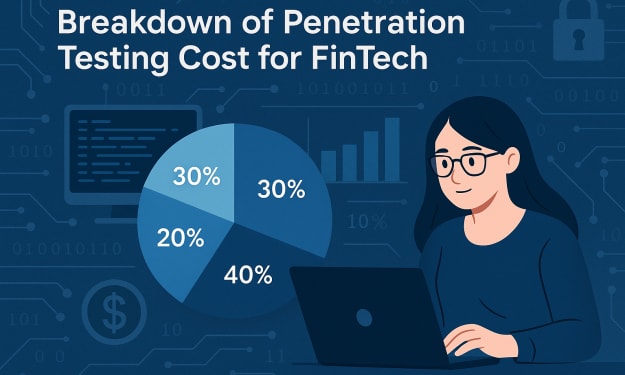
A Complete Guide to Penetration Testing Costs in FinTech
Introduction FinTech companies are at the forefront of digital transformation, handling sensitive financial data and complex transactions every second. With this power comes enormous security responsibility. According to industry reports, nearly 70% of FinTech applications experience at least one cyberattack attempt each year. For such high-value environments, understanding the cost of penetration testing for FinTech platforms isn’t just about budgeting — it’s about maintaining trust and compliance.
By Sam Bishop4 months ago in 01
Voice AI for Clinics: Reduce No-Shows & Improve Patient Experience
Modern healthcare clinics are under increasing operational pressure. Rising patient expectations, growing administrative workloads, and consistent revenue leakage from missed appointments are creating serious challenges for clinic owners and healthcare administrators. In 2026, the conversation is no longer about whether automation is needed—it’s about how fast it can be implemented.
By Nishant Bijani4 days ago in 01
Belle of the Bayou
Bad move, cher. Not just the slip of her kitten heel on the rainy February cobblestones in the Fourth Ward. She got caught snooping. Detective Deleon clucked and strutted like a rooster in his rush to clear her from the scene, waving cigar smoke to and fro as he gesticulated amid the thick air of the speak easy. An experienced crime reporter, Marie knew better than to let the coppers catch her on the wrong side of the line, but curiosity had gotten the better of her.
By Maia Gadwall the metAlchemist7 days ago in Fiction



Comments
There are no comments for this story
Be the first to respond and start the conversation.