
The Hyper-Casual Game Explosion: Why the Simplest Games Win Big
How Game Studios Turn Micro-Moments Into Massive Mobile Hits
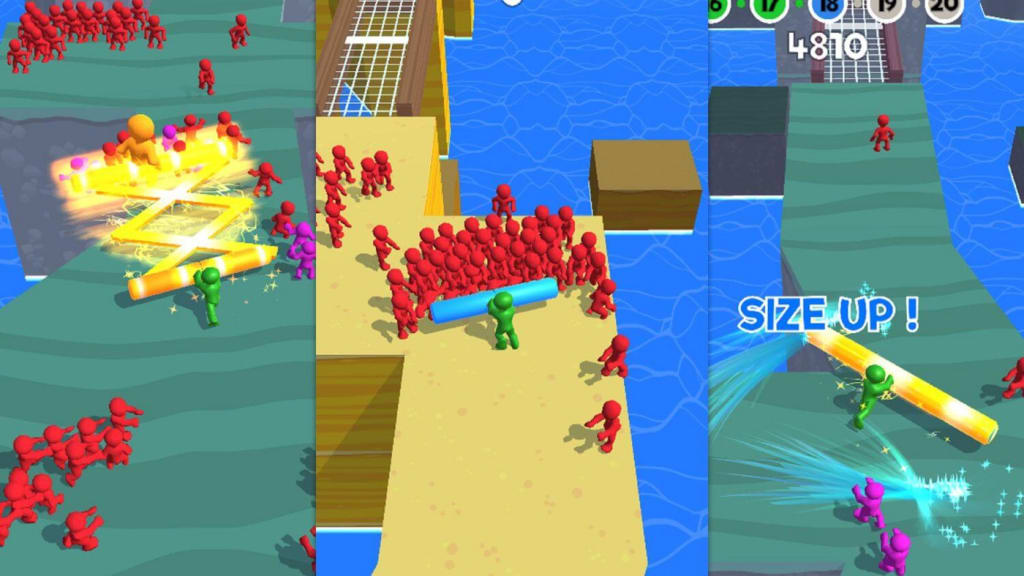
What drives a game with one mechanic and no tutorial to outperform complex titles built on millions in dev costs? Hyper-casual games thrive not because they’re simple, but because they remove every possible point of friction between user interest and reward. The user journey begins the moment the app is opened, not after a login wall or tutorial maze. Titles like Helix Jump and Flappy Dunk didn’t ask players to learn—they invited them to act. That immediacy isn’t just UX gold; it’s a strategic moat.
What’s rarely discussed is the systemic impact this has on the app store ecosystem. These games aren’t just dominating by volume—they’re altering CPI norms, skewing engagement expectations, and forcing even AAA studios to rethink mobile strategies. As of late 2024, Voodoo’s network alone accounted for over 1.2 billion installs annually, with an average session time under 90 seconds. That brevity isn’t a weakness—it’s the attention economy, weaponized.
UX That Feeds Dopamine: Invisible Design Patterns Behind User Obsession
Why do users compulsively tap through a game that offers no story, no goal, and no clear end? The answer lies in invisible feedback loops, baked deep into the UI. Hyper-casual titles use rapid micro-validation—every tap delivers either progress or spectacle. There’s no ambiguity, no failure screen that asks the player to wait, restart, or reflect. Every design choice, from color contrast to button size, is engineered for impulse activation.
A great example is Stack by Ketchapp, where precision stacking and rhythm create a loop indistinguishable from skill gambling. The user doesn’t realize they’re engaging in flow-state reinforcement because the visual rhythm feels intuitive. Designers don’t talk enough about how these games minimize cognitive load while maximizing sensory payoff. It’s not just simplicity—it’s calibrated frictionlessness.
Virality by Design: How Games Engineer Sharing Without Asking
What makes someone share a game that offers no multiplayer, no leaderboard, and no social badge? Hyper-casual games embed subtle competitive energy into single-player design. Every retry is faster than the last, and high scores reset emotional stakes within seconds. The real trick? These games let users own their skill narrative without needing to explain mechanics—perfect for social virality.
Consider how Color Switch turned precision timing into a share-worthy achievement. There were no social hooks, yet the format spread through classrooms and group chats. Developers often underestimate the role of ambient competition: people don’t want to just win—they want others to witness the difficulty they just mastered. Studios that understand this—often using micro-share prompts and competitive overlays—build virality into core design, not post-launch marketing.
For teams building such features into MVPs, it’s worth exploring dev studios experienced in viral loop implementation and rapid prototyping. One such example is BR Softech’s hyper-casual game development services, which are structured to align mechanics with shareability from the prototype phase.
The Monetization Matrix: Ads, Engagement, and the Psychology of Skipping
Is it possible to monetize without breaking immersion in games that barely last two minutes per session? The hyper-casual monetization model answers that with a strategic yes—by leveraging attention moments, not playtime. Rewarded videos, skippable interstitials, and minimal banners are not just ad types; they’re timed psychological nudges. The most successful games predict when a user is most open to interruption, not when they hit a milestone.
Games like Paper.io or Crowd City place rewarded ads precisely after emotional arcs—right after a near win or a level up. This makes the skip-or-watch decision feel like a continuation of gameplay, not an interruption. That’s the difference between ads as intrusions and ads as choices. Poorly timed monetization, on the other hand, is the fastest path to D1 drop-off.
The Hidden Engine: Prototyping, Soft Launches, and Behavioral Feedback Loops
How do studios go from concept to global hit in under 30 days? The answer isn’t just ideation—it’s industrialized validation. Hyper-casual studios build and discard prototypes in cycles of five to ten days, testing CTR, D1 retention, and playtime before writing a second line of code. This is product-market fit at velocity.
Using tools like Firebase, GameAnalytics, and third-party UA dashboards, developers run soft-launch loops that measure how players behave in the first 10 seconds. It’s a binary game: if users bounce, it’s dead. If CTR exceeds 5% and D1 hits 35%, it gets expanded. Nothing else matters—not polish, not brand, not even monetization. Only behavior.
Studios that lack internal firepower for this cycle often partner with dev teams that specialize in fast prototyping, quick-launch frameworks, and live metric filtering—turning ideas into testable assets in under a week.
From Casual to Core: The Rise of Hybrid-Casual and the Future of Depth
Why are hyper-casual publishers now investing in progression systems, meta layers, and long-term retention loops? Because the top of the funnel is saturated. Hyper-casual games won the install war—but hybrid-casual is built to win the LTV game.
Games like Survivor.io or Archero blend one-tap simplicity with stat growth, unlockable gear, and roguelike runs. The result is depth without cognitive fatigue. Players start with frictionless action and end up grinding sessions by choice. This shift is data-driven: retention past day 7 is now more valuable than CPI under $0.20.
Publishers that survive the next platform shift will be those that combine hyper onboarding with midcore depth. It’s not either/or—it’s sequencing simplicity and complexity like narrative arcs.
App Store Algorithms and ASO Tactics That Give Hyper-Casual Games an Edge
How do these games get millions of installs with no paid ads? Because they know how to hack the App Store’s dopamine triggers. Icon click-through rate (CTR), short-video preview optimization, and screenshot sequencing matter more than keywords. The app listing itself is a mini-hyper-casual experience: fast, visual, instinctive.
Top-performing icons use bold contrast, single objects, and no text. The first three seconds of the preview video mimic gameplay with zero explanation. And reviews? They’re nudged post-session, not post-frustration. Most developers still treat ASO like SEO—they shouldn’t. It’s not about discoverability; it’s about conversion. The algorithm rewards velocity, not metadata.
Invisible Experience: What Indie Developers Learn the Hard Way
What’s the #1 silent killer of promising hyper-casual games? Friction that feels invisible during dev but lethal during user flow. Indie studios often launch games with unskippable intros, unclear feedback loops, or inconsistent touch response—and wonder why D1 retention drops below 20%.
A telling example: a well-designed runner game with beautiful art failed to retain users because the first 2 seconds included a fade-in logo and a confusing tap-to-start label. No bugs—just a missed heartbeat. Hyper-casual players decide in milliseconds whether your game is worth another.
The hard truth is: invisible design choices matter more than visible polish. Developers who learn that early iterate faster, waste less budget, and break through the noise.
Expert Use Cases: What Publishers and Agencies Actually Do Differently
What separates hobbyist developers from publishers with billion-view hits? Process, not creativity. Leading hyper-casual studios don’t just A/B test visuals—they rotate gameplay concepts weekly, pre-screen mechanics via playable ads, and filter concepts through creative testing before development.
Agencies like SayGames or Supersonic operate on data-first pipelines. They build marketing and gameplay in parallel, not sequence. Their teams know that an unplayable ad with 7% CTR beats a polished game with 1.2% CTR. Why? Because creative validation comes before engineering effort.
For developers trying to break into this ecosystem, aligning with technical partners who understand this sequencing is crucial. A studio with ad-ready templates and prototype libraries will outperform solo builds every time.
The Blueprint: Building Your First Hyper-Casual Hit (With or Without a Team)
Think it’s impossible to break in without a team? It’s not—if you think like a strategist, not just a coder. Solo devs have launched hits using Unity or Buildbox, leveraging prefab engines and creative testing marketplaces to validate before scaling.
The smartest entry point isn’t to build—it’s to test. Use playable ad formats to gauge interest, prototype only when CTR proves demand, and outsource polish to speed up execution. If you're lacking backend or multiplayer logic, plug into a dev team that offers modular frameworks instead of full builds.
Studios like BR Softech provide backend scaffolding and gameplay modules tailored for speed, not just functionality. That difference—building fast, not big—is what defines winners in this space.
About the Creator
Exploring AI InsMelo: Revolutionizing Music Composition
Abstract AI InsMelo is an innovative artificial intelligence tool designed to transform the landscape of music composition. By leveraging advanced algorithms and machine learning techniques, InsMelo enables musicians, composers, and creators to generate unique melodies and harmonies, enhancing their creative processes. This article delves into the features, benefits, and implications of AI InsMelo in the music industry, highlighting its potential to democratize music creation and inspire new artistic expressions.
By Arslan Khana day ago in 01




Comments
There are no comments for this story
Be the first to respond and start the conversation.