
The Global Shipping Container Market: A Deep Dive into the Arteries of Global Trade
Supply Chain Resilience, Fleet Modernization, and the Impact of E-Commerce on Containerized Logistics

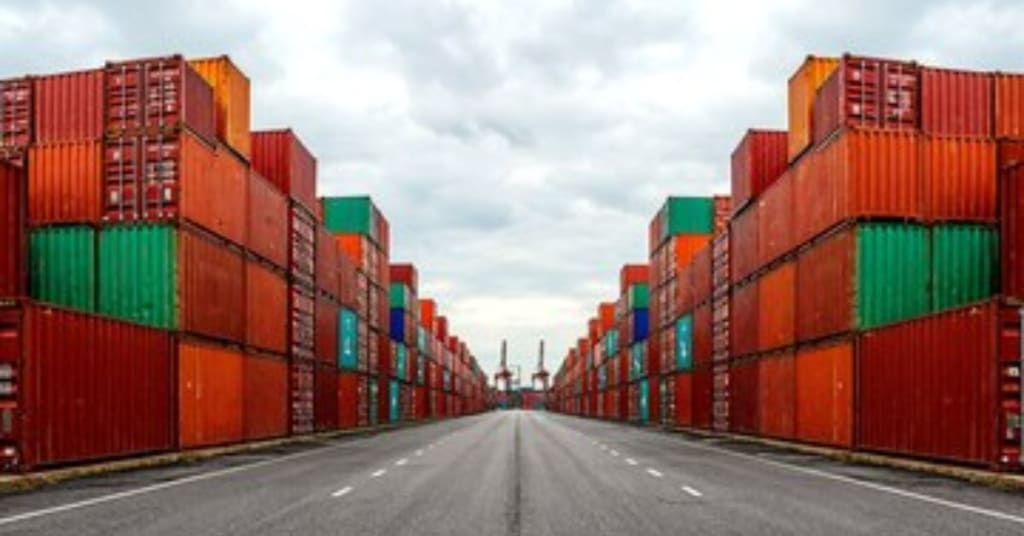
The shipping container is often called "the box that changed the world." Since its standardization in the 1950s, it has been the single most important catalyst for globalization. Today, the shipping container market is not just a barometer for global trade health; it is a complex industrial sector evolving through digitalization, sustainability mandates, and a massive shift toward "second-life" modular applications.
1. Executive Summary: The State of the Box
The global shipping container market is currently navigating a post-pandemic "normalization" phase. After the record-breaking freight rates and container shortages of 2021-2022, the industry has seen a massive influx of new inventory. Valued at approximately $10.5 billion (for the hardware alone), the market is projected to grow at a CAGR of 4.5% through 2030.
However, the "market" is no longer just about moving goods from Shanghai to Long Beach. It has bifurcated into two distinct powerhouse sectors: Logistics/Intermodal Transport and Modular Construction/Storage. The integration of hardware and software is redefining the industry, turning static steel boxes into intelligent assets.
2. Market Segmentation by Container Type
To understand the market, one must look beyond the standard dry box. The diversification of container types is a response to the increasing complexity of global cold chains and specialized industrial needs.
A. Dry Storage Containers (The Standard)
The 20ft (TEU) and 40ft (FEU) containers remain the workhorses of the industry. They account for over 70% of the total market share. Their demand is directly tied to the Global Manufacturing PMI (Purchasing Managers' Index). These units are favored for their durability and ease of stackability, forming the foundation of modern logistics.
B. Reefer (Refrigerated) Containers
This is the highest-growth sub-segment. As global middle-class populations grow, so does the demand for fresh produce, pharmaceuticals, and protein. Modern reefers are now "IoT-enabled," allowing shippers to monitor temperature, humidity, and atmospheric composition (CO2/Oxygen levels) in real-time from across the ocean.
C. Tank Containers
Used for liquids, gases, and powders, tank containers are replacing traditional drums and specialized tankers due to their safety and ease of intermodal transfer (ship-to-rail-to-truck). They are particularly vital for the chemical and food-grade liquid industries.
D. Special Purpose Containers
This includes open-tops (for heavy machinery), flat racks (for oversized cargo), and "High Cube" containers which offer an extra foot of vertical space—increasingly popular for lightweight e-commerce goods that require volume more than weight capacity.
3. The Manufacturing Monopoly: China’s Dominance
The production side of the shipping container market is one of the most concentrated industrial sectors in the world. Over 90% of the world's shipping containers are manufactured in China. This dominance is driven by China's massive steel production capacity and its position as the "world's factory," ensuring that new containers are born exactly where they are needed for first-trip exports.
Three state-owned or state-affiliated giants dominate the landscape:
CIMC (China International Marine Containers)
DFIC (Dong Fang International Asset Management)
CXIC Group
For western nations, this concentration has become a point of "supply chain sovereignty" concern. Efforts are being made in India and Vietnam to establish container manufacturing hubs to diversify the supply base, though China's scale and steel-integration make it difficult to compete on price in the short term.
4. Market Drivers and "The Bullwhip Effect"
The E-commerce Catalyst
The shift from "just-in-time" to "just-in-case" inventory management following the 2020 disruptions has fundamentally changed how retailers use containers. We are seeing a trend where containers are being used as "mobile warehouses," sitting in distribution yards longer than they used to, which increases the total volume of units needed in the global pool.
The Sustainability Mandate (IMO 2030)
The shipping industry is under pressure to decarbonize. This affects the container market in two ways:
Material Science: Manufacturers are experimenting with lighter-weight composite materials to reduce the "tare weight" of the container, allowing for more cargo or less fuel consumption per voyage.
Eco-friendly Liners: Moving away from traditional solvent-based paints to water-borne coatings to reduce VOC (Volatile Organic Compound) emissions during the manufacturing process.
5. The "Second Life" Market: Modular Architecture
A significant and high-margin segment of the market is the repurposed container sector. This has moved beyond "trendy coffee shops" into serious industrial applications that provide a sustainable alternative to traditional construction:
Data Centers: Modular, portable data centers housed in 40ft containers are being deployed for edge computing. These units can be shipped to remote locations and plugged in with minimal site preparation.
Emergency Housing: Governments are increasingly stockpiling container-based housing units for rapid deployment in disaster zones. Their structural integrity makes them ideal for earthquake or hurricane-prone regions.
Vertical Farming: "Farm-in-a-box" companies are using insulated containers to create controlled-environment agriculture units that can grow leafy greens in urban centers or deserts regardless of external weather conditions.
6. Digitalization and Smart Containers
The "dumb metal box" is becoming intelligent. The integration of Smart Container technology is the most significant technological shift in 30 years. This transition allows for a "Physical Internet" where cargo moves with the same transparency as data packets.
Real-time Tracking: GPS and LoRaWAN sensors provide end-to-end visibility, reducing the $2.5 billion annual loss attributed to cargo theft and spoilage.
Blockchain Integration: To eliminate the mountain of paperwork (Bills of Lading), digital identities are being assigned to containers, allowing for automated customs clearance and smart contracts that trigger payments upon delivery.
Predictive Maintenance: Sensors can now alert owners when a door seal is failing or if the structural integrity is compromised, extending the lifespan of the asset from 15 years to 20+ years.
7. Regional Market Analysis
Asia-Pacific: The undisputed leader in both production and throughput. The "Maritime Silk Road" continues to drive massive container volumes through hubs like Singapore, Shanghai, and Port Klang.
North America: Focused on infrastructure upgrades. Major ports (Savannah, Houston, NY/NJ) are investing billions to handle larger vessels, which in turn requires larger land-side container staging areas and improved rail connectivity.
Europe: Leading the way in "Smart Port" technology and automation. The Port of Rotterdam is currently the world leader in automated container handling, using robotic AGVs (Automated Guided Vehicles) to move containers without human intervention.
8. Strategic Analysis of Market Forces
The global container market operates within a delicate balance of geopolitical and economic forces. One of the primary strengths of the market is the extreme level of standardization; a container made in a small factory in China fits perfectly onto a truck in Germany or a train in Canada. This interoperability is the backbone of the global economy.
However, the industry faces significant threats. Geopolitical tensions can lead to "de-globalization" or "near-shoring," where goods are produced closer to home, potentially reducing the need for long-haul maritime containers. Additionally, environmental regulations are making the production of steel containers more expensive, forcing manufacturers to look for green steel alternatives which currently command a premium price.
9. Future Outlook (2025–2030)
The next five years will be defined by equilibrium. The industry is moving away from the "panic buying" of containers and toward a data-driven approach. We expect to see a surge in "Container-as-a-Service" (CaaS) models, where companies lease smart containers on a per-trip basis with integrated insurance and tracking.
Furthermore, as the world focuses on the circular economy, the "scrapping" of containers will be replaced by "remanufacturing." Instead of melting down the steel, old units will be robotically refurbished for the housing and storage markets, creating a more sustainable lifecycle for the humble steel box.
10. Conclusion
The shipping container market is far more than a commodity sector; it is a high-stakes technology and logistics arena. For investors and stakeholders, the real value is shifting from the physical steel toward the data generated by the container and the creative ways these units can be repurposed once their sea-faring days are over. As global trade routes evolve and e-commerce continues to grow, the "box" will remain the most essential tool in the global supply chain, albeit a much smarter and more sustainable version than its predecessors.
About the Creator
Rahul Pal
Market research professional with expertise in analyzing trends, consumer behavior, and market dynamics. Skilled in delivering actionable insights to support strategic decision-making and drive business growth across diverse industries.
10 Expert CAD Bathroom Vanity Drawings Every Designer Should Know
In modern bathroom design, precision matters. Among the most foundational elements clients expect to be planned carefully is the bathroom vanity a key component in both form and function. Whether you’re working on residential projects in London, commercial spaces in New York, or high-end builds anywhere in the world, bathroom vanity CAD drawings are a cornerstone of excellent design execution.
By Shalin Designs3 days ago in 01
Stories Before a Wedding, or The Happily Ever After of Cinderella
Cinderella had always dreamt of marrying a prince. She had dreamt of nothing else since she was a small girl. Now, however, as the Prince’s wife of three days, she had to admit that the reality was not as she had dreamt it to be.
By Dionearia Red2 days ago in Fiction




Comments
There are no comments for this story
Be the first to respond and start the conversation.