
The Ghost in the Machine: Remembering Valve's Bold, Beautiful Steam Machine Flop
The Ghost in the Machine: What Happened to the Steam Machine, Valve's Lost Console?

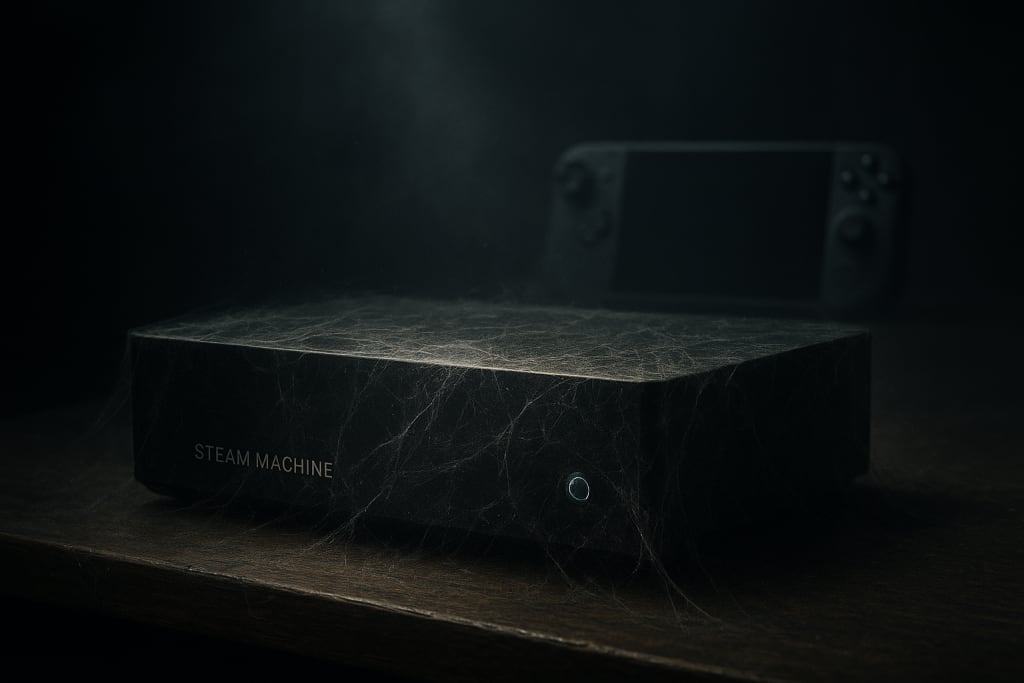
We’ve all felt that tug-of-war in our hearts, haven’t we? On one side, the powerful, customizable, but often complicated world of PC gaming. On the other, the simple, plug-and-play comfort of a console like the PlayStation or Xbox. What if you could have both? What if you could have the library of Steam in a box that fit perfectly under your TV?
That was the dream. The beautiful, ambitious, and ultimately heartbreaking dream of the Steam Machine.
This is the story of a revolution that never was—a glimpse into an alternate universe of gaming that came so close, yet feels a world away. It’s a tale of big ideas, missed opportunities, and the fascinating ghost that still haunts the gaming world today.
The Grand Vision: A PC in Console Clothing
Back in 2013, Valve, the legendary company behind Steam and classics like Half-Life, looked at the gaming landscape and saw a divide. They envisioned a future where the walled gardens of traditional consoles crumbled, replaced by an open, living room-friendly Steam PC.
The idea was genius on paper:
· The Form Factor: Multiple hardware partners would create beautiful, small-form Steam Machine boxes, also called Steam Boxes, designed for the living room.
· The OS: They would run SteamOS, a free, Linux-based operating system built for big screens and controllers.
· The Controller: The revolutionary Steam Controller, with its trackpads and high customizability, would bridge the gap between mouse-and-keyboard precision and couch-friendly comfort.
The goal was to give you the freedom of a PC with the simplicity of a console. No Windows licenses, no driver headaches—just the entire Steam library at your fingertips on the biggest screen in your house. The hype was palpable. For a moment, it felt like Valve was about to change everything.
What Went Wrong? The Cracks in the Console
When the first Steam Machine models finally started trickling out, the dream began to fray at the edges. The reality was far messier than the vision.
The biggest issues were:
· The Confusing Price Tag: There was no single Steam Machine price. Because multiple companies made them, you had a wild range. You could find a low-end model or a high-end beast, but the Steam Machine cost was often higher than a comparable traditional PC or a mainstream console. This confused consumers who were used to simple choices: PS4, Xbox One, or... a list of 15 different Steam hardware boxes?
· The Linux Problem: SteamOS was based on Linux. While Valve made huge strides with Proton (a compatibility layer), in 2015, the vast majority of games on Steam were built for Windows. Your favorite game might not work on a Steam Machine, creating an instant deal-breaker for most gamers.
· A Controller Ahead of Its Time: The Valve Steam Controller was a marvel of engineering, but it had a steep learning curve. It wasn't the pick-up-and-play experience of a DualShock or Xbox pad. Many reviewers and users never got past the initial awkwardness, leaving the Steam Machine without its intended soulmate.
The Steam Machine release date came and went with more of a whimper than a bang. The fragmented hardware, software limitations, and high Steam Machine price points were a recipe for commercial failure.
The Phoenix Rises: How the Steam Deck Learned from the Past
For years, the Steam Machine was a cautionary tale. But Valve is a company that learns from its failures. Look at the wildly successful Steam Deck, and you can see the ghost of the Steam Machine smiling back.
The Steam Deck is what the Steam Machine always wanted to be. It’s a single, recognizable piece of Steam hardware. It runs a massive portion of the Steam library seamlessly thanks to continued improvements in Proton. It’s a plug-and-play device for the couch that you can also unplug and take with you.
Valve took the hard lessons of the Steam Machine console—the confusion, the compatibility issues, the identity crisis—and applied them directly to the Steam Deck. They proved that the core idea wasn't wrong; it just needed the right execution.
The Legacy Lives On: Steam Machines in the Modern Era
So, are Steam Machines completely dead? Not exactly. Their DNA is everywhere.
· The Living Room PC: The idea of a compact Steam PC for the TV is more alive than ever. Companies like ZOTAC and MINISFORUM make tiny, powerful PCs that you can install Steam on yourself, effectively creating your own, more powerful Steam Box.
· The VR Connection: Valve’s own Valve Index and the new Steam Frame VR headset continue their push for high-end, open-platform hardware. The Steam Frame cost is high, but it's a spiritual successor to the Steam Machine philosophy: premium, open Steam hardware for enthusiasts.
· The Controller's Influence: While there's no official Steam Controller 2, its innovative design has influenced other controllers and its configurable profiles are the bedrock of the Steam Deck's control scheme.
hen you see rumors about the PS5 Pro, or experience the wireless freedom of the Meta Quest 3, remember that the Steam Machine was part of a broader push to redefine where and how we game. It was a pioneer that stumbled so that others could run.
The Steam Machine wasn't a failure; it was a first draft. A bold, flawed, and beautiful first draft of a future we are only now starting to live in. It was a testament to the power of a big idea, even when the execution falls short.
It makes you wonder, doesn't it? What other "failed" gadgets of today are just waiting for the right moment, the right technology, or the right vision to be reborn into something extraordinary?
What do you think? Could a new, revised Steam Machine ever work today, or has the Steam Deck completely claimed that throne? Share your thoughts in the comments below.
About the Creator
Waqar Khan
Passionate storyteller sharing life, travel & culture. Building smiles, insights, and real connections—one story at a time. 🌍
Every read means the world—thanks for your support! 💬🖋️
Keep reading
More stories from Waqar Khan and writers in 01 and other communities.
Samsung Galaxy S26 Ultra: Samsung’s Most Advanced Smartphone Ever Specs, Price, Camera & Release Date
The Samsung Galaxy S26 Ultra is already generating strong interest across search engines and tech communities, even though Samsung has not officially announced the device yet. As part of Samsung’s flagship Ultra lineup, the Galaxy S26 Ultra is widely expected to continue the brand’s focus on premium design, powerful performance, and advanced camera technology.
By Waqar Khan11 days ago in 01
How Homeowners in Coastal Alabama Can Plan Residential Repairs Wisely
Owning a home comes with long-term responsibilities, and maintenance is one of the most important. In coastal and southern parts of Alabama, environmental conditions such as heavy rain, humidity, and seasonal storms can gradually affect a home’s structure. Understanding how to plan residential repairs thoughtfully helps homeowners protect their property, manage costs, and avoid larger problems over time.
By M and T Contractor 3 days ago in 01
Handbags: From Everyday Utility to Cultural Symbol
Handbags are more than simple accessories. Over time, they have evolved into practical tools, fashion statements, and cultural symbols that reflect lifestyle, identity, and social change. Whether discussing everyday handbags, luxury Hermes bags, or the growing interest in replica designer bags, the subject remains deeply connected to how people organize and express their daily lives.
By charliesamuelabout 9 hours ago in 01



Comments
There are no comments for this story
Be the first to respond and start the conversation.