
The Future of Healthcare
How AI-Driven Robotic Surgery is Transforming Medicine

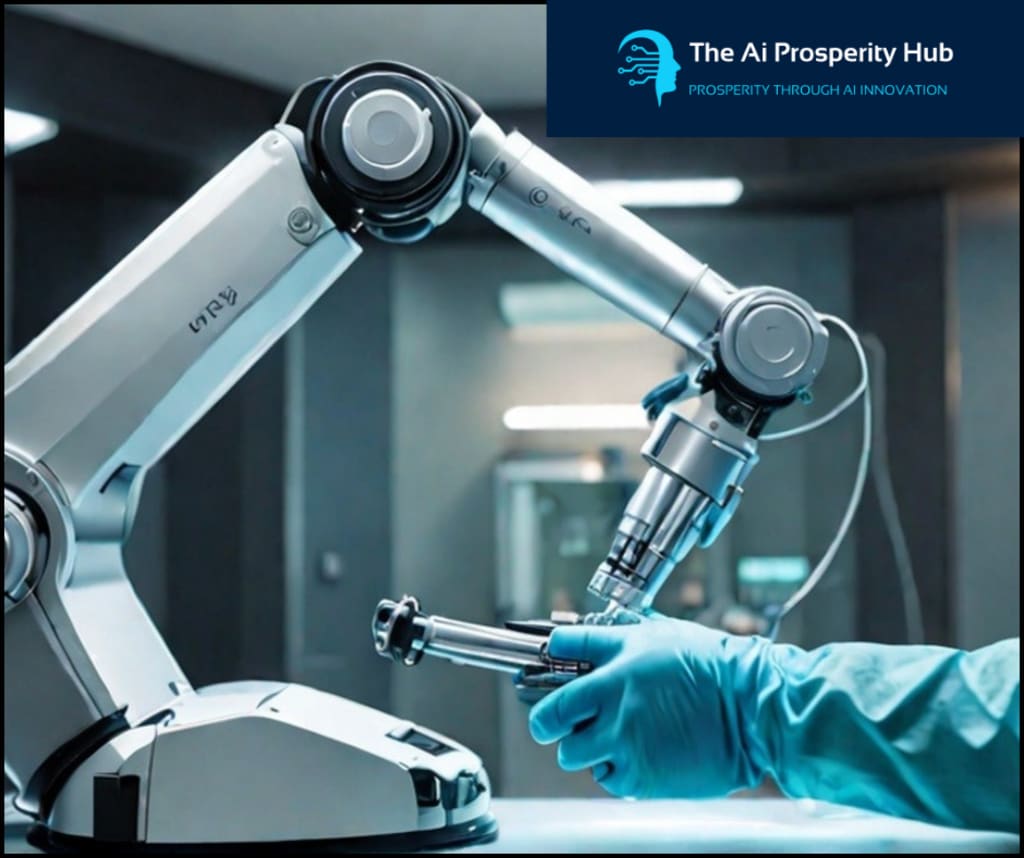
The field of surgery has always been one of the most delicate and complex areas of medicine, requiring an exceptional level of precision and expertise from surgeons. Over the years, technological advancements have continually pushed the boundaries of what is possible in the operating room. But nothing has been quite as transformative as the introduction of artificial intelligence (AI) and robotic systems into the surgical space. Today, AI-driven robotic surgery is leading a new era in healthcare, offering incredible benefits to both patients and medical professionals alike.
A Revolutionary Partnership: Surgeons and Robots
AI-driven robotic surgery combines the skills and judgment of human surgeons with the precision and consistency of advanced robotics. This collaboration has dramatically improved patient outcomes, reducing the invasiveness of procedures and shortening recovery times. One of the most well-known examples of this partnership is the da Vinci Surgical System, which has been used in over 8.5 million procedures worldwide. With the help of robotic arms, surgeons can perform minimally invasive surgeries with unprecedented control and accuracy.
While robots like the da Vinci system have been in use for years, the integration of AI is what has pushed this technology to the next level. AI algorithms are now being used to enhance surgical precision, assist in real-time decision-making, and even predict complications before they arise. These advancements are enabling more complex and delicate procedures to be performed with greater safety and efficiency.
The Power of AI in the Operating Room
One of the most promising aspects of AI in robotic surgery is its ability to process vast amounts of data in real-time. During surgery, AI can analyze patient vitals, imaging scans, and historical data to provide surgeons with critical insights that may not be immediately visible to the human eye. This not only improves the accuracy of the surgery but also helps in making real-time adjustments that can prevent complications.
In some cases, AI-driven robots are now able to perform parts of the surgery autonomously. For example, AI can assist in tasks such as suturing or making precise incisions, allowing surgeons to focus on the more complex aspects of the procedure. This type of collaboration between human intelligence and machine learning is opening the door to new possibilities in the operating room, where errors are minimized, and outcomes are optimized.
Success Stories Across Specialties
The impact of AI in robotic surgery is being felt across multiple medical specialties. In neurosurgery, where millimeter precision is critical, AI has enabled surgeons to operate on tumors or other brain conditions with greater accuracy than ever before. These systems can also use imaging data to map out surgical paths, avoiding sensitive areas of the brain and reducing the risk of damage.
In cardiac surgery, AI-powered robots are assisting with complex valve repairs and bypass surgeries, where precision is key to ensuring a successful outcome. The combination of AI and robotic tools allows surgeons to perform these operations with minimal incisions, reducing patient recovery times and hospital stays.
One of the most notable success stories in recent years was a liver transplant surgery in 2021, where AI-assisted robots played a crucial role. The procedure was completed with incredible precision, minimizing the risk of complications and setting a new standard for what is possible in transplant surgeries.
The Future of AI-Driven Surgery: Autonomous Robots?
While we are still in the early stages of AI integration into surgery, the future holds even more exciting possibilities. Autonomous surgical robots—machines that can perform entire procedures on their own—are being developed and tested. These robots, powered by AI and machine learning, have the potential to perform surgeries in remote locations, bringing life-saving medical care to underserved communities.
As machine learning algorithms continue to improve, these systems will only become more accurate and efficient. In the not-so-distant future, we could see robots performing routine surgeries without the need for human intervention, while surgeons supervise multiple procedures remotely.
Ethical Considerations and Challenges
Despite the incredible potential of AI in robotic surgery, there are important ethical and practical considerations to address. For one, the cost of implementing AI-driven robotic systems remains a barrier for many hospitals, especially in low-resource settings. There are also concerns about the potential for over-reliance on machines and the loss of human judgment in critical situations.
Ensuring equitable access to this technology is another challenge. While AI-driven robotic surgery has the potential to revolutionize healthcare, it must be made available to patients across all socioeconomic levels, not just those in well-funded hospitals. As the technology continues to develop, it will be important for policymakers and healthcare providers to ensure that these innovations benefit everyone, not just a privileged few.
A New Era in Medicine
AI-driven robotic surgery represents a major leap forward in the way medical procedures are performed. With its ability to enhance precision, reduce invasiveness, and assist in real-time decision-making, this technology is reshaping the future of healthcare. As we look ahead, the potential for fully autonomous robots and wider access to AI-driven tools promises to make surgery safer, more efficient, and more accessible to patients around the world.
While challenges remain, the future of AI-driven robotic surgery is undeniably bright. As the technology continues to evolve, it will play a critical role in improving patient outcomes and shaping the future of medicine.
About the Creator
The AI Prosperity Hub
Exploring the future of AI, technology, and innovation. The AI Prosperity Hub breaks down the latest in AI, robotics, and tech trends to keep you informed and inspired. Join us for insights that shape tomorrow’s world!
Keep reading
More stories from The AI Prosperity Hub and writers in 01 and other communities.
Grok-3: The Next Step in AI Evolution
In the rapidly evolving world of artificial intelligence, each breakthrough brings us closer to a future that seemed unimaginable just a few decades ago. The recent unveiling of Grok-3, the latest AI model developed by OpenAI, marks a significant milestone in the ongoing AI revolution. Designed to surpass its predecessors, Grok-3 offers new possibilities for industries ranging from healthcare to finance, while raising important questions about how AI will shape our future.
By The AI Prosperity Hubabout a year ago in 01
Top 10 Cryptocurrency Marketing Tactics for Explosive Token Growth in 2026
The cryptocurrency industry in 2026 has reached a stage where innovation alone is not enough to guarantee success. Every month, hundreds of blockchain projects, DeFi protocols, NFT ecosystems, and token-based platforms enter the market, yet only a few manage to capture significant attention and achieve large-scale adoption. The difference between projects that succeed and those that disappear often lies in the strength of their marketing strategy. Cryptocurrency marketing has evolved far beyond simple social media promotions and community announcements. Today’s blockchain projects operate in a highly competitive digital ecosystem where visibility, trust, and engagement play a critical role in determining long-term success. Investors and users are also becoming more informed, carefully evaluating tokenomics, partnerships, technological capabilities, and community strength before supporting a project.
By Jack santo7 days ago in 01




Comments
There are no comments for this story
Be the first to respond and start the conversation.