
The Energy–Water Nexus: Why Power Generation and Water Security Are Deeply Interconnected
Brook Lang Seattle

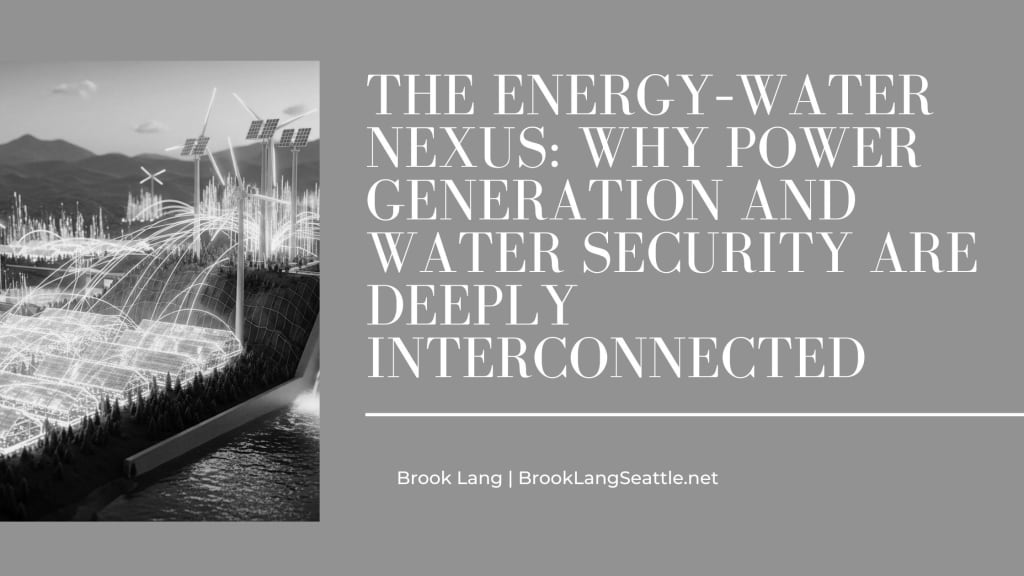
Energy and water are often discussed as separate challenges, yet they are deeply interconnected. Power generation depends heavily on water, while water systems rely on energy to operate. This interdependence, known as the energy–water nexus, is becoming increasingly critical as climate change, population growth, and urbanization place greater strain on both resources.
Recognizing and managing this connection is essential for building resilient energy systems and ensuring long-term water security.
How Energy Production Depends on Water
Most conventional power plants require large volumes of water for cooling. Coal, natural gas, and nuclear facilities withdraw water from rivers, lakes, or oceans to regulate temperatures and maintain safe operations. Even some renewable energy sources, such as hydropower and certain bioenergy systems, rely heavily on water availability.
As water scarcity intensifies in many regions, power plants face operational risks, including reduced output or temporary shutdowns during droughts or heat waves. These disruptions highlight how water constraints can directly threaten energy reliability.
The Energy Required to Deliver Water
The relationship works in the opposite direction as well. Extracting, treating, and distributing water requires significant energy. Pumps move water across long distances and elevations, while treatment facilities ensure water meets safety standards. Wastewater treatment adds another layer of energy demand.
In water-stressed regions, desalination has become a growing solution. However, desalination is highly energy-intensive, reinforcing the need for clean, efficient power sources to avoid increasing emissions.
Climate Change Intensifies the Nexus
Climate change is amplifying risks across the energy–water nexus. Rising temperatures increase electricity demand for cooling while simultaneously reducing water availability. Extreme weather events such as droughts, floods, and heat waves disrupt both power generation and water infrastructure, exposing vulnerabilities in traditional systems.
These pressures are pushing utilities and policymakers to rethink how energy and water resources are planned and managed together.
Integrated Solutions for a Resilient Future
Addressing the energy–water nexus requires integrated strategies that reduce water use in energy production and energy use in water systems. Power plants are adopting advanced cooling technologies, including dry and hybrid cooling, to minimize water withdrawals. Renewable energy sources such as wind and solar photovoltaic systems require minimal water during operation, making them particularly valuable in water-scarce regions.
On the water side, energy-efficient pumps, smart monitoring systems, and water reuse technologies reduce electricity demand. Pairing water infrastructure with renewable energy further lowers emissions and operating costs.
Policy, Planning, and Technology Alignment
Holistic planning is essential to manage the energy–water nexus effectively. Governments and utilities are increasingly using integrated resource planning models that account for both water and energy constraints. Data analytics, AI-driven forecasting, and digital twins are helping operators anticipate shortages and optimize system performance.
Policy alignment also plays a key role. Incentives for water-efficient power generation and energy-efficient water systems encourage innovation while strengthening resilience.
Why the Energy–Water Nexus Matters
Ignoring the link between energy and water can lead to unintended consequences, from power shortages to water insecurity. By addressing these systems together, cities and regions can reduce risks, lower costs, and improve sustainability.
Building Resilience Through Integration
The energy–water nexus underscores a fundamental reality: energy security and water security cannot be achieved in isolation. As climate challenges intensify, integrating energy and water planning will be essential for creating resilient, low-carbon systems that support communities and economies alike.
Understanding and managing this connection is not just good policy; it is a necessity for a sustainable future.
About the Creator
Brook Lang Seattle
Brook Lang Seattle is a Senior Level Technology Executive. To learn more about him, be sure to check out his websites!
Keep reading
More stories from Brook Lang Seattle and writers in 01 and other communities.
Retrofitting the Built Environment: How Aging Infrastructure Can Be Upgraded for a Low-Carbon Future
Cities around the world are built on aging infrastructure. From decades-old office buildings to outdated transportation systems, much of the built environment was designed long before energy efficiency and climate resilience were priorities. While new low-carbon developments are important, the greatest opportunity for emissions reduction lies in retrofitting existing infrastructure. Upgrading what already exists is often faster, more cost-effective, and far more impactful than starting from scratch.
By Brook Lang Seattleabout 8 hours ago in 01
What “Best SEO” Actually Mean for Houston Businesses?
I used to think “best” was a measurable thing. Best rankings. Best traffic growth. Best-looking reports. Then I tried to grow a business in Houston using SEO, and I learned quickly that “best” means something very different once real markets, real buyers, and real timelines get involved.
By Jane Smith4 days ago in 01
How to Integrate Technology for Increased Productivity in Your Stone Crusher Plant
Integrating modern technology into a stone crusher plant is no longer a luxury reserved for the largest operators; it is a practical pathway to significant gains in productivity, cost control, and product consistency. This process does not require a complete, overnight overhaul. A methodical, step-by-step approach allows you to implement technological solutions that deliver a clear return on investment, building a smarter and more responsive operation over time. The goal is to transition from reactive, experience-based management to a proactive, data-driven model. This guide provides a structured framework for this integration, focusing on actionable steps that enhance visibility, automate repetitive tasks, and optimize the entire material processing chain from feed to final stockpile.
By consrtuctionmachines2 days ago in 01
One Unchecked Box
"Republished" because it was the only way to add the embed for the newly recorded audio version of this story due to the Top Story badge. Plus it serves as a nice, informal announcement of the podcast's revival for another season (go subscribe!):
By Stephen A. Roddewig4 days ago in Fiction



Comments
There are no comments for this story
Be the first to respond and start the conversation.