
THE DOOMSDAY CLOCK
Everything's Countdown to Catastrophe

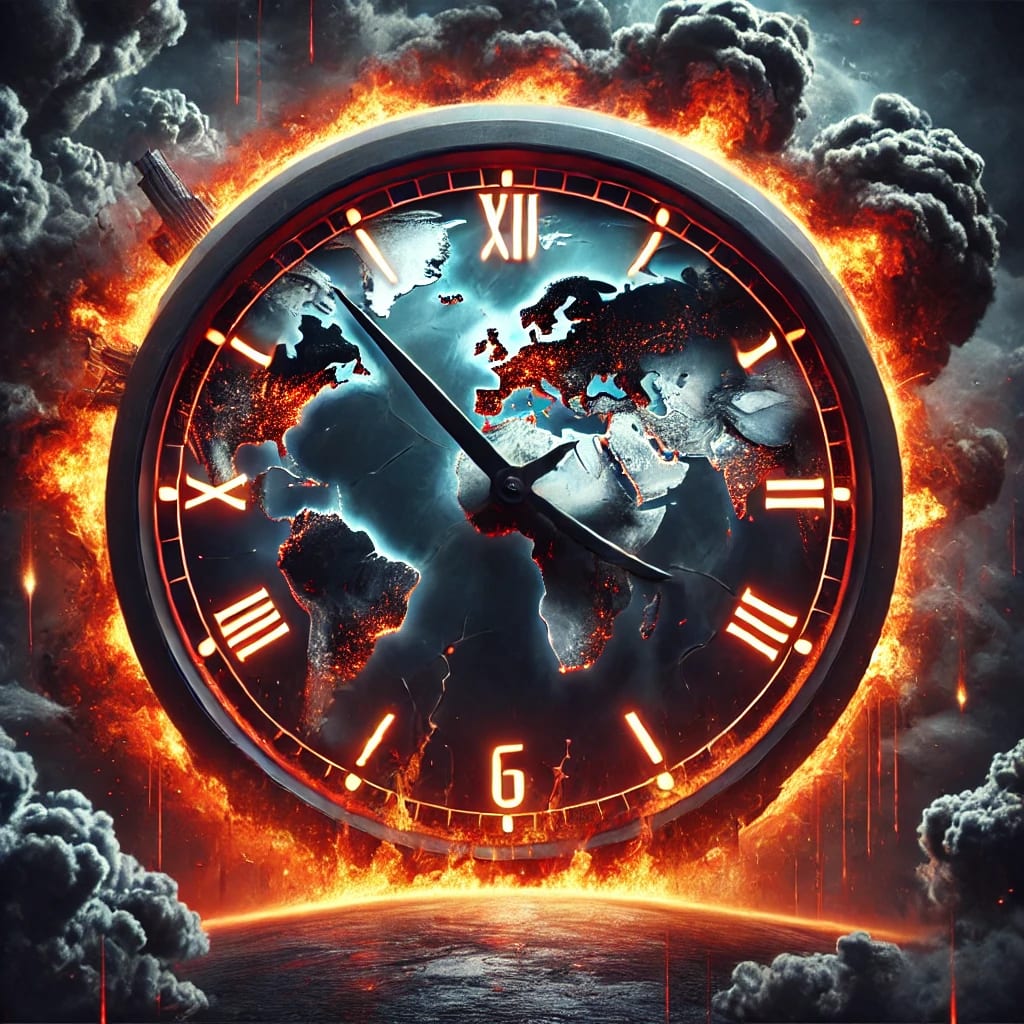
🕰️ The Doomsday Clock: Everything's Countdown to Catastrophe 🌍
Imagine a clock that doesn’t just measure time but the fate of humanity. A clock that creeps closer to midnight as global threats escalate, symbolizing how near we are to self-destruction. This is the Doomsday Clock—a haunting reminder that our choices today shape our survival tomorrow. But what exactly is it, how does it work, and why should we care? Let’s explore the chilling concept behind this symbolic countdown.
🧭 What Is the Doomsday Clock?
The Doomsday Clock is not a physical clock but a metaphorical one, representing how close humanity is to a global catastrophe. Created in 1947 by the Bulletin of the Atomic Scientists, it initially symbolized the threat of nuclear war following World War II. Over time, it has evolved to consider a broader range of existential threats, including:
Nuclear weapons proliferation 💥
Climate change 🌡️
Cyber warfare and technological advancements 💻
Biological threats and pandemics 🦠
Disinformation and erosion of democratic institutions 🗳️
The clock’s minute hand moves closer or farther from midnight (symbolizing global catastrophe) based on the severity of these threats. As of 2023, the clock stands at 90 seconds to midnight—the closest it has ever been, reflecting unprecedented dangers.
🛠️ How Does the Doomsday Clock Work?
The clock is adjusted annually by the Bulletin’s Science and Security Board in collaboration with a panel of experts, including Nobel laureates. The decision to move the clock’s hand is based on meticulous analysis of global events and scientific data.
Factors That Influence the Clock:
Nuclear Risk:
Any increase in nuclear testing or tensions among nuclear-armed states can push the clock closer to midnight.
Examples: The Cold War, North Korea’s nuclear tests, and ongoing conflicts involving nuclear powers.
Climate Change:
Rising global temperatures, extreme weather patterns, and insufficient action to reduce carbon emissions are major factors.
The lack of significant progress in international climate agreements is also concerning.
Technological Advancements:
The misuse of emerging technologies like artificial intelligence or cyber weapons poses new risks.
Growing concerns over AI-driven warfare and cyberattacks on critical infrastructure are influential.
Biological Threats:
Pandemics like COVID-19 highlight the lack of preparedness and coordination among nations.
Emerging threats like synthetic biology could be weaponized.
Political Instability and Disinformation:
Attacks on democracy, spread of disinformation, and weakening of global cooperation erode societal stability.
🌐 A Timeline of the Clock’s Movement
Since its inception, the Doomsday Clock has moved back and forth depending on the global climate:
1947 (7 minutes to midnight): Initial setting after the dawn of the nuclear age.
1991 (17 minutes to midnight): The furthest from midnight, following the end of the Cold War.
2007 (5 minutes to midnight): Introduction of climate change as a factor.
2020 (100 seconds to midnight): Growing threats from nuclear tensions and environmental degradation.
2023 (90 seconds to midnight): Increased risk from nuclear conflict (e.g., Russia-Ukraine war), climate inaction, and disruptive technologies.
🚨 Why Should We Care?
The Doomsday Clock is more than just a metaphor; it’s a call to action. It reminds us that humanity's fate is in our hands, and our collective decisions impact how close we inch toward catastrophe. It challenges leaders and citizens alike to address global issues with urgency.
What Can Be Done?
Strengthen Global Cooperation:
Diplomatic efforts to reduce nuclear arsenals and ease geopolitical tensions.
Address Climate Change:
Implement policies to cut carbon emissions and promote renewable energy.
Promote Ethical Technology:
Establish guidelines for safe AI and cybersecurity practices.
Boost Public Awareness:
Educate people about existential risks and encourage community resilience.
🌟 Hope Amidst the Ticking Clock
While the Doomsday Clock’s ominous ticking might seem discouraging, it serves a vital purpose—raising awareness and promoting change. It pushes us to confront uncomfortable truths about our world and challenges us to make responsible choices.
The clock’s hands are not destined to move only forward. With collective effort and a commitment to global solidarity, we can turn back time—away from midnight and toward a more secure and sustainable future.
⏳ The clock is ticking—what will we do to save our future?
About the Creator
Yeasin Arafat
🌟 Storyteller & Writer ✍️ | Sharing tales of growth, motivation, and mental health 💪🧠| Crafting fiction, poetry, and thought-provoking insights 🌌| Exploring tech trends and real-life stories and more📺✨
Keep reading
More stories from Yeasin Arafat and writers in 01 and other communities.
MAJOR SPACE EVENT IN 2025
2025 Space Events: A Year of Wonder Beyond Earth The year 2025 is shaping up to be an extraordinary time for those who love the night sky and the mysteries of outer space. From rare alignments of planets to powerful meteor showers, dazzling eclipses, and exciting space missions, the cosmos has a full calendar ready to amaze stargazers and scientists alike.
By Yeasin Arafat11 months ago in 01
Ranga Raya Eragamreddy Unveils Multi-Agent AI Framework Transforming EV Fleet Energy Management
November 2025. A new milestone in electric vehicle (EV) energy intelligence has been set by Ranga Raya Reddy Eragamreddy, Senior Software Engineer at General Motors, whose latest research introduces a multi-agent reinforcement learning (MARL) framework capable of coordinating large-scale EV fleets with unprecedented efficiency and grid awareness.
By Oliver Jones Jr.3 days ago in 01



Comments (1)
This clock is great! Wonderful work’ !