
The Day the Pacific Held Its Breath: A Near-Miss Tsunami Disaster
How global alerts, local evacuations, and coordinated systems helped avoid catastrophe after a massive 8.8 magnitude earthquake rocked the Pacific.


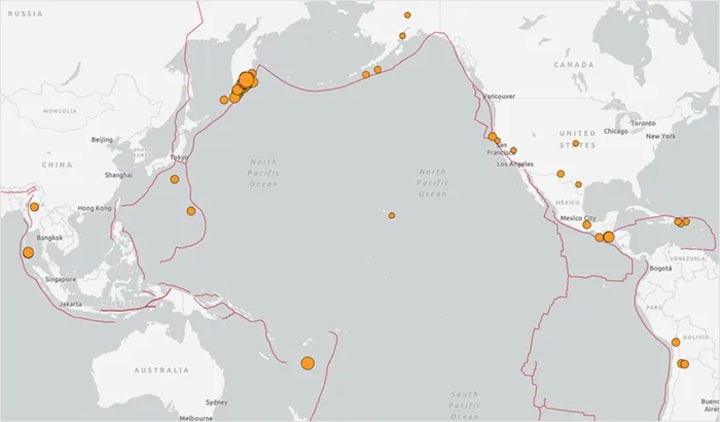
For many in the Pacific, the memory of past tsunamis looms large. But this time, something different happened.
The Earthquake That Triggered Global Concern
According to the US Geological Survey, the quake had a shallow depth of just 18 km — shallow enough to displace ocean water and trigger a potential tsunami. Images soon surfaced showing partially submerged ports in Russia’s Sakhalin Region, particularly in Severo-Kurilsk. While the structural damage was limited, the threat loomed large across the ocean.

Early Responses: Sirens, Alerts, and Calm Movement
In Hawaii, tourists and locals alike found themselves facing an advisory. Farrell Monaco, a visitor from California, shared with BBC that despite initial nonchalance, the situation quickly turned serious. “We hit traffic… then ran out of gas,” she said. Yet she also emphasized the calmness around her: “It was nerve-wracking waiting — but no panic.”
This calmness can be credited to Hawaii’s efficient disaster preparedness systems. Air raid sirens and mobile alerts were quickly issued. Evacuations occurred orderly, proving the system’s efficiency even in moments of potential crisis.
Japan’s Meticulous Precision
In Japan, nearly two million people were evacuated. Trains were halted, some flights canceled, and people ascended rooftops in regions like Hokkaido. The Japan Meteorological Agency warned of waves possibly reaching 3 meters, particularly dangerous if coinciding with high tide.
The Fukushima nuclear plant — a name that stirs deep concern globally — was within the warning zone. But swift actions were taken, with workers evacuated and officials confirming no abnormalities.

Tsunami Alert Levels Explained
To many, the differences between warnings and advisories might be unclear. The US National Weather Service offers this guide:
- Warning: Dangerous coastal flooding is likely. Evacuate immediately.
- Advisory: Strong waves possible. Avoid the water.
- Watch: A tsunami is possible. Be alert.
- Information Statement: No current threat detected.
This clarity helped prevent chaos in places like California, Oregon, and even British Columbia, where advisories — not full warnings — were issued.
Localized Impacts: California, Colombia, and French Polynesia
In northern California’s Crescent City and Arena Cove, waves surpassed 1 meter. In Port San Luis, reports described a “rapid and damaging surge.” Meanwhile, waves in French Polynesia prompted evacuations in the Marquesas Islands, where authorities expected waves between 1.1 and 2.2 meters.
Across the Pacific Rim, nations like Colombia and Indonesia ordered evacuations. In Indonesia’s Papua region, people left beaches and climbed to higher ground, while local journalists reported scenes of urgency yet discipline.

What Causes a Tsunami?
At the root lies plate tectonics. Earth’s outer layer is like a cracked puzzle. These tectonic plates shift slowly — just centimeters a year. But when they get “stuck,” stress builds until it violently releases in an earthquake. Underwater quakes can displace vast volumes of ocean water, sending waves out in all directions.
The Calm After the Surge
Fortunately, the catastrophic waves feared never materialized. Hawaii downgraded its warning to an advisory. Guam, CNMI, and other islands saw their alerts canceled. The Philippines reported no significant sea-level disturbances.
Yet this event served as a crucial test of global disaster readiness. And in many regions — from Japan to Canada, the US to Indonesia — people proved up to the challenge.
Real Voices from the Coastlines
In California, beachgoers like George Mejia shrugged off the danger initially — until sirens and updates drove them off the sand. In Hawaii, some tourists were left behind by cruise ships as they scrambled back too late. In Colombia, evacuation orders were swiftly obeyed, particularly in Chocó and Nariño.
Even as warnings fade, these stories paint a picture of a world more connected and better prepared.
Conclusion: Prepared, Alert, and Lucky
This was not a disaster averted by chance alone. Global coordination, clear alert systems, and community awareness played a significant role.
Yes, the waves that could have swallowed coastlines never came. But that doesn’t mean the threat wasn’t real. And if anything, this event should remind us of the fine line between nature’s fury and our readiness.
🔗 UTM Link (To place naturally at the end of the article):
For a deeper look into the tsunami alert timeline and real-time visuals, check out the original coverage on Bored Panda:👉 https://www.boredpanda.com/tsunami-warning-earthquake-pacific-2025/?utm_campaign=faiz1477&utm_source=vocal&utm_medium=ref
About the Creator
Faiz Bashir
Passionate writer sharing engaging stories on art, culture, science & trends. I craft content that informs, inspires & sparks curiosity. Let’s explore the world—one story at a time! 🚀📖 #Storyteller #ContentCreator
Keep reading
More stories from Faiz Bashir and writers in 01 and other communities.
Defiance Amid Flames: Governor Shapiro Faces Arson Attack with Unyielding Spirit
On April 13, 2025, the heart of Harrisburg was shaken by a brazen act of violence. As the city slept, flames erupted at the Pennsylvania Governor’s Residence, a historic mansion along the Susquehanna River. Governor Josh Shapiro, his wife Lori, their four children, and visiting family members were forced to flee their home at 2 a.m., roused by state troopers banging on their doors. The fire, now confirmed as arson, left the mansion’s south wing in ruins, but Shapiro emerged unbroken, vowing to lead stronger than ever. A suspect, 38-year-old Cody Balmer, is in custody, facing charges that could redefine this chilling moment in Pennsylvania’s history.
By Faiz Bashir9 months ago in 01
Man’s Polo Shirts and the Everyday Evolution of the Golf Shirt
Clothing trends often reveal more about how people live than about fleeting fashion movements. Few garments illustrate this better than the polo shirt, which has quietly maintained its place in everyday wardrobes for decades. Neither overly formal nor entirely casual, it occupies a practical middle ground that continues to feel relevant across different settings and generations. This balance has helped the style adapt to changing lifestyles, work environments, and social expectations. In this evolution, Man's Golf Polo Shirts stand out as an example of how a garment designed for function can naturally transition into everyday use without losing its original purpose.
By charliesamuel4 days ago in 01


Comments
There are no comments for this story
Be the first to respond and start the conversation.