
The Comparison: AI vs Human Creativity
Know AI and Human Creativity

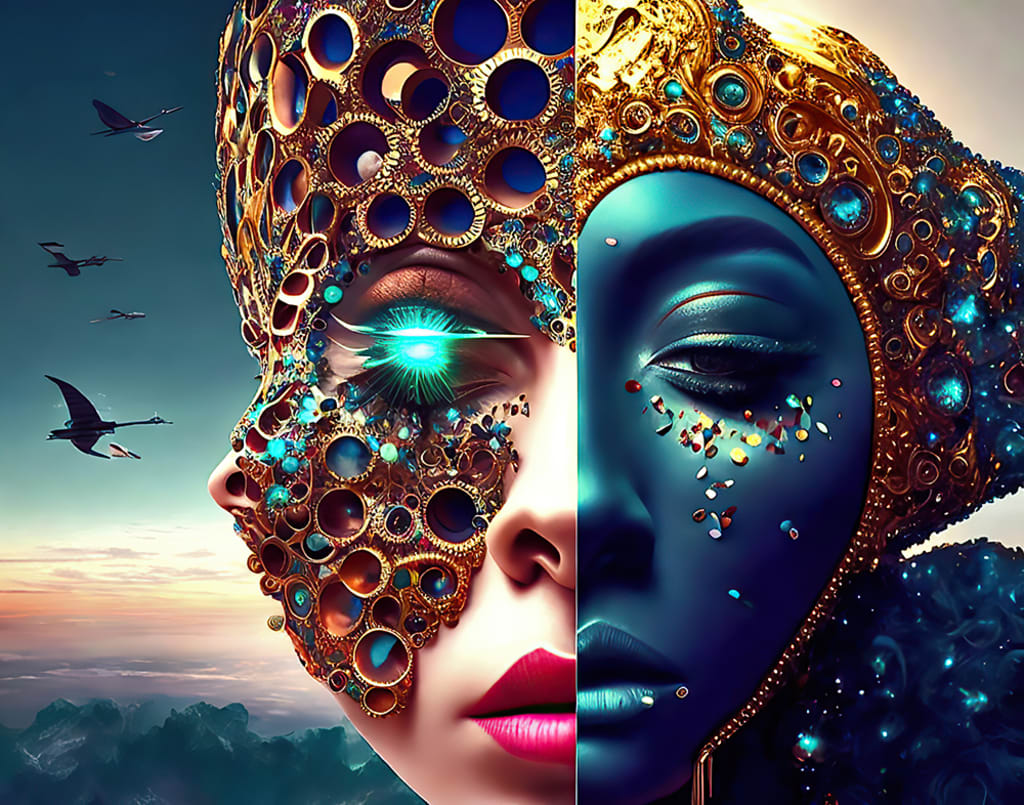
Artificial Intelligence (AI) has made significant strides in recent years, particularly in generating images that rival human-created artwork. This technological advancement has sparked debates and discussions surrounding the capability of AI to match or even surpass human creativity. While AI-generated images possess impressive technical prowess and demonstrate the ability to imitate certain artistic styles, it is essential to explore the fundamental aspects of human creativity that set it apart from AI-generated creations.
Understanding Human Creativity
Human creativity is a complex phenomenon rooted in our unique cognitive abilities, experiences, and emotions. It encompasses the capacity to imagine novel concepts, ideas, and forms of expression. Human creativity draws inspiration from various sources, such as personal experiences, cultural influences, and intellectual pursuits, resulting in artwork that reflects individual perspectives and subjective interpretations of the world.
Artistic creativity often involves a combination of technical skills and imaginative thinking. Artists incorporate their understanding of aesthetics, composition, colour theory, and other artistic principles to bring their vision to life. Human creators possess the ability to infuse their works with personal emotions, narratives, and intentions, allowing for deeper connections and resonances with viewers.
The Rise of AI-Generated Images
AI-generated images are created by algorithms trained on vast datasets of existing artwork. These algorithms learn to analyze patterns, textures, and styles, enabling them to generate images that mimic various artistic genres. AI models can recreate the styles of famous artists, simulate brushstrokes, and produce visually stunning compositions.
Proponents argue that AI-generated images have the potential to match human creativity by replicating intricate details, mastering multiple artistic styles, and generating novel compositions that captivate viewers. These creations can evoke emotions, challenge traditional artistic norms, and even spark new artistic movements.
The Role of AI in Enhancing Human Creativity
While AI-generated images may impress with their technical prowess, they are fundamentally limited in terms of genuine creativity. AI lacks the inherent human qualities that drive artistic expression, such as subjective interpretation, emotional depth, and a nuanced understanding of the human experience.
Rather than replacing human creativity, AI has the potential to enhance and augment it. AI tools can serve as catalysts for inspiration, offering new perspectives, generating alternative ideas, and assisting artists in realizing their vision. AI-generated images can be used as starting points for human artists, who can then infuse them with their unique perspectives, emotions, and creative intentions.
The Reasons AI could not overlap with Human Creativity
Emotional depth: AI cannot imbue artwork with genuine human emotions, limiting its ability to evoke deep emotional responses from viewers.
Subjective interpretation: AI cannot provide subjective interpretations of the world, which is a key aspect of human creativity.
Personal experiences: Human creativity draws inspiration from personal experiences, memories, and relationships, allowing for a unique perspective that AI cannot replicate.
Intuition and instinct: Human artists rely on their intuition and instinct to make creative choices, something that AI algorithms cannot replicate.
Cultural influences: Human creativity is influenced by cultural backgrounds, traditions, and social contexts, giving rise to diverse and meaningful artistic expressions.
Originality: AI-generated images are based on existing datasets and are limited in their ability to create truly original and groundbreaking artwork.
Serendipity: Human creativity often thrives on unexpected discoveries and chance encounters, something that AI algorithms cannot replicate.
Narrative storytelling: Human artists excel at telling stories through their artwork, creating narratives that resonate with viewers on a deeper level.
Symbolism and metaphor: Human artists can employ symbolism and metaphor to convey complex ideas and emotions, adding layers of meaning to their work.
Social commentary: Human artists often use their work to comment on societal issues and provoke critical thinking, a level of depth that AI-generated images struggle to achieve.
Imperfections: Human-created artwork embraces imperfections, which can add character, depth, and authenticity. AI-generated images tend to be flawlessly perfect.
Empathy: Human artists can empathize with others and create artwork that connects with people on an emotional level, something that AI lacks.
Evolution of style: Human creativity allows for the evolution and progression of artistic styles over time, while AI-generated images tend to mimic existing styles without contributing to their development.
Experimentation: Human artists push the boundaries of their chosen medium, constantly experimenting with new techniques, materials, and concepts, resulting in novel and unique artwork.
Artistic intuition: AI lacks the intuitive sense of aesthetics and artistic judgment that human artists possess.
Cultural context: Human creativity is deeply rooted in cultural context, whereas AI-generated images may lack cultural understanding and significance.
Subconscious influences: Human artists often tap into their subconscious minds to create artwork, drawing upon dreams, instincts, and hidden desires.
Physicality: The physical process of creating art, such as painting, sculpting, or drawing, involves a tactile and sensory experience that AI-generated images cannot replicate.
Unconscious decision-making: Human artists make creative decisions at an unconscious level, driven by intuition and instincts, which contributes to the depth and complexity of their artwork.
Evolution of thought: Human creativity reflects the evolution of human thought, influenced by philosophy, science, psychology, and other intellectual disciplines.
Interpretation of meaning: Human artists can leave room for interpretation in their artwork, inviting viewers to engage with the piece and find their meaning. AI-generated images often lack this ambiguity.
Human connection: Human creativity fosters a sense of connection between the artist and the audience, creating a shared experience that AI-generated images struggle to replicate.
Unconventional approaches: Human artists often explore unconventional and boundary-pushing approaches to art, challenging established norms and expanding the definition of creativity.
Transcendence of medium: Human artists can transcend the limitations of their chosen medium, incorporating multiple forms of expression to create innovative and multidimensional artwork.
Ethics and moral considerations: Human artists can use their creativity to address ethical and moral dilemmas, raising awareness and stimulating critical thinking, something AI-generated images cannot effectively accomplish.
Evolutionary adaptation: Human creativity has evolved over millennia, adapting to changing societal, technological, and environmental contexts, while AI-generated images are limited to their training data.
Intentionality: Human artists create with intention, infusing their artwork with personal meaning and purpose, something that AI lacks.
Contextual understanding: Human artists can consider the broader context of their work, incorporating historical, political, or cultural references that resonate with viewers.
Authenticity: Human-created artwork possesses a sense of authenticity and genuineness that AI-generated images struggle to replicate.
Artistic expression as a form of therapy: Human artists often use their creativity as a means of self-expression and therapy, channelling their emotions and experiences into their artwork for personal growth and healing.
Spiritual and philosophical exploration: Human artists explore profound questions about existence, spirituality, and the human condition through their artwork, fostering introspection and contemplation.
Collaborative creativity: Human creativity thrives in collaborative environments, where ideas are exchanged, challenged, and built upon. AI-generated images lack the collaborative element.
Adaptive problem-solving: Human artists employ creative problem-solving skills, adapting their approach to overcome challenges and limitations, resulting in innovative solutions.
Sensory perception: Human artists engage multiple senses in the creation and appreciation of artwork, offering a holistic experience that AI-generated images cannot replicate.
Evolutionary innovation: Human creativity has been a driving force behind numerous scientific, technological, and societal advancements, shaping the course of human history in ways AI-generated images cannot achieve.
Contextual interpretation: Human viewers can interpret artwork within their own unique personal, social, and cultural contexts, adding layers of meaning and complexity that AI cannot comprehend.
Synthesis of diverse influences: Human artists can synthesize diverse influences from various disciplines, such as literature, music, and science, into their artwork, resulting in rich and multidimensional creations.
Autobiographical exploration: Human artists often use their creativity to explore and express their own personal stories, identities, and journeys, creating a deep connection with viewers.
Artistic evolution through self-critique: Human artists constantly evaluate and critique their work, allowing for growth, improvement, and the development of their artistic style, which AI lacks.
Contextual adaptation: Human artists adapt their creative output to suit specific contexts, addressing the needs, values, and aspirations of their intended audience, something AI-generated images cannot achieve.
Spontaneity and improvisation: Human artists can embrace spontaneity and improvisation during the creative process, leading to unexpected and inspired results that AI algorithms cannot replicate.
Philosophical and ethical dilemmas: Human creativity often grapples with complex philosophical and ethical dilemmas, inviting viewers to engage in thought-provoking discussions and reflections that AI-generated images struggle to evoke.
Expressing the human condition: Human artists have a unique ability to capture and convey the complexities and nuances of the human condition, including emotions, relationships, and existential questions.
Intentional ambiguity: Human artists can deliberately introduce ambiguity into their artwork, sparking curiosity, interpretation, and ongoing engagement from viewers.
Personal growth and self-discovery: Human creativity serves as a medium for personal growth, self-discovery, and self-expression, enabling individuals to explore and communicate their innermost thoughts and emotions.
Transcendence of limitations: Human creativity has the potential to transcend physical, mental, and societal limitations, challenging preconceived notions and redefining what is possible.
Ethereal and intangible concepts: Human artists can depict abstract, ethereal, and intangible concepts, such as love, time, or consciousness, through their artistic interpretations, something AI-generated images struggle to capture.
Cultural preservation and heritage: Human creativity plays a vital role in preserving and celebrating cultural heritage, traditions, and identities, fostering a sense of continuity and identity that AI-generated images lack.
Ethical decision-making in art: Human artists often face ethical dilemmas in their creative process, such as balancing artistic freedom with societal responsibility, and making choices that AI algorithms cannot navigate.
Contextual responsiveness: Human artists can create artwork that is responsive to specific contexts, such as social, political, or environmental issues, addressing them in a meaningful and thought-provoking manner that AI-generated images cannot achieve.
Cultural evolution: Human creativity is an integral part of cultural evolution, shaping and reflecting the changing values, beliefs, and aspirations of societies over time, which AI-generated images cannot contribute to.
Subtle nuances: Human artists can capture and express subtle nuances, gestures, and expressions in their artwork, resulting in a deeper and more nuanced portrayal of the subject matter than AI-generated images.
Spiritual and transcendent experiences: Human artists can channel spiritual and transcendent experiences into their artwork, exploring the mystical and intangible aspects of human existence in ways that AI algorithms cannot comprehend.
Conceptual complexity: Human-created artwork often explores complex concepts and intellectual ideas, pushing the boundaries of understanding and challenging viewers’ perspectives in a way that AI-generated images struggle to achieve.
Unique artistic voice: Each human artist possesses a unique artistic voice, reflecting their individuality, experiences, and perspectives, which contributes to the diversity and richness of the artistic landscape in ways AI-generated images cannot replicate.
Intuitive understanding of aesthetics: Human artists have an intuitive understanding of aesthetics, enabling them to make creative choices that result in visually compelling and harmonious artwork that resonates with viewers on a profound level.
Cultural synthesis: Human artists can synthesize diverse cultural influences, merging different artistic traditions, styles, and techniques into a cohesive and innovative body of work that represents the richness and complexity of human creativity.
Historical and contextual relevance: Human-created artwork often holds historical and contextual significance, reflecting specific moments in time, societal changes, and cultural shifts, providing valuable insights into the human experience that AI-generated images lack.
Engaging the senses: Human-created artwork can engage multiple senses, evoking tactile, auditory, and olfactory experiences, enhancing the immersive and multi-dimensional nature of the artistic encounter, which AI-generated images cannot replicate.
Spatial awareness: Human artists have an innate understanding of spatial relationships, enabling them to create artwork that plays with perspective, depth, and spatial composition, resulting in visually captivating and dynamic pieces that AI-generated images struggle to achieve.
Synthesis of contradictory elements: Human artists can merge contradictory elements in their artwork, such as chaos and order, darkness and light, creating tension and intrigue that sparks deep contemplation and emotional responses, something AI-generated images cannot effectively emulate.
Cultural preservation through reinterpretation: Human artists can reinterpret and reinvent cultural symbols, motifs, and traditions, breathing new life into them while preserving their cultural significance, a process that AI-generated images cannot authentically contribute to.
Art as a catalyst for social change: Human artists have a long history of using their creativity as a means to inspire social change, challenge oppressive systems, and advocate for justice and equality, a dimension that AI-generated images cannot fully embrace.
Intellectual and philosophical depth: Human-created artwork often delves into intellectual and philosophical inquiries, posing questions about the nature of reality, consciousness, and existence, stimulating intellectual discourse that AI-generated images cannot generate.
Evolution of artistic movements: Human creativity is instrumental in the evolution of artistic movements, as artists build upon and respond to the work of their predecessors, contributing to the dynamic and progressive nature of the art world, which AI-generated images cannot actively participate in.
Interpretive ambiguity: Human-created artwork can intentionally incorporate ambiguity and open-mindedness, allowing viewers to engage in interpretation, exploration, and personal reflection, fostering a deeper connection that AI-generated images struggle to evoke.
Non-visual dimensions of art: Human artists can explore non-visual dimensions of art, such as performance art, installations, or multimedia experiences, incorporating auditory, kinesthetic, and interactive elements that go beyond the scope of AI-generated images.
Cultural identity and diversity: Human artists express and celebrate cultural identities and diversity through their artwork, preserving and showcasing the richness and uniqueness of different cultural traditions and perspectives, which AI-generated images cannot authentically represent.
Time and labour invested: Human-created artwork often involves significant time, effort, and labour invested in the creative process, resulting in a sense of dedication, craftsmanship, and personal connection that AI-generated images cannot replicate.
Collaborative energy: Human creativity thrives in collaborative environments, where artists inspire and challenge each other, sparking new ideas and innovative approaches that surpass the capabilities of individual AI algorithms.
Unconscious symbolism: Human artists can tap into the realm of the unconscious mind, using symbolism and archetypes to communicate universal themes and tap into the collective human experience, something AI-generated images lack.
Art as a form of self-expression: Human artists use art as a means of self-expression, conveying their emotions, thoughts, and experiences in ways that are deeply personal and introspective, enabling viewers to connect with the artist’s humanity on a profound level.
Adaptive exploration of mediums: Human artists constantly explore and adapt different artistic mediums, pushing the boundaries of what is possible, and experimenting with new materials, techniques, and technologies, resulting in innovative and groundbreaking artwork that AI-generated images cannot actively contribute to.
Intentional imperfections: Human artists can purposefully introduce imperfections into their artwork, recognizing that these imperfections contribute to the character, authenticity, and emotional impact of the piece, an element that AI-generated images often lack.
Artistic expression as cultural critique: Human artists can use their creativity as a means of cultural critique, questioning societal norms, challenging power structures, and initiating important dialogues, something that AI-generated images struggle to achieve.
Spatial and temporal context: Human artists consider the spatial and temporal context in which their artwork is displayed, taking into account the physical environment, lighting, and audience engagement, creating a holistic and immersive artistic experience that AI-generated images cannot replicate.
Emotional intelligence: Human artists possess emotional intelligence, allowing them to infuse their artwork with nuanced emotional subtleties, creating connections and resonating with viewers on an emotional level that AI-generated images find challenging to replicate.
Intellectual property and originality: Human artists assert ownership and copyright over their original artwork, protecting their creative output from plagiarism and unauthorized reproduction, a concept that AI-generated images cannot fully grasp.
Artistic intent and purpose: Human artists create with intent and purpose, driven by their unique artistic visions and intentions, which allows for the creation of meaningful, thought-provoking, and purposeful artwork that AI-generated images lack.
Engagement with the human body: Human artists can explore the human body and its expressions, capturing the nuances of physicality, movement, and gesture, creating artwork that resonates with our embodied experiences in ways that AI-generated images struggle to capture.
Legacy and artistic lineage: Human artists contribute to a rich artistic lineage, building upon the work of previous generations, leaving a legacy that inspires future artists, and enriching the collective artistic heritage, a continuum that AI-generated images cannot actively participate.
Emotional catharsis: Human-created artwork can provide a cathartic release for both the artist and the audience, serving as a vehicle for processing and expressing complex emotions, healing, and personal growth, which AI-generated images cannot directly facilitate.
Adaptive learning and growth: Human artists engage in adaptive learning and growth, continually expanding their knowledge, refining their skills, and challenging themselves, resulting in artistic development and evolution that surpasses the capabilities of AI-generated images.
Social and cultural symbolism: Human artists can incorporate social and cultural symbolism into their artwork, reflecting the values, struggles, and aspirations of communities, and sparking conversations and reflections that AI-generated images find challenging to elicit.
Non-linear creative process: Human artists often engage in a non-linear creative process, embracing exploration, experimentation, and the unexpected, allowing for serendipitous discoveries and artistic breakthroughs that AI-generated images cannot replicate.
Artistic mentorship and apprenticeship: Human artists pass down their knowledge, skills, and artistic traditions through mentorship and apprenticeship, fostering a lineage of artistic wisdom, guidance, and inspiration that AI-generated images cannot actively contribute to.
Art as a means of cultural and historical documentation: Human artists have historically played a crucial role in documenting and preserving cultural and historical events, social movements, and significant moments in time, capturing the essence and significance of these events in ways AI-generated images cannot authentically achieve.
Aesthetics of impermanence: Human-created artwork can embrace the aesthetics of impermanence, exploring themes of transience, decay, and ephemerality, reminding us of the fleeting nature of life and beauty, a dimension that AI-generated images cannot fully capture.
Adaptability to individual tastes and preferences: Human artists can tailor their artwork to individual tastes, preferences, and commission requests, creating customized and personalized pieces that resonate with the unique sensibilities and desires of the audience, a level of adaptability that AI-generated images struggle to achieve.
Sensitivity to cultural sensitivities and taboos: Human artists possess cultural sensitivity, understanding and respecting the taboos, norms, and boundaries of different cultures, ensuring that their artwork is contextually appropriate and respectful, something that AI-generated images may inadvertently overlook.
The serendipity of mistakes: Human artists can embrace and learn from their mistakes, recognizing the serendipitous opportunities that arise from unexpected errors or accidents, incorporating them into the creative process and transforming them into unique and innovative artistic elements that AI-generated images cannot inherently generate.
Artistic evolution as a reflection of personal growth: Human artists’ creative evolution reflects their personal growth and development as individuals, embodying the lessons learned, the experiences gained, and the transformative journey that contributes to the depth and authenticity of their artwork, an aspect that AI-generated images cannot genuinely embody.
Cultural significance of artistic process: Human artists’ creative process itself holds cultural significance, embodying rituals, traditions, and historical practices that contribute to the cultural identity and heritage of a community, a dimension that AI-generated images cannot actively contribute to.
Spatial and contextual integration: Human artists can create artwork that is integrated into the physical and architectural space, complementing and enhancing the environment, creating site-specific installations and murals that engage and interact with the surroundings, a level of integration that AI-generated images cannot inherently achieve.
Engagement with the unconscious and dreamscapes: Human artists can tap into the unconscious mind, exploring dreamscapes, and visions, accessing realms of the imagination and symbolism that are deeply rooted in the human psyche, resulting in artwork that evokes mystery, introspection, and wonder, a dimension that AI-generated images struggle to authentically capture.
Art as a catalyst for empathy and compassion: Human-created artwork can foster empathy and compassion by illuminating the human experience, exposing social injustices, and inviting viewers to connect emotionally with the struggles and triumphs of others, a transformative power that AI-generated images cannot fully embody.
Materiality and craftsmanship: Human artists engage with the materiality of their chosen mediums, honing their craftsmanship and technical skills to manipulate and transform materials into works of art, resulting in a tangible and tactile quality that AI-generated images cannot inherently possess.
Engaging with the intangible aspects of existence: Human artists can delve into the intangible aspects of existence, exploring themes such as love, hope, loss, and spirituality, navigating the intricacies and depths of human emotions and experiences in ways that AI-generated images struggle to genuinely convey.
Art as a medium for cultural and political commentary: Human artists often use their creativity as a platform for cultural and political commentary, addressing pressing issues, challenging social norms, and advocating for change, initiating critical dialogues that AI-generated images cannot actively participate in.
Fusion of art and life: Human artists can blur the boundaries between art and life, infusing everyday experiences, objects, and interactions with artistic intent, creating immersive and transformative encounters that transcend the confines of the traditional art space, a dimension that AI-generated images cannot inherently embody.
The evolutionary purpose of creativity: Human creativity serves an evolutionary purpose, enabling adaptation, problem-solving, and innovation, fostering resilience, and growth as a species, a fundamental aspect of human nature that AI-generated images cannot intrinsically comprehend.
The Reasons AI could match Human Creativity
Infinite possibilities: AI-generated images have the potential to explore an infinite range of possibilities and combinations, allowing for the creation of unique and unconventional artwork.
Efficiency: AI algorithms can generate images quickly and efficiently, enabling artists to experiment and iterate more rapidly than traditional methods.
Replicating artistic styles: AI can analyze and replicate various artistic styles, allowing artists to create works inspired by different artists, movements, or historical periods.
Enhanced precision: AI algorithms can create highly precise and detailed images, capturing intricate patterns, textures, and fine details with accuracy.
Exploring new aesthetics: AI-generated images can push the boundaries of traditional aesthetics, offering new and innovative visual experiences.
Data-driven creativity: AI algorithms can analyze vast amounts of data and learn from patterns, enabling the generation of creative and visually appealing images based on this knowledge.
Collaborative creativity: Artists can collaborate with AI algorithms, combining their creative inputs with the computational power of AI to produce collaborative artwork.
Continuity of artistic ideas: AI can continue the artistic ideas of human artists even after their passing, generating new artwork that stays true to their style and vision.
Handling complex computations: AI algorithms excel at handling complex computations, enabling the creation of intricate and mathematically precise artwork that may be challenging for humans to achieve.
Enhanced realism: AI can generate images that closely resemble reality, mimicking natural textures, lighting, and forms with remarkable accuracy.
Endless sources of inspiration: AI can analyze vast collections of existing artwork and generate new images inspired by this diverse range of artistic sources, providing artists with endless inspiration.
Rapid prototyping: AI-generated images can serve as quick prototypes or visual drafts, helping artists visualize their ideas before committing to final artwork.
Accessibility: AI algorithms can democratize art creation by providing accessible tools and platforms for individuals who may not have traditional artistic skills or training.
Learning from feedback: AI algorithms can learn from feedback and adapt, improving their ability to generate images that align with human preferences and aesthetics.
Personalization: AI-generated images can be personalized to suit individual preferences, allowing viewers to interact with and customize the artwork based on their tastes.
Scalability: AI algorithms can generate images at different scales, from small illustrations to large-scale murals, facilitating the creation of artwork for various mediums and applications.
Experimental exploration: AI-generated images can facilitate artistic experimentation by suggesting alternative compositions, colour palettes, or visual elements that artists may not have considered.
Augmented creativity: Artists can use AI algorithms as tools to augment their creative process, enhancing their ability to generate ideas and explore artistic possibilities.
Unconventional combinations: AI can generate unexpected combinations of visual elements, leading to the discovery of unique and visually striking compositions.
Automated generation of variations: AI algorithms can generate variations of an image or a concept, providing artists with a broader range of options to choose from.
Enhanced imagination: AI-generated images can inspire and fuel the imagination of human artists, offering fresh perspectives and new ideas to incorporate into their creative process.
Cross-disciplinary exploration: AI-generated images can bridge the gap between different artistic disciplines, merging visual art with other fields such as music, literature, or dance, creating multi-dimensional and immersive artistic experiences.
Intuitive interfaces: AI tools can provide intuitive interfaces and user-friendly platforms that allow artists to easily interact with and manipulate generated images.
Preservation of artistic techniques: AI algorithms can preserve and document artistic techniques, allowing for the replication and study of traditional methods that may otherwise be lost over time.
Enhanced exploration of colour palettes: AI algorithms can suggest unique and harmonious colour palettes, expanding the possibilities for artistic expression and experimentation.
Novel interpretations: AI-generated images can offer novel interpretations of familiar subjects, challenging conventional perspectives and inviting viewers to see things in a new light.
Emotional impact: AI-generated images can evoke emotional responses in viewers, capturing the essence of human emotions and experiences through visual representations.
Learning from historical context: AI algorithms can analyze the historical context of art movements, enabling the generation of images that align with specific periods or styles.
Diverse perspectives: AI-generated images can incorporate diverse cultural, social, and historical perspectives, promoting inclusivity and fostering dialogue on important issues.
Dynamic and interactive elements: AI-generated images can incorporate dynamic and interactive elements, such as animation or responsive visuals, creating immersive and engaging experiences for viewers.
Adaptive storytelling: AI-generated images can contribute to adaptive storytelling, generating visuals that dynamically change based on user interactions or narrative progression.
Enhanced visualizations: AI algorithms can generate visualizations of complex data sets, making information more accessible and engaging for viewers.
Enhancing art restoration: AI algorithms can assist in the restoration of damaged or deteriorated artwork, reconstructing missing or damaged portions to preserve artistic heritage.
Harmonizing composition: AI-generated images can suggest adjustments to the composition of an artwork, enhancing its visual balance and harmony.
Algorithmic creativity: AI-generated images can be seen as a form of algorithmic creativity, offering a unique perspective on the creative process and challenging traditional notions of authorship.
Combining artistic styles: AI can blend different artistic styles or merge elements from multiple sources, creating hybrid aesthetics that reflect a fusion of artistic influences.
Real-time generation: AI algorithms can generate images in real-time, allowing for interactive installations or performances that respond to user inputs or environmental factors.
Reproducibility: AI-generated images can be reproduced with consistent quality, ensuring that multiple copies of artwork are virtually identical.
Exploring the unknown: AI-generated images can venture into unexplored artistic territories, breaking free from conventional artistic boundaries and opening new avenues for creative expression.
Enhancing conceptualization: AI-generated images can assist artists in visualizing abstract concepts or ideas that are challenging to represent using traditional means.
Removing technical limitations: AI algorithms can compensate for technical limitations or physical constraints that may hinder the execution of certain artistic visions.
Emotional resonance: AI-generated images can evoke emotional responses in viewers, tapping into shared human experiences and universal themes.
Augmented collaboration: AI can facilitate collaborative art creation by providing a common digital canvas where artists can contribute and build upon each other’s work.
Artistic diversity: AI-generated images can contribute to the diversification of artistic voices and perspectives, introducing new forms of creativity that may not have emerged otherwise.
Extending artistic boundaries: AI-generated images can challenge traditional artistic boundaries, pushing the limits of what is considered art and expanding the definition of creativity.
Personalized aesthetics: AI algorithms can learn an individual’s aesthetic preferences over time and generate images tailored to their unique taste, providing a personalized artistic experience.
Enhancing imagination: AI-generated images can act as visual prompts or stimuli, inspiring artists and sparking their imagination to create new and original artwork.
Amplifying artistic impact: AI-generated images can amplify the reach and impact of an artist’s work by enabling digital distribution, sharing, and dissemination on a global scale.
Fostering interdisciplinary collaboration: AI-generated images can foster collaboration between artists and technologists, encouraging the exploration of the intersection between art, science, and technology.
New artistic expressions: AI-generated images can introduce entirely new forms of artistic expression that push the boundaries of traditional art disciplines and redefine what is considered creative.
Exploring alternative perspectives: AI-generated images can offer alternative perspectives on familiar subjects, challenging preconceived notions and encouraging viewers to see things from a different angle.
Cross-cultural fusion: AI algorithms can combine elements from different cultures, creating artwork that celebrates diversity and promotes cross-cultural understanding.
Reimagining historical artwork: AI-generated images can reimagine and reinterpret historical artworks, breathing new life into iconic pieces and introducing contemporary elements.
Enhanced exploration of abstract concepts: AI-generated images can visually represent abstract concepts and philosophical ideas, making them more accessible and relatable to a broader audience.
Adaptive aesthetics: AI algorithms can adapt the visual style of an image based on the preferences of individual viewers, tailoring the artwork to suit their specific aesthetic sensibilities.
Generating art in unconventional mediums: AI can generate artwork for unconventional mediums such as virtual reality, augmented reality, or interactive installations, expanding the possibilities of artistic expression.
Recreating lost or damaged artwork: AI algorithms can recreate lost or damaged artwork based on historical records, preserving the cultural heritage that would otherwise be lost.
Creating personalized art experiences: AI-generated images can be combined with user inputs to create personalized and interactive art experiences, allowing viewers to actively engage with the artwork.
Hyperrealism: AI algorithms can create hyperrealistic images that blur the line between reality and art, capturing minute details and textures with astonishing precision.
Harmonizing with architectural spaces: AI-generated images can be tailored to harmonize with specific architectural spaces, complementing and enhancing the environment in which they are displayed.
Embracing randomness and unpredictability: AI algorithms can introduce randomness and unpredictability into the creative process, resulting in unexpected and surprising artistic outcomes.
Revitalizing traditional techniques: AI-generated images can revitalize traditional artistic techniques by applying them in novel ways or combining them with contemporary approaches.
Environmental consciousness: AI-generated images can promote environmental consciousness by visualizing environmental issues, raising awareness, and inspiring action.
Incorporating multi-modal elements: AI algorithms can combine visual elements with other modalities such as sound, music, or text, creating multi-sensory artistic experiences.
Assisting in concept generation: AI can assist artists in generating conceptual ideas by providing suggestions, alternative perspectives, or visual references based on their inputs.
Virtual art galleries: AI-generated images can populate virtual art galleries, providing immersive and accessible platforms for artists to showcase their work to a global audience.
Exploring the limits of imagination: AI-generated images can stretch the limits of human imagination by generating visuals that go beyond what we can envision on our own.
Adaptive learning from user preferences: AI algorithms can learn from user preferences and feedback, refining their ability to generate images that align with individual tastes and preferences over time.
Creating visually striking patterns: AI-generated images can create intricate and visually striking patterns that captivate the viewer’s attention and evoke a sense of wonder.
Non-linear narrative exploration: AI-generated images can contribute to non-linear narrative structures, allowing for interactive storytelling experiences where viewers can explore multiple storylines or outcomes.
Embracing imperfections: AI-generated images can incorporate intentional imperfections or deviations from traditional aesthetics, embracing the beauty of uniqueness and unpredictability.
Generating original characters and creatures: AI algorithms can create original characters, creatures, or fantastical beings, expanding the realm of imagination and fictional worlds.
Reinventing traditional genres: AI-generated images can reinvent and reinterpret traditional artistic genres, injecting them with new perspectives, themes, and visual styles.
Personalized art recommendations: AI algorithms can analyze a user’s artistic preferences and provide personalized recommendations, introducing them to new artists or styles they may enjoy.
Reducing artistic limitations: AI-generated images can help overcome physical or technical limitations that may hinder the execution of certain artistic ideas, enabling artists to realize their vision more fully.
Gamification of art creation: AI tools can introduce gamification elements into the art creation process, turning it into an interactive and enjoyable experience for artists.
Exploring subjective aesthetics: AI-generated images can explore subjective aesthetics and challenge conventional notions of beauty, expanding the spectrum of artistic expressions.
Cultural preservation: AI algorithms can contribute to the preservation of cultural heritage by generating images that depict traditional practices, rituals, or artefacts.
Aiding in art education: AI-generated images can serve as educational tools for aspiring artists, providing visual references, tutorials, or interactive learning experiences.
Augmented reality exhibitions: AI-generated images can be integrated into augmented reality exhibitions, overlaying digital artworks onto the physical world, and creating immersive and interactive art experiences.
Enhancing medical imaging: AI algorithms can enhance medical imaging techniques by generating visuals that aid in diagnostics, treatment planning, or medical research.
Non-biased creativity: AI algorithms are not influenced by personal biases, allowing for the generation of artwork that transcends cultural, social, or individual biases.
Virtual sculpting: AI algorithms can simulate virtual sculpting, allowing artists to experiment with different sculpting techniques and forms without the need for physical materials.
Predictive aesthetics: AI algorithms can predict aesthetic trends and preferences based on historical data, providing insights that can inform artistic decision-making and curation.
Collaborative generative art: AI-generated images can be collaboratively created by multiple artists and AI systems, fostering a shared creative process and expanding the possibilities of collaborative art.
Exploring synesthesia: AI-generated images can explore the intersection of different senses, visualizing sound, taste, or smell in unique and intriguing ways.
Adaptive storytelling in video games: AI-generated images can contribute to adaptive storytelling in video games, dynamically generating visuals that align with the player’s choices and actions.
Creating immersive worlds: AI-generated images can contribute to the creation of immersive virtual worlds, transporting viewers into imaginative and visually captivating environments.
Personalized artistic filters: AI algorithms can generate personalized artistic filters that transform images according to individual preferences, allowing users to apply unique and customizable visual styles.
Visualizing scientific concepts: AI-generated images can visualize complex scientific concepts, making them more accessible and comprehensible to a wider audience.
Dynamic artwork generation: AI algorithms can generate artwork that evolves or changes over time, offering viewers a dynamic and ever-changing visual experience.
Enhancing visual communication: AI-generated images can assist in visual communication by providing visuals that enhance understanding, convey complex ideas, or simplify information.
Exploring the uncanny valley: AI-generated images can venture into the realm of the uncanny valley, blurring the line between real and artificial, prompting viewers to reflect on the nature of human perception.
Personalized art therapy: AI-generated images can be used in art therapy sessions, tailoring the artistic experience to the individual needs and preferences of the participants.
Adaptive art recommendation systems: AI algorithms can recommend artwork based on individual preferences, fostering serendipitous discoveries and expanding artistic horizons.
Exploring alternative realities: AI-generated images can create visual representations of alternative realities, speculative futures, or imagined worlds, stimulating viewers’ imagination and sense of possibility.
Breaking through creative blocks: AI-generated images can serve as prompts or inspiration to overcome creative blocks, providing starting points or visual stimuli to jumpstart the artistic process.
Real-time style transfer: AI algorithms can apply artistic styles in real-time to live video feeds or camera input, enabling interactive and immersive artistic experiences.
Dynamic generative art installations: AI-generated images can be utilized in dynamic generative art installations, responding to environmental cues, user interactions, or live data streams.
Redefining the notion of artistic authorship: AI-generated images challenge the traditional notion of artistic authorship, prompting discussions about creativity, collaboration, and the role of machines in the creative process.
Therefore, the relationship between AI and human creativity is a complex and evolving one. While AI-generated images have demonstrated impressive capabilities in replicating and mimicking human creativity, some fundamental differences and limitations distinguish them from the depth and richness of human artistic expression.
AI algorithms excel at analyzing vast amounts of data, identifying patterns, and generating images based on learned information. They can replicate established artistic styles, generate aesthetically pleasing visuals, and even offer novel interpretations of familiar subjects. AI-generated images can be technically impressive, displaying remarkable precision and detail. They can assist artists, augment creative processes, and expand the possibilities of artistic expression in various ways.
However, human creativity encompasses a multitude of intangible qualities that make it truly unique and irreplaceable. Human creativity emerges from our consciousness, emotions, experiences, and individual perspectives. It is fueled by imagination, intuition, and the ability to think abstractly. Human artists possess a deep understanding of cultural, historical, and social contexts, infusing their work with layers of meaning, symbolism, and personal expression. They can communicate complex narratives, convey emotions, and challenge societal norms through their artwork.
Human creativity is not limited to mere technical proficiency or aesthetic appeal. It encompasses the capacity to innovate, take risks, and break new ground. Artists experiment, make choices, and engage in dialogue with their audience and peers. They push the boundaries of their craft, exploring unconventional ideas, challenging conventions, and inspiring new ways of thinking.
The imperfections, idiosyncrasies, and uniqueness of human creativity are vital aspects that give art its soul and authenticity. It is the flaws, the spontaneity, and the personal touch that make human-generated artwork resonate with viewers on a profound level. Human artists bring their lived experiences, emotions, and vulnerabilities into their work, creating connections and evoking empathy.
While AI algorithms can generate impressive visual output, they lack the intrinsic human qualities that underpin the true essence of creativity. AI is limited to what it has been trained on and relies on existing data and patterns. It cannot replicate the depth of human emotions, the subtlety of human intuition, or the capacity for introspection and self-expression.
It is important to recognize that AI-generated images should not be seen as a replacement for human creativity, but rather as a tool to enhance and augment artistic endeavours. AI can serve as a collaborator, a source of inspiration, or a facilitator in the creative process. It can assist artists in exploring new possibilities, experimenting with styles, or visualizing abstract concepts. When used in conjunction with human creativity, AI can be a powerful ally in pushing artistic boundaries and expanding the horizons of artistic expression.
In the end, the synergy between AI and human creativity holds immense potential for artistic innovation and exploration. As we navigate this evolving landscape, it is crucial to appreciate the distinctive qualities that make human creativity incomparable and indispensable. By embracing the complementary nature of AI and human creativity, we can harness the strengths of both to shape a future where art continues to captivate, inspire, and challenge us in uniquely human ways.
About the Creator
Manik Roy
AI Writer | AI Photographer | AI Artist
Stop Ignoring PCI-DSS - It's Killing Your Fintech App
Disclaimer: This information is for educational purposes only. It does not constitute legal or financial advice. Consult a qualified compliance officer. Seek a PCI Qualified Security Assessor (QSA). They provide guidance specific to your jurisdiction.
By Del Rosario4 days ago in 01




Comments
There are no comments for this story
Be the first to respond and start the conversation.