
The Best Managed IT Services for Healthcare Providers in 2026
The backbone of a strong specialty practice is the technology in the clinic. Learn how to select the right Managed Services Provider to help your practice thrive.


What are Managed IT Services for Healthcare?
Managed IT services for healthcare are specialized outsourced technology solutions designed to help hospitals, clinics, and medical practices manage, secure, and optimize their IT environments. These services are delivered by managed service providers (MSPs) who oversee critical functions such as system monitoring, cybersecurity, cloud hosting, data management, EHR (Electronic Health Record) support, and compliance with healthcare regulations. Unlike general IT providers, healthcare-focused MSPs have expertise in clinical workflows, HIPAA and HITECH compliance, and medical software integration, ensuring that all technology operations directly support patient care and regulatory requirements.
The best managed IT services for healthcare in 2026 offer more than just technical support—they provide a partner-centric approach involving strategic advisory services, vendor neutrality, cost transparency, and robust compliance to meet evolving regulatory and operational demands. In this article, four Managed Service Providers— HealthSpaces, Meriplex, Medicus IT, and Dedicated IT—are compared on criteria that matter most to healthcare organizations including range of services, cost control, contract flexibility, and their unique approach to supporting specialty practices.
Things to Consider When Choosing a Healthcare MSP
Look beyond the sales pitch. When evaluating a Managed Service Provider (MSP) for your healthcare practice or specialty clinic, it’s crucial to look beyond the sales pitch and carefully assess how they operate. Many MSPs will present themselves as flexible partners willing to start small — perhaps with a short-term project like migrating data, upgrading your network, or a HIPAA Security Risk Assessment. Many times these are heavily discounted or even offered for “free”. However, what often follows is pressure to sign a long-term, auto-renewing agreement, typically lasting three or more years. Shorter 12 or 18 month contracts are rare exceptions. These agreements can make it difficult for a clinic to pivot if the MSP’s service quality declines or if business needs change. It’s important to scrutinize contract terms closely and ensure you have clear exit options without financial penalties.
The Top Healthcare MSPs to Consider for Your Speciality Clinic
#1 HealthSpaces
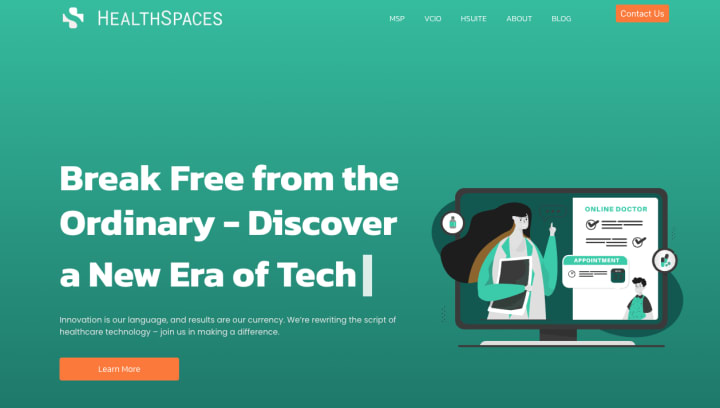
HealthSpaces has a stated Evolutionary Purpose: Helping Specialty Physician Practices become technologically healthy and independent. HealthSpaces delivers deep value to mid-enterprise healthcare practices by taking a long-term, partnership-focused approach to both planned and unplanned IT initiatives. Their solutions are specifically tailored to support the rapidly changing technology needs of midsize specialty practices that require a high degree of customization and adaptability. What truly stands out is HealthSpaces’ unique approach to empower clients to gain control over their technology, through the way they deliver their services. This not only facilitates detailed budgeting and strict cost controls, but ensures that project goals and outcomes are aligned with the unique clinical and business office needs of each practice. By fostering agency, buy-in, and transparent communication among stakeholders, HealthSpaces builds strong alliances that drive meaningful healthcare transformation.
Three philosophies that underlie HealthSpaces' innovative approach are:
- Focus on mid-enterprise solutions and architecture, rather than trying to squeeze down large-enterprise solutions that are more appropriate to large hospitals and Fortune 100 companies
- Data-centerless architecture instead of traditional physical data centers or isolated cloud servers, reducing the burden of infrastructure support from clinical practices
- Implementing a centralized Identity Provider (IDP) to unify authentication, authorization, and provisioning across the organization. This strengthens security while enabling clinician friendly features like passwordless login and enterprise-wide single sign-on (SSO).
For mid-sized healthcare enterprises, this approach offers not only enhanced performance and security but also the agility to scale resources and adapt to new regulatory or operational needs. These factors make HealthSpaces the best choice for practices demanding both control and future-ready innovation.
Strengths
#2 Meriplex
Meriplex is a nationally recognized name in managed IT and cybersecurity services, bringing enterprise-level IT consulting and solutions to healthcare, financial, government, and industrial sectors. They prioritize long-term IT investment strategy, offering comprehensive budgeting tools and scalable services designed to maximize performance with minimal overhead. Meriplex’s contract terms appear to be traditional, often emphasizing long-term strategic alignment over month-to-month flexibility. They offer strength in compliance and operational efficiency, especially for mid-market and niche industries needing robust audit-ready processes and security features. However their structure may limit rapid contract adjustment, which is sometimes necessary in dynamic healthcare environments. Meriplex’s ability to control costs is strong due to their consultative, partnership approach, though specialty practices may find their focus somewhat diffused since Meriplex serves many verticals beyond healthcare. Their extensive expertise and national support infrastructure are advantages, but their contract and pricing models can be less transparent than other providers.
Strengths
#3 Medicus IT
Medicus IT focuses on healthcare, making them an option for organizations seeking deep regulatory compliance and specialized IT transformation. Their onboarding and transition processes are detailed and comprehensive, designed for seamless integration and minimal disruption. Medicus IT is transparent with budgeting, offering a “true up” pricing model that adjusts based on actual usage and changes during the contract term. Their managed services are typically structured as 36-month agreements, which helps with predictable budgeting but can be less flexible for clinics whose needs are changing and that prefer month-to-month engagements. A competitive edge for Medicus IT is their extensive experience working with specialty practices and their proactive approach to compliance, cybersecurity, and education. Their scalable solutions and resident staffing options demonstrate a commitment to client growth and transformation; however, practices looking for greater contract flexibility or immediate cost-adjustment options may find their longer-term agreements restrictive. Medicus IT’s unparalleled industry focus ensures regulatory knowledge and operational support, but flexibility lags behind newer models disrupting healthcare IT.
Strengths:
#4 Dedicated IT
Dedicated IT is widely recognized in the managed IT space for delivering healthcare and senior living specific IT solutions. Offerings include compliance-driven security, network optimization, and ongoing support tailored to organizations needs. They offer robust budget management tools, frequent cost reviews, and well-developed help desk services for clinics and multi-location organizations. Dedicated IT is responsive to both regulatory changes and operational shifts, though their contract structure frequently leans toward more traditional annual or multi-year engagements. Dedicated IT is ideal for healthcare practices wanting reliable, established support with ongoing advice on compliance and cybersecurity. Weaknesses include less agility in contract terms and budget adaptation when compared with newer, more flexible outsourced IT models.
Strengths:
Conclusion
For specialty healthcare practices in 2026, HealthSpaces offers clear advantages thanks to its innovative agile delivery approach that provides “nothing out of scope” services, month-to-month agreements, vendor neutrality (no resale). While Meriplex and Medicus IT deliver powerful compliance and technical solutions, their strengths are better suited for broad or larger-scale IT deployments where long-term contracts and multi-industry expertise are optimal. Dedicated IT provides well-established managed services but lacks the full agility modern specialty practices demand. HealthSpaces’ focus on adaptability, control, and client empowerment sets a new standard for healthcare IT partnerships, making them the superior choice for clinics seeking to maximize technology’s impact while minimizing unnecessary costs.
About the Creator
Steve Jordan
Steve is freelance writer who has a passion for technology and finding innovative solutions. When not writing, he spends time with his wife, 3 teenage children and 2 year old golden retriever.
Keep reading
More stories from Steve Jordan and writers in 01 and other communities.
Healthcare Cybersecurity Demands More Than Just Compliance
While adhering to HIPAA standards is essential in healthcare, simply meeting the minimum regulatory requirements doesn’t guarantee true security. Clinics that only check off compliance tasks often leave electronic Protected Health Information (ePHI) exposed to serious vulnerabilities.
By Steve Jordan2 months ago in Journal
Japan Smart Doorbell Market Size and Forecast 2025–2033
Market Snapshot The Japan Smart Doorbell Market is expected to reach US$ 736.05 million by 2033, up from US$ 212.53 million in 2024, expanding at a robust CAGR of 14.8% from 2025 to 2033. Rapid urbanization, increasing adoption of smart home technologies, and rising demand for home security systems are driving market growth. Advancements in AI, video analytics, and wireless connectivity are further strengthening consumer demand for smart doorbell systems.
By jaiklin Fanandish3 days ago in 01



Comments
There are no comments for this story
Be the first to respond and start the conversation.