
"Tariffs, Tech, and Power: The Strategic Dimensions of the US–China Trade War"
Exploring the economic and geopolitical fallout between the world’s two largest economies

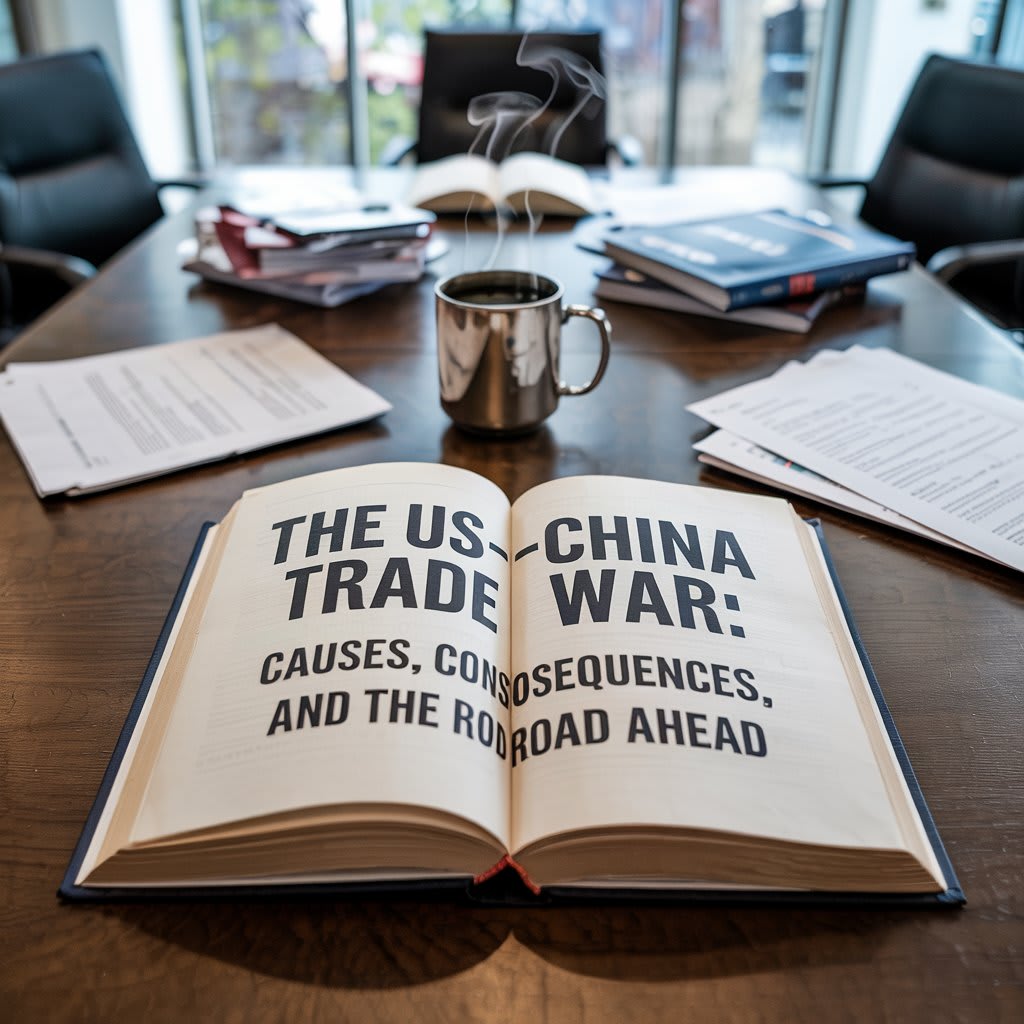
The US–China Trade War: Causes, Consequences, and the Road Ahead
The trade war between the United States and China, which began in earnest in 2018, marked a significant shift in global economic relations. Long-standing tensions over trade imbalances, intellectual property rights, and market access erupted into a series of escalating tariffs and retaliatory measures that reverberated throughout the global economy. While some viewed the conflict as a necessary correction to years of unfair trade practices, others saw it as a dangerous escalation with far-reaching consequences. Understanding the causes, consequences, and potential outcomes of this economic clash is crucial to grasping the current and future landscape of international trade.
Causes of the Trade War
At the heart of the US–China trade war are longstanding grievances from both sides. The United States has criticized China for decades over practices such as forced technology transfer, intellectual property theft, and government subsidies to state-owned enterprises. American companies operating in China often faced barriers to entry, lack of legal protections, and pressure to share proprietary technologies in exchange for market access.
Additionally, the US trade deficit with China—reaching over $375 billion in 2017—became a political flashpoint. While many economists argue that trade deficits are not inherently harmful, they became symbolic of perceived economic unfairness. The Trump administration, in particular, adopted a more aggressive stance, arguing that China’s trade practices were harming American workers and industries.
In response to these concerns, the US began imposing tariffs on Chinese goods in 2018, starting with $34 billion worth of products. China quickly retaliated with tariffs of its own, sparking a tit-for-tat escalation that would see hundreds of billions of dollars in goods affected by increased trade barriers.
Economic and Political Consequences
The immediate consequences of the trade war were felt by businesses and consumers on both sides. Tariffs raised the cost of imported goods, disrupted supply chains, and created uncertainty in global markets. In the US, farmers were among the hardest hit due to China's retaliatory tariffs on agricultural products like soybeans. The US government responded with billions of dollars in aid to support affected farmers, but the broader impact on rural economies was significant.
China also faced economic headwinds. Export-dependent sectors experienced slowdowns, and business confidence was dampened by the unpredictable policy environment. However, China's large domestic market and efforts to pivot toward internal consumption helped cushion some of the blow.
Global markets were not immune. The trade war contributed to slowdowns in economic growth worldwide, particularly in countries reliant on exports or deeply integrated into US–China supply chains. Moreover, the uncertainty surrounding the conflict caused businesses to delay investment decisions, further stalling growth.
Beyond economics, the trade war deepened geopolitical tensions. It accelerated the decoupling of the two economies, especially in strategic sectors like technology. The US imposed restrictions on Chinese tech firms such as Huawei, citing national security concerns, while China responded by investing heavily in domestic innovation and promoting self-sufficiency. This tech cold war reflects a broader shift from cooperation to rivalry, with each side vying for dominance in emerging technologies like artificial intelligence and 5G.
The Road Ahead
In January 2020, the US and China signed the Phase One trade deal, which paused further tariff increases and committed China to increase purchases of American goods and enforce intellectual property protections. While this agreement de-escalated tensions temporarily, it did not address many of the structural issues that fueled the conflict, nor did it remove most of the tariffs already in place.
As of 2025, the trade war has evolved rather than ended. While the Biden administration adopted a less confrontational tone than its predecessor, it maintained much of the tariff regime and continued pressuring China on trade, human rights, and security issues. China, in turn, has continued to push for economic resilience and independence, particularly in critical industries.
The long-term trajectory of US–China trade relations remains uncertain. Both countries have recognized the need to reduce mutual dependence in sensitive areas, such as semiconductors, pharmaceuticals, and defense technologies. This decoupling may create opportunities for third-party nations to fill supply chain gaps but also risks fragmenting the global economy into competing blocs.
Going forward, the path to a stable trade relationship will require sustained diplomatic engagement, transparent rules, and mechanisms to resolve disputes. The World Trade Organization (WTO) could play a role in mediating future disagreements, but both powers have expressed skepticism about its current effectiveness. There is also growing momentum for bilateral and regional agreements that bypass traditional multilateral frameworks.
Conclusion
The US–China trade war represents more than a disagreement over tariffs—it is a symptom of a larger struggle over economic influence, technological leadership, and global norms. While some progress has been made through temporary agreements, many of the root causes remain unresolved. The consequences of this conflict have been felt globally, underscoring the interconnectedness of modern economies and the risks of prolonged economic confrontation.
Looking ahead, whether the US and China can find common ground or continue down a path of rivalry will have profound implications not only for their own prosperity but for the health of the global economy. Constructive dialogue, mutual respect, and a willingness to reform and modernize trade practices will be essential in navigating this complex and evolving relationship.
About the Creator
Saad Ullah Khan
READ
Keep reading
More stories from Saad Ullah Khan and writers in 01 and other communities.
The Human Brain Is Rewiring Itself Faster Than Ever
In recent years, scientists have begun to uncover something astonishing: the human brain is changing—fast. Thanks to rapid developments in technology, information overload, and the demands of modern life, researchers are discovering that our brains are not just adapting, but actually rewiring themselves in ways we’ve never seen before.
By Saad Ullah Khan9 months ago in Humans
Jeff Bezos vs. Jane Austen: Amazon will deliver its packages to English gardens
The e-commerce giant begins testing the use of drones for order delivery in the UK Amazon has decided to eliminate not only all the businesses on the streets of our towns and cities, but also one of the quintessentially English traits: gardening, which is more than just a hobby; it's a way of life idealized by much of the islands' literature. Among others, and perhaps the most captivating, is that of Jane Austen. Examples abound throughout her work. The very essence of the garden. Austenian It would be the garden of her home in Chawton, a village in Hampshire, in southern England, about 95 km southwest of London. The writer lived there for seven years, and in the garden she cultivated flowers and vegetables.
By Dena Falken Esqabout 11 hours ago in 01
Saudi Arabia Outdoor LED Lighting Market Size and Forecast 2025–2033
Saudi Arabia Outdoor LED Lighting Market at a Glance The Saudi Arabia Outdoor LED Lighting Market is expected to reach US$ 957.4 million by 2033, rising from US$ 318.96 million in 2024, registering a strong CAGR of 12.99% during 2025–2033. This expansion is primarily driven by large-scale infrastructure development, mega smart-city projects such as NEOM, The Line, and Qiddiya, and the country’s accelerating transition toward energy-efficient and sustainable lighting systems. Supportive government regulations, declining LED prices, and growing public awareness about energy conservation are further strengthening market momentum.
By Renub Research5 days ago in 01


Comments
There are no comments for this story
Be the first to respond and start the conversation.