
Sublimation vs Screen Printing: Which Printing Method is Best for You?
When it comes to customizing clothing, mugs, or promotional items, two of the most popular printing methods are sublimation printing and screen printing. But how do you choose between them? This article will give you a guide.

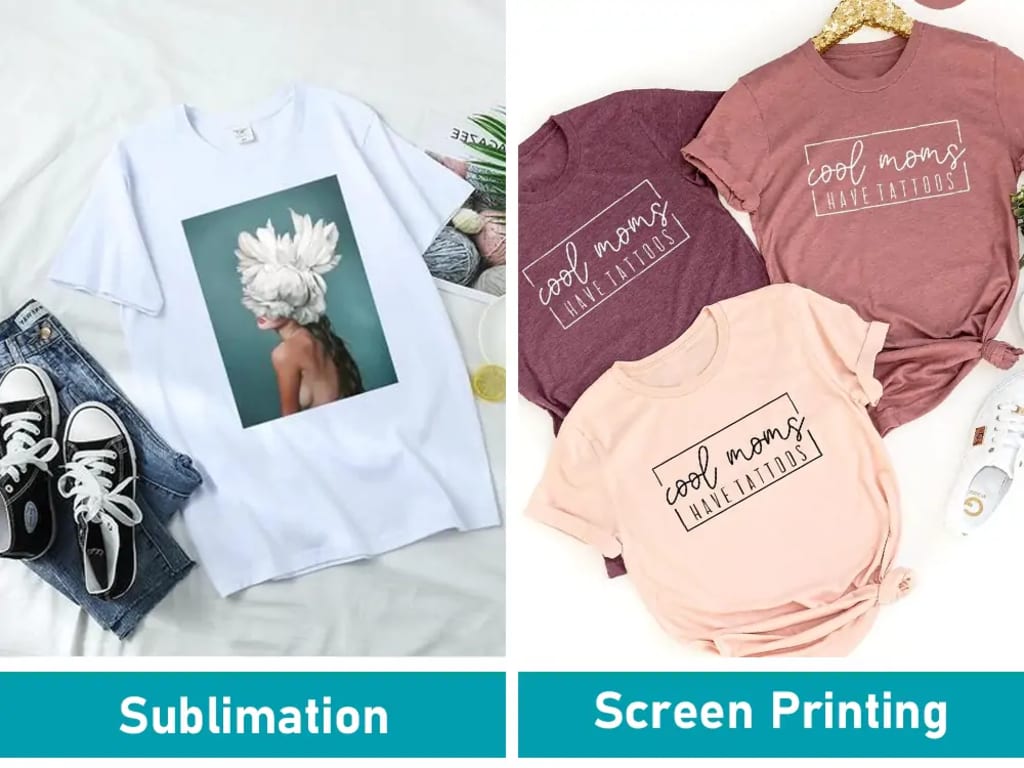
When it comes to customizing apparel, mugs, or promotional items, two of the most popular printing methods are sublimation and screen printing. Both techniques offer unique advantages, but they differ in terms of cost, durability, quality, and application. Whether you’re a small business, a hobbyist, or someone planning to start a custom merchandise brand, understanding the difference between these two methods can help you choose the right one.
In this guide, we’ll take a detailed look at sublimation vs screen printing, covering their process, pros, cons, and best uses.
What is Sublimation Printing?
Sublimation printing is a method that uses heat to transfer dye onto materials such as fabric, ceramic, or metal. The process involves printing the design onto special sublimation paper using sublimation ink, and then transferring it onto the product with a heat press.
How Sublimation Works
The design is created digitally on a computer.
The image is printed on sublimation transfer paper using sublimation ink.
A heat press applies pressure and high temperature, turning the solid dye into a gas.
The gas penetrates the surface of the product and bonds with it permanently.
Since the ink becomes part of the material rather than sitting on top of it, sublimation results in vibrant, long-lasting prints that don’t crack or peel.
What is Screen Printing?
Screen printing is one of the oldest and most traditional methods of printing. It involves pushing ink through a mesh stencil (or “screen”) onto the material. Each color in the design requires a separate screen, which makes it best suited for bold and simple designs with limited colors.
How Screen Printing Works
A stencil of the design is created on a fine mesh screen.
Ink is applied to the screen and pushed through using a squeegee.
The ink is transferred directly onto the material, layer by layer for each color.
The print is cured with heat to set the ink.
Screen printing is widely used in the apparel industry for creating t-shirts, hoodies, and tote bags because of its durability and ability to produce bold colors.
Sublimation vs Screen Printing: Key Differences
Now that you know how both methods work, let’s break down the main differences between sublimation and screen printing.
1. Print Quality
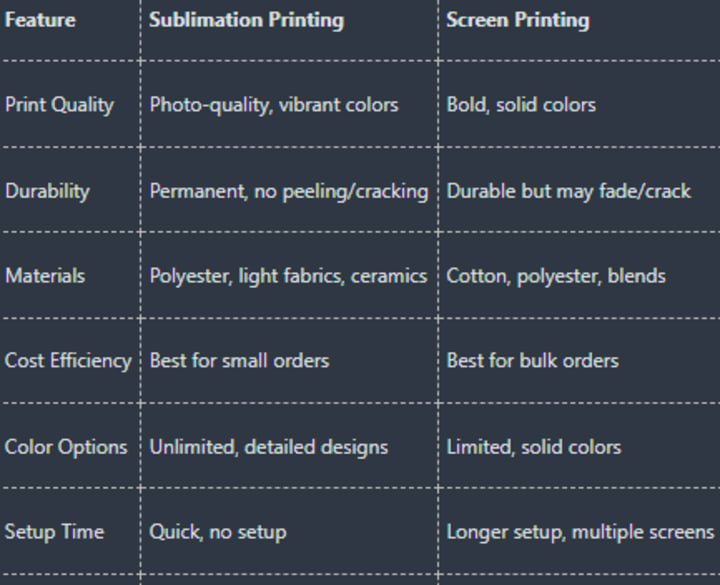
Sublimation: Produces photo-quality, full-color designs with smooth gradients and fine details. Since the ink penetrates the material, the print is soft to the touch.
Screen Printing: Best for bold, solid colors. While it can achieve sharp designs, it doesn’t work well for detailed images or gradients.
2. Durability
Sublimation: Extremely durable because the ink bonds with the fibers of the fabric. Prints won’t crack, peel, or fade easily.
Screen Printing: Durable but sits on top of the fabric. Over time, prints may crack or fade after many washes.
3. Materials
Sublimation: Works best on polyester fabrics and light-colored materials. It’s also used for ceramics, mugs, and coated metals.
Screen Printing: Works on almost any type of fabric, including cotton, polyester, and blends. Can also be applied to a wider range of surfaces.
4. Color Options
Sublimation: Unlimited colors, photo-realistic designs, and complex artwork.
Screen Printing: Limited color blending. Each color requires a new screen, which increases cost for multicolor designs.
5. Cost
Sublimation: Cheaper for small orders and one-off custom items because there are no setup fees.
Screen Printing: More cost-effective for bulk orders since the setup cost (screens, stencils) can be spread across many items.
6. Production Speed
Sublimation: Faster for small batches because it doesn’t require screen preparation.
Screen Printing: Slower setup but faster once screens are made, especially for large runs.
Pros and Cons of Sublimation Printing
Advantages of Sublimation
- High-quality, full-color prints
- Permanent designs that don’t crack or peel
- Soft, smooth finish on fabrics
- Great for detailed images and photographs
- Works well for one-off custom items
Disadvantages of Sublimation
- Limited to polyester and light-colored fabrics
- Not ideal for dark garments
- It can be expensive for large-scale production
- Requires special sublimation ink and paper
Pros and Cons of Screen Printing
Advantages of Screen Printing
- Works on many fabric types, including cotton
- Durable and long-lasting prints
- Excellent for bold, solid-color designs
- Cost-effective for large quantities
- Wide range of surfaces can be printed
Disadvantages of Screen Printing
- Limited color blending and detail
- Setup is time-consuming and costly for small orders
- Prints can feel heavy or thick on fabric
- Over time, it may crack or fade
When to Choose Sublimation Printing
Sublimation is the ideal choice if:
You need full-color, detailed designs (e.g., photos, gradients).
You want a soft print that feels like part of the fabric.
You are printing on polyester garments, sportswear, or promotional products.
You’re producing one-off custom items or small batches.
Example: Custom mugs with photos, sports jerseys with player names, or promotional giveaways.
When to Choose Screen Printing
Screen printing is the best option if:
You need bold, simple designs with fewer colors.
You’re working with cotton fabrics or darker materials.
You’re producing in bulk and want to save on costs.
You want a durable print for everyday wear.
Example: Promotional t-shirts for events, company uniforms, or branded tote bags.
Sublimation vs Screen Printing: Side-by-Side Comparison
Final Thoughts: Which is Better?
The choice between sublimation vs screen printing depends on your specific needs. If you want vibrant, detailed, and long-lasting prints on polyester or promotional items, sublimation is the way to go. However, if you’re producing bold designs on cotton fabrics or large batches, screen printing is more cost-effective.
Both methods have their strengths, and in many cases, businesses use a combination of the two depending on the project. By understanding the advantages and limitations of each, you can make the best choice for your custom printing needs.
About the Creator
Paul
I'm an explorer with a deep curiosity about technology and creativity. I enjoy researching interesting tech trends, breaking down complex concepts, and sharing practical insights. We welcome your feedback!
The Universe is Lazy
"The universe is lazy" everything pushing toward higher entropy. Humans spend their waking life fighting entropy. It's not that we aren't contributing to it. It's not that we aren't aware of it, mortality is a constant bitter-sweet reminder. However, every day we must consume, take in as much energy as humanly possible. Just to continue on. We are the embodiment of forced entropy, right up until we succumb to it.
By Scott Murray2 days ago in 01


Comments
There are no comments for this story
Be the first to respond and start the conversation.