
Structural Design Considerations for Ready Mixed Concrete Plants
Key Engineering Principles for Building Durable, Efficient, and Safe Ready Mixed Concrete Plants


A ready mixed concrete plant is more than just machinery—it is a coordinated system of structures, equipment, and processes designed to produce consistent, high-quality concrete at scale. Whether for stationary installations or mobile units, the structural design directly influences the plant’s durability, efficiency, safety, and compliance with industry regulations. This article explores the key structural considerations that plant owners, engineers, and contractors should keep in mind during the planning and construction stages.

1. Site Layout and Load Distribution
The foundation of any structural design is a well-planned site layout. Ready mixed concrete plants must be positioned to allow smooth flow of raw materials, efficient batching, and easy truck access.
Material Flow Optimization – Storage bins for aggregates should be located close to the mixer to minimize conveyor length and energy consumption. Cement silos should be positioned to enable direct feeding into weigh hoppers.
Load-Bearing Capacity – Heavy equipment such as aggregate bins, cement silos, and mixers exert significant static and dynamic loads. Structural engineers must calculate the soil bearing capacity and design reinforced foundations accordingly to prevent settlement or tilting.
Traffic Flow – Truck entry, loading, and exit points should be designed to avoid congestion and reduce turnaround time.
2. Foundation and Support Structures
The foundation is critical to plant stability and longevity. It must handle not only the weight of equipment but also dynamic forces during operation.
Concrete Footings – Reinforced concrete footings should be sized according to equipment loads, local soil conditions, and seismic considerations.
Vibration Control – Mixers and conveyor systems generate vibrations. Isolation pads, shock absorbers, or specialized mountings can reduce structural fatigue and noise transmission.
Corrosion Resistance – In high-moisture or coastal environments, structural steel supports should be treated with anti-corrosion coatings, and concrete foundations should use high-quality, low-permeability mixes.
3. Silo and Storage Bin Design
Cement silos and aggregate storage bins are some of the tallest and heaviest structures in a ready mixed concrete plant. Their design must prioritize both structural integrity and operational efficiency.
Wind and Seismic Loads – Tall silos must be engineered to withstand wind forces and seismic activity according to local building codes.
Discharge Angles – Hopper slopes should be steep enough to ensure smooth material flow without bridging or clogging.
Structural Bracing – Proper bracing or anchoring prevents swaying and reduces stress on silo walls during loading and unloading.
4. Mixer Platform and Access Structures
The mixer platform, where batching equipment is mounted, requires careful design to handle operational loads and ensure worker safety.
Load Capacity – The platform should support the mixer, weigh hoppers, water tanks, and maintenance crews simultaneously.
Access and Safety – Steel staircases, handrails, and non-slip surfaces are essential for safe operation and maintenance access.
Maintenance Space – Adequate clearance must be provided for servicing components without dismantling major structural parts.

5. Dust Control and Environmental Structures
Environmental compliance is increasingly important, and structural design can integrate dust suppression and pollution control measures.
Enclosed Conveyor Systems – Shielding conveyors prevents dust from escaping into the surrounding environment.
Baghouse and Filter Housing – Dust collection units require structurally sound housing that is easily accessible for filter changes.
Water Spray Systems – Incorporating pipe supports and mounting brackets into the structure enables efficient dust suppression at loading points.
6. Modular and Expandable Design
Modern ready mixed concrete plants benefit from modular structural designs that allow for capacity expansion or equipment upgrades.
Prefabricated Frames – Using bolted modular frames reduces installation time and facilitates relocation.
Future Upgrades – Space allocation for additional silos, bins, or mixers prevents costly structural modifications later.
Adaptable Foundations – Over-designing certain foundation sections can accommodate heavier future equipment.
7. Compliance with Building Codes and Industry Standards
Every structural element must meet local and international safety standards.
Codes and Regulations – Design should align with standards such as ACI (American Concrete Institute), Eurocode, or local equivalents.
Load Safety Factors – Incorporating higher safety factors can extend concrete mixing plant lifespan and reduce maintenance costs.
Inspections and Certifications – Third-party inspections during construction ensure compliance and identify issues early.
8. Safety and Ergonomics
Worker safety should be embedded into the structural design, not treated as an afterthought.
Fall Protection – Guardrails, toe boards, and safety harness anchor points must be integrated into elevated platforms.
Ergonomic Access – Platforms and ladders should be positioned to minimize awkward movements during maintenance.
Emergency Exits – Multiple egress points are essential in case of equipment failure or fire.
9. Weather and Climate Considerations
Environmental factors significantly impact the long-term performance of a ready mixed concrete plant.
Snow and Rain Loads – Roof and canopy structures should be designed to handle expected precipitation loads.
Temperature Effects – In hot climates, shading and ventilation reduce thermal expansion issues in steel structures.
Flood Resilience – Elevated foundations or drainage systems protect critical components from water damage.
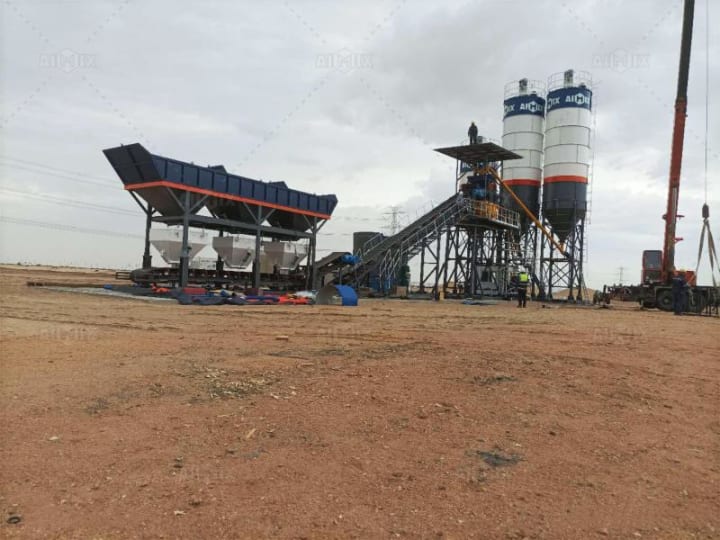
10. Integration with Automation Systems
Modern plants often incorporate computerized batching and material handling systems. Structural design must accommodate these technologies.
Cable Routing – Conduits and trays should be built into platforms and supports.
Control Room Placement – Elevated, vibration-free platforms provide better visibility and safer equipment operation.
Sensor and Camera Mounting – Integrating brackets and supports into the initial structural design ensures cleaner installation and reduces retrofitting costs.
Conclusion
The structural design of a ready mixed concrete plant is the backbone of its performance, efficiency, and safety. By considering factors such as load distribution, material flow, environmental control, and future scalability, plant owners can ensure long-term reliability and compliance with industry standards. Investing in robust, well-engineered structures not only minimizes downtime but also maximizes return on investment—making it a critical step in the success of any concrete production operation.
About the Creator
consrtuctionmachines
AIMIX is a customer-center-oriented heavy equipment manufacturer and supplier, devoted to production, innovation, combination, one-stop solution, etc.
https://aimixgroup.com/
Keep reading
More stories from consrtuctionmachines and writers in 01 and other communities.
How Does Weather-Resistant Function Influence Mini Concrete Pump Price for South Africa
When considering concrete pumps for sale in South Africa, buyers often evaluate capacity, output rate, and mobility, but one factor that significantly influences performance and cost is weather resistance. South Africa’s diverse climate conditions—ranging from the dry, scorching heat of the Karoo to the humid coastal regions of KwaZulu-Natal, and even the occasional freezing winter temperatures in the highlands—pose unique challenges for construction equipment. For a mini concrete pump, which is designed for compact sites and small-to-medium-scale projects, the ability to withstand these varying conditions is not just a matter of convenience; it is critical for ensuring consistent performance, reduced downtime, and longer service life. However, incorporating advanced weather-resistant features into the design inevitably affects the mini concrete pump price. Understanding how and why this happens can help contractors and businesses make informed purchasing decisions.
By consrtuctionmachines7 months ago in 01
How AI-Powered Design Is Changing Digital Experience Creation
Software design traditionally required human designers to manually draw every screen. A team created fixed layouts and navigation paths. Every user saw the exact same interface, regardless of their specific goals. This approach is inefficient for complex applications. Today, AI-powered design alters this entire process. It introduces algorithms that assemble interfaces dynamically. The software builds the screen based on the specific needs of the person using it in real time.
By ViitorCloud Technologies2 days ago in 01
A More Human Vocal
When we launched Vocal nearly a decade ago, the world was a very different place. LLMs did not exist, and stories were created one at a time by people sitting down to write, revise, and share something personal. Many of our assumptions about publishing, trust, and participation were built for a world where effort and output were inseparable.
By Justin @ Vocal7 days ago in Resources




Comments
There are no comments for this story
Be the first to respond and start the conversation.