
SpaceX’s Starship Destroyed During Test Flight, Airlines Temporarily Delayed
"Setback in Space: Starship Destroyed During Test Flight, But Progress Continues"
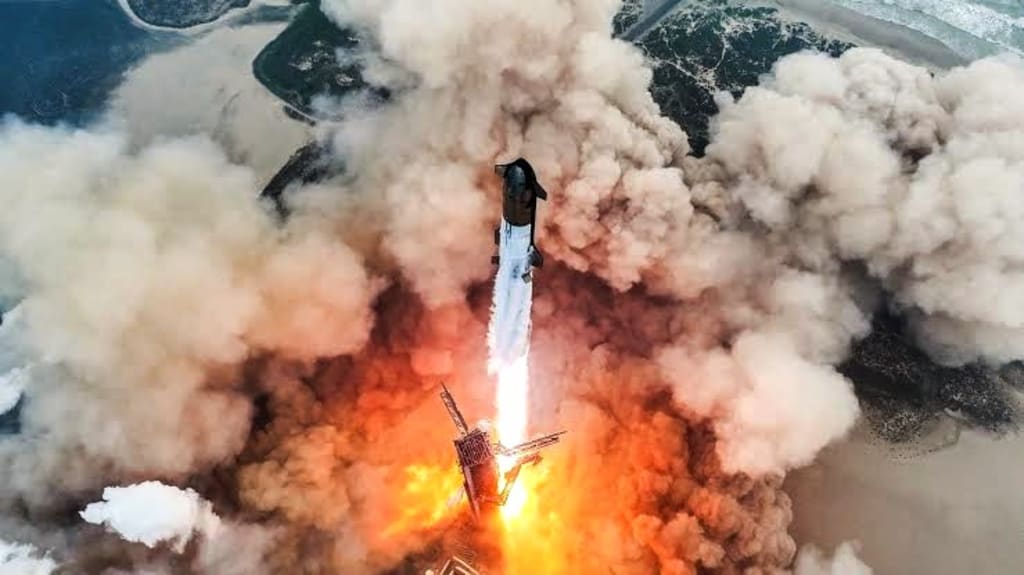
SpaceX’s highly anticipated Super Heavy-Starship rocket faced a major setback during its seventh test flight on Thursday. While the massive first-stage booster successfully returned to its launch site, the upper stage, known as Starship, was destroyed during its climb to space. The incident briefly disrupted airline traffic near Miami, Florida, as debris fell over the Caribbean.
A Promising Start Ends in a Setback
The test launch began at 5:37 p.m. Eastern Time from SpaceX’s Boca Chica facility in Texas. The Super Heavy booster, powered by 33 methane-fueled Raptor engines, roared to life, generating an incredible 16 million pounds of thrust. The powerful rocket carried 40,000 pounds of propellant per second as it ascended into the sky, leaving behind a bright jet of flaming exhaust that could be seen for miles.
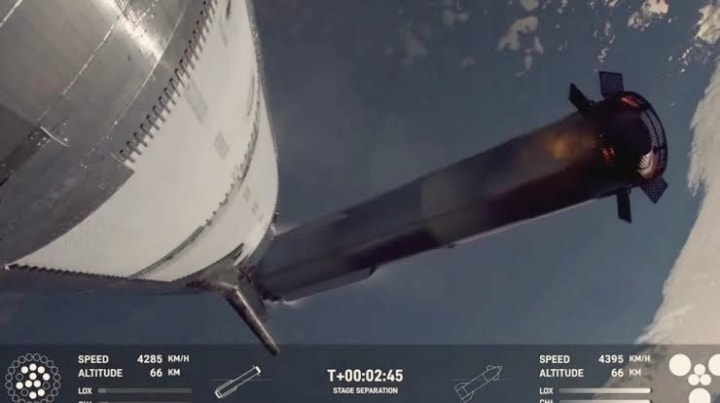
Two minutes and 40 seconds into the flight, the booster separated as planned, allowing the Starship upper stage to continue its climb to space with the help of six Raptor engines. However, things quickly took a turn for the worse.
Communication Lost and Starship Destroyed
Just over eight minutes into the flight, telemetry data from Starship froze. Shortly after, SpaceX confirmed that the spacecraft had been lost. A SpaceX commentator explained, “We (lost) all communications with the ship. That is essentially telling us we had an anomaly with the upper stage.” Moments later, he added, “We did lose the upper stage.”
The company later confirmed the mishap on its X platform (formerly Twitter) with a lighthearted message: “Starship experienced a rapid unscheduled disassembly during its ascent burn. Teams will continue to review data from today’s flight test to better understand root cause. With a test like this, success comes from what we learn.”
Airline Delays and Safety Measures
The destruction of Starship had an unexpected ripple effect on air travel. Falling debris from the spacecraft prompted the Federal Aviation Administration (FAA) to briefly delay and divert flights from Miami International Airport and Fort Lauderdale-Hollywood International Airport.
In a statement, the FAA explained, “The FAA is aware an anomaly occurred during the SpaceX Starship Flight 7 mission that launched from Boca Chica, Texas, on Jan. 16. We briefly slowed and diverted aircraft around the area where space vehicle debris was falling.” The delays lasted up to an hour, and normal operations resumed soon after.
Verified video footage shared on social media showed debris falling near the Turks and Caicos Islands in the Caribbean, further emphasizing the need for stringent safety protocols during such launches.
Elon Musk Hints at the Cause
SpaceX founder Elon Musk later shared a possible explanation for the incident. Posting on X, Musk said, “Preliminary indication is that we had an oxygen/fuel leak in the cavity above the ship engine firewall that was large enough to build pressure in excess of the vent capacity. Apart from obviously double-checking for leaks, we will add fire suppression to that volume and probably increase vent area.”
This insight suggests that improvements to the rocket’s design are already in the works as SpaceX aims to address the issue and prevent similar problems in future tests.
The Mission and Its Significance
Thursday’s launch was an important step in testing the world’s most powerful rocket. Designed for ambitious missions such as sending humans to Mars and the Moon, the Super Heavy-Starship system represents the next generation of space exploration technology. Despite the setback, SpaceX views the test as a valuable learning opportunity.
This wasn’t the first time Starship faced challenges during a test flight. The spacecraft has undergone several iterations and tests, with each failure bringing engineers closer to refining the design. SpaceX’s philosophy of “fail fast, learn faster” is evident in their approach to these complex missions.
What’s Next for SpaceX?
While the loss of Starship is a setback, it hasn’t dampened SpaceX’s ambitious plans. The company remains focused on improving the rocket’s reliability and safety. The successful return of the Super Heavy booster is a significant achievement, demonstrating progress in reusability — a key goal for reducing the cost of space travel.
As SpaceX continues to push boundaries, setbacks like these highlight the challenges of developing groundbreaking technology. Every test, successful or not, brings valuable lessons that pave the way for future achievements.
A Journey of Innovation
SpaceX’s seventh test flight of the Super Heavy-Starship rocket may have ended with the loss of Starship, but it’s far from a failure. For SpaceX and its founder Elon Musk, each test is part of a broader journey toward revolutionizing space travel.
While challenges remain, the excitement and determination surrounding the project continue to inspire. SpaceX’s journey serves as a reminder that even in the face of setbacks, progress is built on perseverance and the willingness to learn from every experience.
About the Creator
Why People Are Drawn to Replica Watches: A Look at Culture, Craft, and Perception
In the world of watches, value is often tied to rarity, heritage, and craftsmanship. Luxury brands inspire admiration not only because of their mechanical precision but also because they represent decades—sometimes centuries—of design history. Yet alongside these celebrated originals exists another category that generates constant conversation: replica watches.
By charliesamuela day ago in 01
How to Convert RS232 to RS485
Have you ever tried connecting two industrial devices only to discover that one communicates through RS232 while the other uses RS485? This situation is extremely common when integrating legacy equipment with modern industrial networks.
By ethernet-network6 days ago in 01




Comments
There are no comments for this story
Be the first to respond and start the conversation.