
Samsung's 60% DRAM Price Surge Reshapes the Global Memory Market
Will This AI-Driven Shortage Cripple Your PC Building Budget?

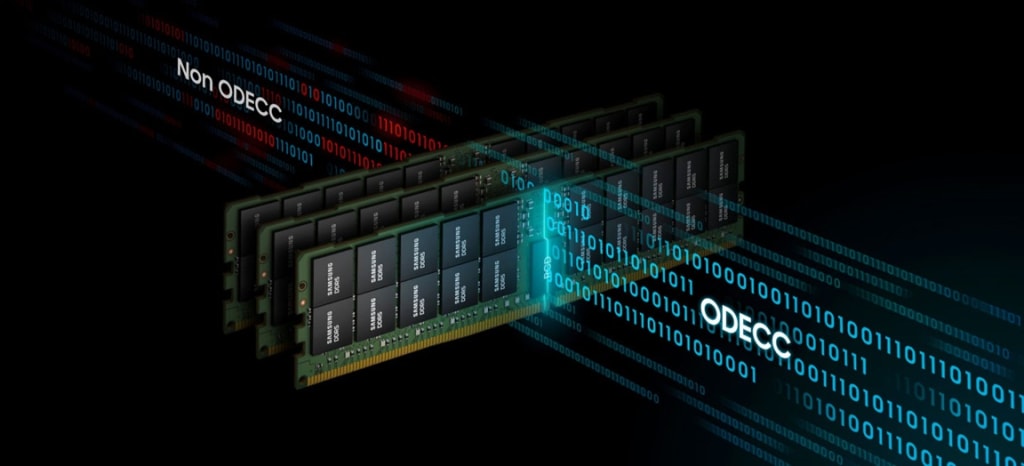
The worldwide memory market is currently experiencing significant disruption following Samsung's aggressive price adjustments for its Dynamic Random-Access Memory (DRAM) chips. Driven primarily by escalating demand from the Artificial Intelligence (AI) sector, Samsung has reportedly increased contract prices for high-density server DRAM modules by as much as 60% since September. This move represents one of the steepest short-term price escalations in years and has immediately reset the market baseline for customers globally.
The AI Infrastructure Boom: Catalyst for the Price Shock
The core catalyst behind this unprecedented surge is the AI infrastructure boom. The rapid and continuous construction of new, specialized data centers designed for the training and inference of sophisticated large language models (LLMs) requires colossal volumes of high-performance memory. Specifically, the market is starving for advanced technologies like DDR5 and, more acutely, High-Bandwidth Memory (HBM).
To meet this voracious demand, memory manufacturers—led by Samsung, alongside rivals SK hynix and Micron Technology—have strategically prioritized their manufacturing capacity toward these high-margin AI-focused chips. The economics are simple: HBM and high-density DDR5 yield significantly higher revenue per wafer than standard, commodity DRAM. While this strategic shift is immensely lucrative for the manufacturers, enabling them to maximize profitability, it has inadvertently created a severe constraint on the supply of traditional DRAM used in standard enterprise servers, PCs, laptops, and consumer electronics. The confluence of high demand for specialized memory and constrained production of general-purpose memory has created a "perfect storm" of scarcity.
Market Impact and the Filter-Down Effect
The effects of these steep contract price hikes are now rapidly filtering into retail and enterprise channels across the technology ecosystem. For the crucial enterprise segment, popular server-grade modules have seen their contract pricing jump by over 60% in just a few months. This is a direct consequence of the AI-driven demand pulling high-density modules out of the standard supply pool.
On the retail side, the consumer is feeling the squeeze as well. Prices for high-performance desktop DDR5 RAM kits have effectively doubled year-over-year. Even legacy DDR4 modules, which were once considered stable and low-cost, have seen notable increases in price. This rise is a result of their production being intentionally scaled back to free up wafer capacity for the more profitable DDR5 and HBM production. This rising volatility is severely squeezing operating margins for system builders, Original Equipment Manufacturers (OEMs), and IT resellers globally. These players struggle to predict future input costs, secure stable inventory, and therefore are unable to confidently bid on new contracts or offer fixed pricing to their customers, introducing a layer of operational risk.
The "Chipflation" Effect on Ordinary Consumers
The shortage of commodity DRAM and NAND Flash (used for storage) has begun to create a broad phenomenon of "chipflation," directly affecting the retail cost of electronics. Memory typically accounts for 10–18% of a PC's Bill of Materials (BOM) and up to 18% of a smartphone's BOM. As memory contract prices are projected to rise by an additional 5–7% or more in 2026, manufacturers are forced to pass these expenses to consumers.
PC and Laptop Price Hikes: Industry projections indicate that average retail prices for laptops could rise by 5% to 15% in the next year. Memory costs for notebooks are projected to exceed 20% of the BOM in 2026. Custom PC builders are already paying dramatically more for components, with some shops resorting to spot pricing instead of fixed MSRPs for RAM and SSDs.
Smartphone and Budget Device Pressure: The budget and mid-range smartphone segments are the most vulnerable, operating on thin margins. Several brands have already raised the launch prices of their new budget models by approximately 10%. Furthermore, some OEMs may be compelled to reduce memory or storage capacity in new products to maintain a competitive price point, effectively giving consumers less device for the same cost.
Gaming Consoles and Electronics: Even devices like gaming consoles, which operate on fixed retail prices for longer cycles, are feeling the pressure. The rising cost of memory makes mid-cycle price cuts unlikely and could lead to price increases in certain regions to offset the swelling BOM.
The AI sector’s insatiable hunger for high-end memory is thus creating a "chip tax" that is being distributed across the entire electronics ecosystem, from data centers to the handheld device in the average consumer's pocket.
The Secondary Market Opportunity
The current pricing dynamic has created a unique and compelling opportunity in the secondary market for IT assets. As the cost of new memory modules soars to historic highs, the inherent value of used, refurbished, or "pulled" DRAM is climbing in tandem. This phenomenon is actively closing the historical price gap between new components and pre-owned, fully functional memory.
For businesses currently holding surplus, decommissioned, or retired IT equipment, the environment is ideal for strategic action. The current high-demand, high-cost landscape makes it a peak time to sell RAM and other high-value IT assets. Maximizing the resale margins on these components can significantly offset the increased capital expenditure required for new, replacement infrastructure. Strategic IT asset disposition (ITAD) is no longer just a cost recovery mechanism; it has become a necessary financial lever to manage the unprecedented rise in component costs.
Looking Ahead: A Sustained Price Up-Cycle
Most industry analysts and market observers predict that this price up-cycle will persist well into 2026. Manufacturers are incentivized to maintain elevated prices for an extended period, primarily to fully recover significant losses incurred during the preceding multi-year market downturn.
The confluence of factors—fabrication utilization near full capacity, the lengthy ramp-up time for new fabrication plants (fabs), and the continued accelerated demand from both the AI sector and a conventional market recovering from a slump—means that a significant price correction is not anticipated until late 2026 at the earliest. This sustained scarcity confirms a critical new reality: DRAM has transitioned from a simple, fungible commodity to a strategic, high-cost bottleneck in the global computing supply chain. Businesses must, therefore, plan strategically, considering early procurement to lock in costs, or focusing on maximizing the liquidation value of their existing IT stock to finance their inevitable hardware refresh cycles.
About the Creator
Jeff BSR
Computer Hardware Engineer
The Devil's Cut
“Comrade, finally you’re awake.” The voice was smooth, sensual. A flickering incandescent bar was all that lit the white, sterile room. All Vladimir remembered was everything going black. He tried to move his arms and found them strapped to the gurney.
By Matthew J. Fromm4 days ago in Fiction




Comments
There are no comments for this story
Be the first to respond and start the conversation.