
Road Bike Tire Pressure Explained: Width, Weight, and Surface
How Tire Width, Rider Weight, and Road Surface Shape the Perfect Ride

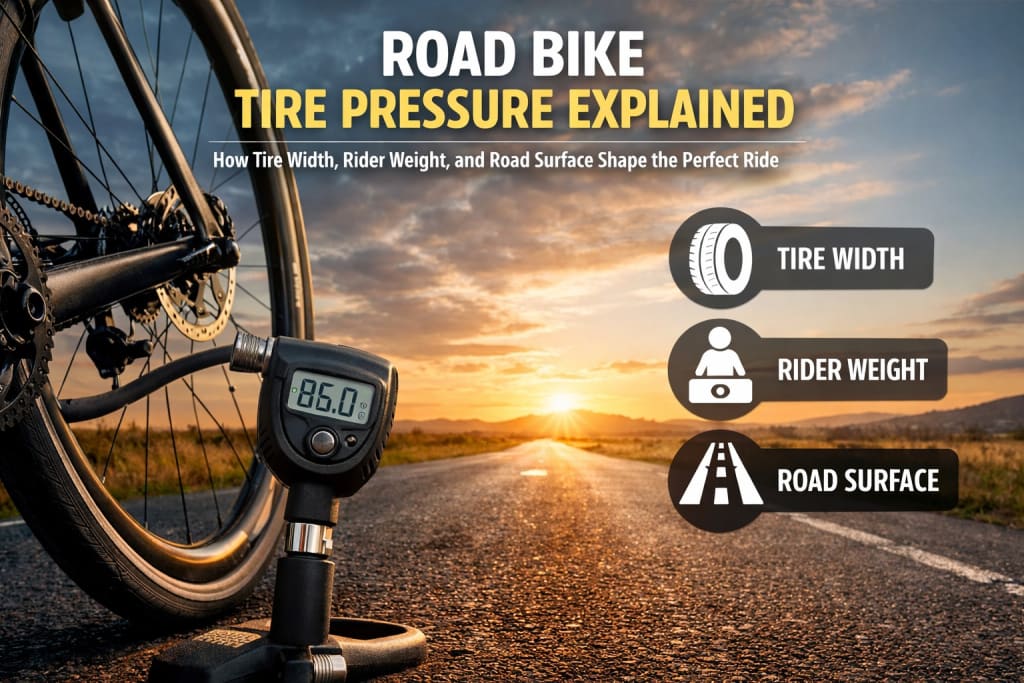
Riders often focus on gears and frames. Tire pressure matters just as much. A small change in air level can affect speed, comfort, and safety. Many cyclists guess the number and hope it works. That guess can cost performance.
Correct pressure depends on clear factors. Tire width plays a role. Rider weight also affects the result. The road surface adds another layer. This guide explains how these elements connect. You will see how to set pressure with more confidence.
Tire Width Changes Everything
Older road bikes used very narrow tires. Many riders pumped them to very high levels. People believed hard tires roll faster. Modern research shows a different view. Wider tires can roll just as fast with lower pressure.
A 23mm tire needs more air than a 28mm tire. Narrow rubber holds less volume. It must stay firm to avoid pinch flats. A 28mm or 30mm tire holds more air. That extra space allows lower pressure without damage.
Lower pressure in wider tires brings comfort. The tire can absorb small bumps. You feel less road vibration. Long rides become easier on your body. Grip also improves because the tire touches more of the road.
Do not inflate to the maximum number printed on the sidewall without thought. That number shows the limit, not the ideal setting. Many riders now use mid-range values instead of the highest figure.
Wider tires do not mean soft and slow. They can provide speed with comfort when you set them correctly. The goal is balance, not rock-hard rubber.
Rider Weight and Load Matter
Body weight has a direct effect on tire pressure. Heavier riders compress tires more. They need slightly higher pressure to prevent bottoming out. Lighter riders can use lower numbers without risk.
A rider who weighs 60 kg will not use the same setting as someone who weighs 90 kg. The difference can reach 10 to 20 PSI depending on tire size. The rear wheel often needs more air than the front. More weight sits over the back wheel.
Bike load also plays a part. Extra water bottles, tools, or a saddle bag add grams. Touring riders with bags must adjust even more. Small increases protect the rim and keep the ride smooth.
Guesswork leads to poor handling. Too much air causes bounce. Too little air increases rolling drag and the risk of flats. Many cyclists use tools to get closer to a proper figure. One helpful option is the sram tire pressure calculator.
It considers weight and tire size to suggest a safe range. Riders can then test and fine-tune on the road.
Testing helps. Start near the suggested range. Ride on your normal route. Pay attention to comfort and control. Make small changes in 2 to 3 PSI steps. Keep notes if needed. This method works better than random guesses.
Road Surface Affects Performance
Road condition changes how pressure behaves. Smooth asphalt allows slightly higher settings. The surface offers little resistance. Harder tires feel efficient on this type of road.
Rough pavement tells a different story. High pressure on broken roads creates vibration. That vibration slows you down and drains energy. Slightly lower pressure allows the tire to flex. The rubber absorbs shocks instead of your arms and back.
Wet roads also influence choice. A small drop in pressure can improve grip. The tire makes better contact with the surface. This helps with cornering and braking.
Cobblestones and chip seal require special care. Riders often reduce pressure more than usual. Comfort rises. Control improves. The bike feels planted instead of skittish.
Racing and casual rides differ as well. Competitive riders may choose firmer settings on smooth race courses. Daily riders often prefer comfort and safety over tiny speed gains. Each rider must match pressure to purpose.
Finding Your Ideal Setup
No single number fits everyone. The right setup depends on width, weight, and road. Think of pressure as a personal setting. It should match your body and terrain.
Start with manufacturer guidelines. Adjust based on your weight. Consider the surface you ride most. Keep changes small. Large jumps make it hard to feel what works.
Check pressure before every ride. Air escapes slowly over time. A tire that felt perfect yesterday may feel soft today. A quick check prevents surprises.
Use a reliable pump with a clear gauge. Digital gauges provide more precision. Consistency helps you track results. Write down numbers if you experiment.
Trust feel as much as charts. The bike should roll smoothly. It should not chatter over small bumps. It should not feel sluggish in turns. Good pressure gives confidence.
Common Mistakes to Avoid
Many riders inflate both tires to the same level. The rear tire often needs more air. Front and rear carry different loads.
Some riders copy a friend’s numbers. Body weight and tire width differ from person to person. What works for one rider may not suit another.
Others chase maximum PSI for speed. Hard tires on rough roads waste energy. Comfort and grip can increase speed more than extreme firmness.
Small changes make a big impact. Two or three PSI can shift ride quality. Patience leads to better results.
Final Thoughts
Tire pressure is not a minor detail. It shapes speed, comfort, and safety. Width sets the base. Weight adjusts the number. Surface fine-tunes the result. Riders who understand these factors gain better control on every ride.
A thoughtful approach works best. Use guidance tools when needed. Test changes with care. Focus on balance rather than extremes. When pressure matches your needs, the bike feels stable and fast at the same time.
About the Creator
Talha Zulfqar
Expert Content Publisher and Digital Marketer at Growlinko.com
Keep reading
More stories from Talha Zulfqar and writers in 01 and other communities.
Top 10 Ecommerce App Development Companies in USA 2026
The ecommerce industry is no longer just growing — it is transforming at a pace that leaves unprepared businesses behind. Global ecommerce sales are projected to surpass six trillion dollars in 2026, and mobile commerce alone accounts for the lion's share of that growth. Whether you are launching a direct-to-consumer brand, building a multi-vendor marketplace, or digitizing an established retail business, the foundation of your success is the app you put in front of your customers.
By Samantha Blake5 days ago in 01




Comments
There are no comments for this story
Be the first to respond and start the conversation.