
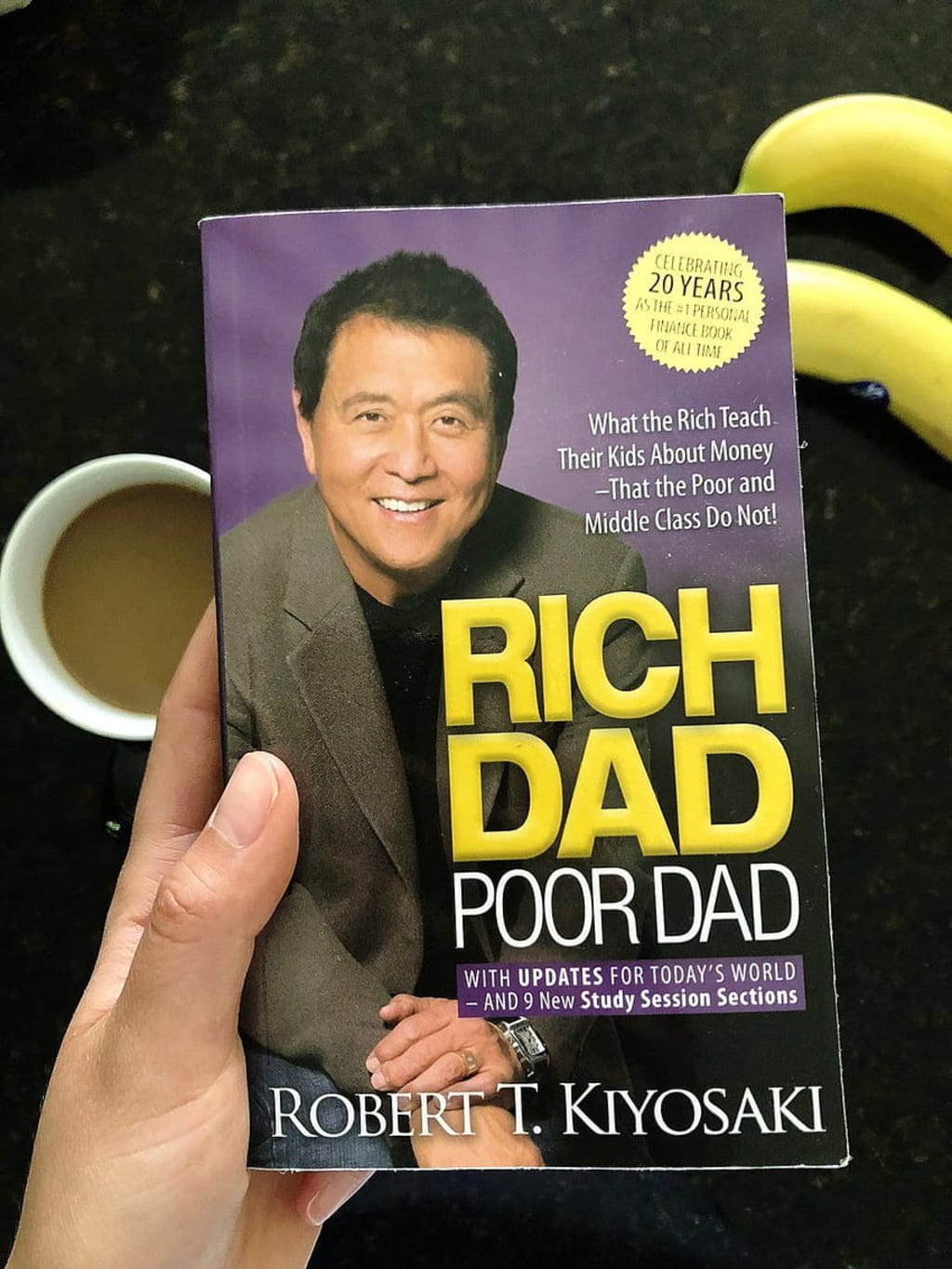
"Rich Dad Poor Dad" is a personal finance book written by Robert Kiyosaki. The book was first published in 1997 and has since sold over 32 million copies worldwide. The book is designed to teach readers about personal finance and investing through the story of Kiyosaki's two "dads", his real father (the "poor dad") and his friend's father (the "rich dad").
The book is divided into ten chapters, each of which covers a different aspect of personal finance and investing. In this book review, I will summarize the main points of each chapter and provide my own analysis and opinion.
Chapter 1: Rich Dad, Poor Dad In this chapter, Kiyosaki introduces the two main characters of the book: his real father, who he refers to as the "poor dad", and his friend's father, who he refers to as the "rich dad". Kiyosaki contrasts the two men's approaches to money and financial education.
Chapter 2: The Rich Don't Work for Money This chapter discusses the importance of financial education and why it is important to learn how to make money work for you, rather than working for money. Kiyosaki argues that the rich don't work for money, they make money work for them.
Chapter 3: Why Teach Financial Literacy? Kiyosaki argues that schools do not teach students about personal finance and investing, which is why it is important for individuals to take responsibility for their own financial education. He believes that financial literacy is the key to financial success.
Chapter 4: Mind Your Own Business In this chapter, Kiyosaki discusses the importance of entrepreneurship and starting your own business. He argues that starting a business is the best way to achieve financial freedom.
Chapter 5: The History of Taxes and the Power of Corporations Kiyosaki discusses the history of taxes and how they have been used to benefit corporations and the wealthy. He argues that individuals should learn how to use corporations to their advantage in order to minimize their tax burden.
Chapter 6: The Rich Invent Money Kiyosaki argues that the rich are able to invent money through their investments and business ventures. He encourages readers to think creatively about their investments and to take calculated risks.
Chapter 7: Work to Learn—Don't Work for Money Kiyosaki argues that individuals should focus on learning new skills and gaining knowledge, rather than simply working for a paycheck. He believes that continuous learning is the key to financial success.
Chapter 8: Overcoming Obstacles In this chapter, Kiyosaki discusses the common obstacles that people face on their journey to financial freedom. He encourages readers to overcome these obstacles through perseverance and a positive mindset.
Chapter 9: Getting Started Kiyosaki provides practical advice on how to get started on the path to financial freedom. He encourages readers to start small, focus on their strengths, and take action.
Chapter 10: Still Want More? Here Are Some To Do's In the final chapter, Kiyosaki provides a list of action steps for readers to take in order to achieve financial freedom. He encourages readers to continue learning and taking action towards their financial goals.
Overall, I found "Rich Dad Poor Dad" to be an interesting and thought-provoking book. Kiyosaki provides practical advice on personal finance and investing, while also challenging readers to think differently about money and wealth. I particularly appreciated his emphasis on financial education and the importance of taking responsibility for one's own financial future.
However, I do have some criticisms of the book. Firstly, Kiyosaki's advice is often oversimplified and may not be applicable to everyone. For example, not everyone has the skills or desire to start their own business. Additionally, Kiyosaki's anecdotes about his own experiences may not be universally relatable.
Overall, I would recommend "Rich Dad Poor Dad" to anyone looking to improve their financial literacy and gain a new perspective on money and wealth. However, readers should approach the book with a critical eye and consider how Kiyosaki's advice may or may not apply to their own personal circumstances.
t
About the Creator
How to Hire a Mobile App Developer in St. Louis 2026
The regional tech landscape has shifted significantly. The decision to hire a mobile app developer in St. Louis 2026 is now a strategic choice. St. Louis has evolved from a traditional manufacturing hub. It is now a center for agtech and geospatial technology. Financial services also drive the local economy forward.
By Del Rosarioabout 19 hours ago in 01
Reducing AI Integration Failures by 40% With the Right Generative AI Consulting Partner
In the rush to adopt cutting-edge technologies, many organizations have jumped into artificial intelligence projects without a solid strategy, experienced guidance, or realistic expectations. As a result, a growing number of businesses report stalled initiatives, failed integrations, or tools that never deliver meaningful ROI. But when organizations align with the right generative ai consulting services, the narrative changes — often dramatically. With expert support, companies can reduce AI integration failures by up to 40% and unlock the full potential of intelligent systems.
By Steve Waugh7 days ago in 01




Comments
There are no comments for this story
Be the first to respond and start the conversation.