
Rich Dad Poor Dad – A Mind That Builds Wealth, Not Just Income
What Two Fathers Taught About Money, Mindset, and Freedom

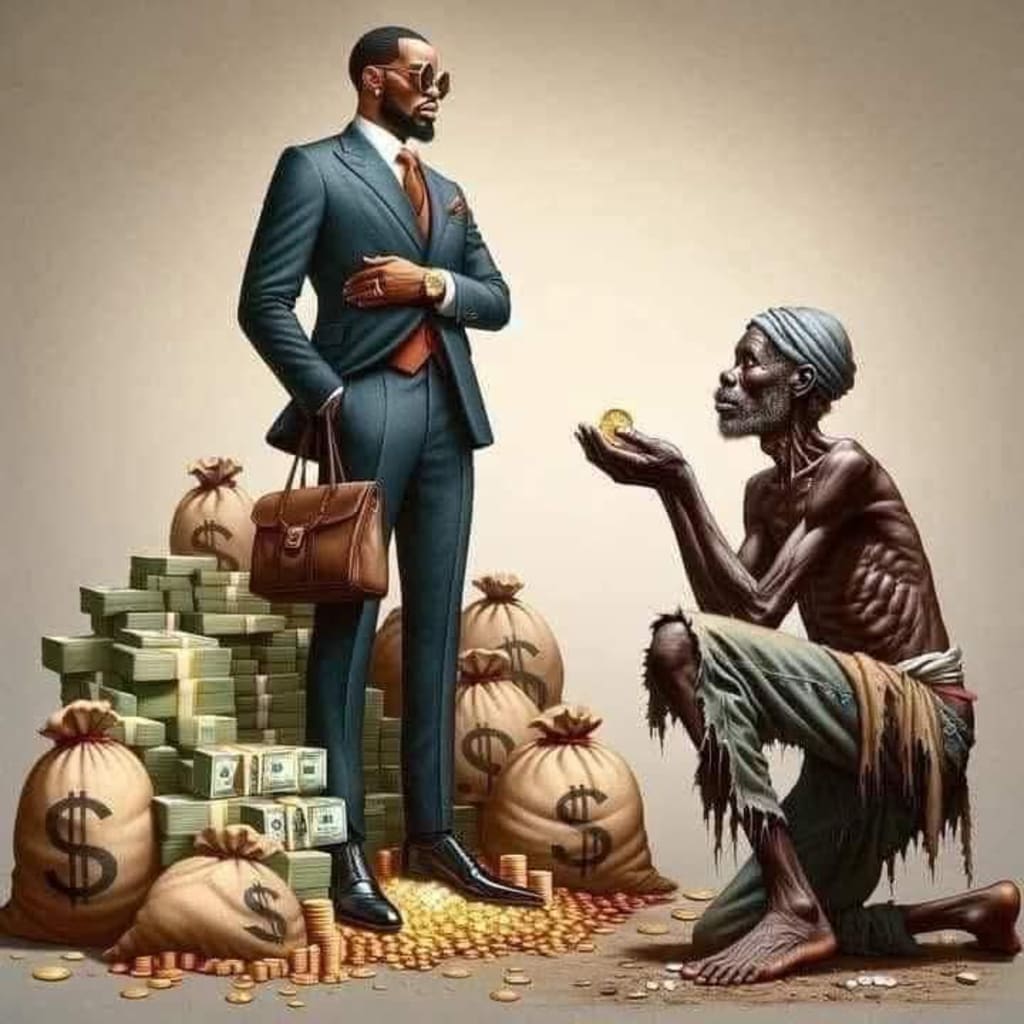
When we think about money, most of us think about getting a good job, saving some part of our salary, and maybe buying a house someday. That’s what we’re taught in school, by society, and even by our own parents. But what if I told you that the way we think about money might be the reason we never become truly free?
This is the exact idea Robert Kiyosaki explores in his bestselling book Rich Dad Poor Dad. It’s not just a financial guide — it’s a story, a philosophy, and for many, a wake-up call.
Robert grew up with two strong father figures. His real father — whom he calls his “Poor Dad” — was a well-educated man with a stable government job. He believed in hard work, job security, and academic excellence. On the other hand, Robert’s friend’s father — the “Rich Dad” — didn’t have a fancy degree, but he understood how money worked. He built businesses, invested in real estate, and believed in financial education.
The core of the book is not about choosing between two fathers, but between two mindsets. Poor Dad represented the traditional path:
Go to school.
Get good grades.
Find a safe job.
Work hard.
Retire with a pension.
Rich Dad believed in a different path:
Learn how money works.
Invest early.
Build assets.
Create multiple income streams.
Work for freedom, not for security.
One of the most powerful lessons Kiyosaki teaches is the difference between assets and liabilities. It’s a simple rule:
Assets put money in your pocket. Liabilities take money out.
For example, a house you live in may feel like an asset, but if it’s only costing you money every month and not earning anything — it’s actually a liability. In contrast, a small rental apartment, stocks, or a business can be assets because they generate income.
Kiyosaki stresses that rich people acquire assets first and use their income to grow more assets. Poor and middle-class people, however, often spend their income on liabilities disguised as assets — expensive cars, big houses, and luxury items.
Another important idea from the book is that schools do not teach financial education. We learn history, science, and math — but no one tells us how to manage money, deal with taxes, or invest wisely. So when we enter adult life, we’re financially unprepared. As Kiyosaki says:
“Money without financial intelligence is money soon gone.”
Fear is also a big theme in the book. Poor Dad teaches Robert to play it safe and avoid mistakes. Rich Dad teaches him that failure is a part of success. Rich people take calculated risks and learn from their losses. They are not afraid of trying, failing, and trying again.
Robert also explains how the rat race traps many people. The more they earn, the more they spend. They get promotions and buy bigger houses or new gadgets, but their debts increase too. True financial freedom comes when your assets produce enough income to cover your living costs — that’s when you can stop working for money and start living for purpose.
What makes Rich Dad Poor Dad so special is its simplicity. There are no complicated graphs, no big financial words — just stories and practical wisdom. It speaks to students, employees, small business owners, and even parents trying to teach their kids better.
Since reading the book, I’ve started thinking differently. I’ve begun tracking my spending, learning about investments, and asking:
Is this thing I’m buying an asset or a liability?
Am I working for money, or is money working for me?
This book doesn’t promise to make you rich overnight. It doesn’t give you some magical formula. But it does give you a new lens — a way to see the world of money and choices that most people miss.
In a world where financial stress is one of the biggest causes of anxiety, Rich Dad Poor Dad offers a new hope. It tells us that wealth is not just about how much you earn — it’s about how you think.
So whether you’re broke, stable, or already earning well, this book is for you. It will challenge your beliefs, inspire new habits, and might just change your life.
After all, sometimes, the richest thing you can have is a new mindset
About the Creator
Waqas khan
Storyteller | Explorer of ideas | Writing to inspire and connect hearts. Join me on a journey of words and wisdom. 🖊️🌍
Keep reading
More stories from Waqas khan and writers in 01 and other communities.
Light Breaks Water
When Light First Touched the Water Every morning, just before the sun rose, Ilham would walk barefoot to the shore. The sea was quiet, the sand still cool from the night. He would stand still, eyes fixed on the horizon, waiting for that single, sacred moment—when the first golden ray of sunlight would break across the water.
By Waqas khan9 months ago in Earth
Top 10 Cryptocurrency Marketing Tactics for Explosive Token Growth in 2026
The cryptocurrency industry in 2026 has reached a stage where innovation alone is not enough to guarantee success. Every month, hundreds of blockchain projects, DeFi protocols, NFT ecosystems, and token-based platforms enter the market, yet only a few manage to capture significant attention and achieve large-scale adoption. The difference between projects that succeed and those that disappear often lies in the strength of their marketing strategy. Cryptocurrency marketing has evolved far beyond simple social media promotions and community announcements. Today’s blockchain projects operate in a highly competitive digital ecosystem where visibility, trust, and engagement play a critical role in determining long-term success. Investors and users are also becoming more informed, carefully evaluating tokenomics, partnerships, technological capabilities, and community strength before supporting a project.
By Jack santo5 days ago in 01



Comments
There are no comments for this story
Be the first to respond and start the conversation.