
Rare Daylight Encounter with the Elusive Deep-Sea Anglerfish
Unprecedented Sighting Off Tenerife's Coast Sheds Light on Mysterious Deep-Sea Dweller

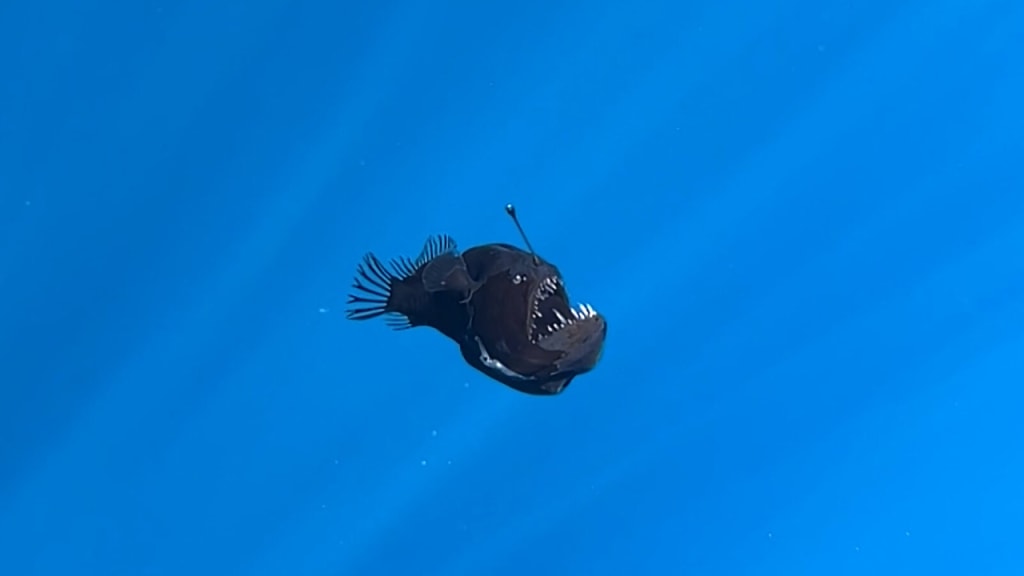
The deep sea remains one of the most mysterious and least explored regions of our planet, home to bizarre and fascinating creatures that have evolved to survive in complete darkness. Among them, the anglerfish is one of the most intriguing species, known for its bioluminescent lure and terrifying appearance. Recently, marine biologists and researchers were astonished when a rare deep-sea anglerfish was spotted near the ocean’s surface in broad daylight for the first time off the coast of Tenerife in the Canary Islands.
This unprecedented event has sparked excitement and curiosity among scientists, as the anglerfish is typically found in the deep ocean, between 200 and 2,000 meters below the surface. The rare sighting presents an incredible opportunity for researchers to study this elusive species up close and learn more about its biology, behavior, and potential reasons for its unexpected appearance in shallow waters.
The Unprecedented Sighting
During a routine shark research expedition conducted by the NGO Condrik Tenerife, marine biologist Laia Valor and underwater photographer David Jara Boguñá stumbled upon the surprising discovery. While returning to port, they spotted an unusual black object floating near the surface of the water. Upon closer inspection, they realized that they had come across a deep-sea anglerfish, specifically the humpback anglerfish (Melanocetus johnsonii), a species rarely seen outside its deep-sea habitat.
“We were returning to port when I saw something black in the water that didn’t look like plastic or debris,” Valor recounted. “It seemed unusual. We spent a couple of hours with it. It was in poor condition and only survived for a few hours.”
The specimen, unfortunately, did not survive for long and was later transported to the Museum of Nature and Archaeology (MUNA) in Santa Cruz de Tenerife for further examination. Despite its demise, this extraordinary event has provided scientists with a rare opportunity to study a deep-sea anglerfish in a way that has never been possible before.
The Enigmatic Anglerfish
The anglerfish is one of the most bizarre and fascinating creatures of the deep sea. Known for its grotesque appearance, large mouth filled with sharp, translucent teeth, and its bioluminescent lure, the anglerfish is a master of deep-sea predation.
Bioluminescence: The Secret to Hunting in Darkness
What makes the anglerfish truly unique is its bioluminescent lure, known as the esca, which is an extension of its dorsal spine. This glowing appendage is filled with symbiotic bacteria that emit light, helping the anglerfish attract prey in the pitch-black depths of the ocean. The light mimics the appearance of small marine organisms, luring unsuspecting fish closer before the anglerfish strikes with lightning speed.
This adaptation allows anglerfish to thrive in an environment where food is scarce, and visibility is nearly nonexistent. The ability to produce light in the abyss is not just for hunting—it can also play a role in communication and mating.
Extreme Sexual Dimorphism
One of the most fascinating aspects of anglerfish biology is their extreme sexual dimorphism. Female anglerfish are significantly larger than their male counterparts, often by several times. Males, on the other hand, are much smaller and have evolved to be parasitic. When a male anglerfish finds a female, he attaches himself to her body, eventually fusing with her and sharing her bloodstream. Over time, the male loses his eyes and internal organs, becoming completely dependent on the female for survival.
This bizarre reproductive strategy ensures that the female always has a mate available in the vast and desolate deep sea, where encounters with others of the same species are incredibly rare.
Why Did This Anglerfish Appear Near the Surface?
The sudden appearance of a deep-sea anglerfish in shallow waters is highly unusual, leading scientists to speculate about the possible reasons behind this event. Several theories have been proposed:
1. Environmental Changes
Climate change and rising ocean temperatures have been known to affect deep-sea currents and habitats. Some researchers believe that changes in ocean conditions, including temperature fluctuations or disruptions in the food chain, might have forced the anglerfish to venture into unfamiliar waters.
2. Disorientation or Injury
It is possible that the anglerfish was sick or injured, which could have led to its unusual behavior. Deep-sea creatures are highly adapted to their dark, high-pressure environments, and sudden changes in depth can be fatal.
3. Predator Evasion
Another theory suggests that the anglerfish may have been escaping from a deep-sea predator. In a desperate attempt to flee, it might have accidentally swum too close to the surface, where it ultimately could not survive.
4. Natural but Rare Occurrence
While this is the first documented case of a deep-sea anglerfish being seen in broad daylight near the surface, it is possible that similar incidents have occurred before but went unnoticed. The vastness of the ocean makes it nearly impossible to track every rare marine event.
The Importance of the Discovery
This remarkable encounter highlights the mysteries of the deep sea and the importance of continued exploration. The deep ocean remains one of the least understood regions on Earth, and every new discovery brings us closer to unraveling its secrets.
Scientific and Conservation Implications
The study of deep-sea creatures like the anglerfish helps scientists understand how life thrives in extreme conditions. These findings can also provide insights into broader ecological changes occurring in the ocean due to climate change and human impact.
Additionally, discoveries like this emphasize the need for conservation efforts to protect deep-sea ecosystems. With increasing threats such as deep-sea mining, plastic pollution, and climate change, preserving the ocean's biodiversity is more crucial than ever.
Final Thoughts
The rare daylight sighting of the deep-sea anglerfish off the coast of Tenerife is a historic moment in marine biology. It serves as a reminder of how little we know about the deep ocean and the incredible creatures that inhabit it.
As researchers continue to analyze the specimen at the Museum of Nature and Archaeology, the scientific community eagerly awaits new insights that could reshape our understanding of deep-sea life. This event also underscores the importance of continued oceanic exploration and conservation efforts, ensuring that future generations can continue to uncover the mysteries of the deep.
For now, the anglerfish remains a symbol of the unknown, a living testament to the wonders hidden beneath the waves. And who knows? The next time you gaze out at the ocean, you might just be looking into the depths where these fascinating creatures lurk in the darkness, waiting to reveal their secrets.
About the Creator
Umer Web Geek
Top-rated freelancer with 100+ professional WordPress websites designed. As an Elementor Pro expert, I create eye-catching, responsive designs. Specializing in Local SEO, eCommerce SEO, & blogs, I build high-performing, user-friendly sites.
Keep reading
More stories from Umer Web Geek and writers in 01 and other communities.
Captain America: Brave New World – A Bold New Chapter in the MCU
The Marvel Cinematic Universe (MCU) continues to expand, and with Captain America: Brave New World, the iconic superhero mantle has firmly passed to Anthony Mackie’s Sam Wilson. This film marks a new beginning, not just for Captain America but for the entire MCU as it ventures into uncharted territory.
By Umer Web Geek10 months ago in 01
How to Hire a Mobile App Developer in St. Louis 2026
The regional tech landscape has shifted significantly. The decision to hire a mobile app developer in St. Louis 2026 is now a strategic choice. St. Louis has evolved from a traditional manufacturing hub. It is now a center for agtech and geospatial technology. Financial services also drive the local economy forward.
By Del Rosarioabout an hour ago in 01
Reducing AI Integration Failures by 40% With the Right Generative AI Consulting Partner
In the rush to adopt cutting-edge technologies, many organizations have jumped into artificial intelligence projects without a solid strategy, experienced guidance, or realistic expectations. As a result, a growing number of businesses report stalled initiatives, failed integrations, or tools that never deliver meaningful ROI. But when organizations align with the right generative ai consulting services, the narrative changes — often dramatically. With expert support, companies can reduce AI integration failures by up to 40% and unlock the full potential of intelligent systems.
By Steve Waugh6 days ago in 01




Comments
There are no comments for this story
Be the first to respond and start the conversation.