
Precision Radioisotopes: Navigating the Medical Cyclotron Market
Innovation, Applications, and Growth Trajectories in Advanced Radiopharmaceutical Production

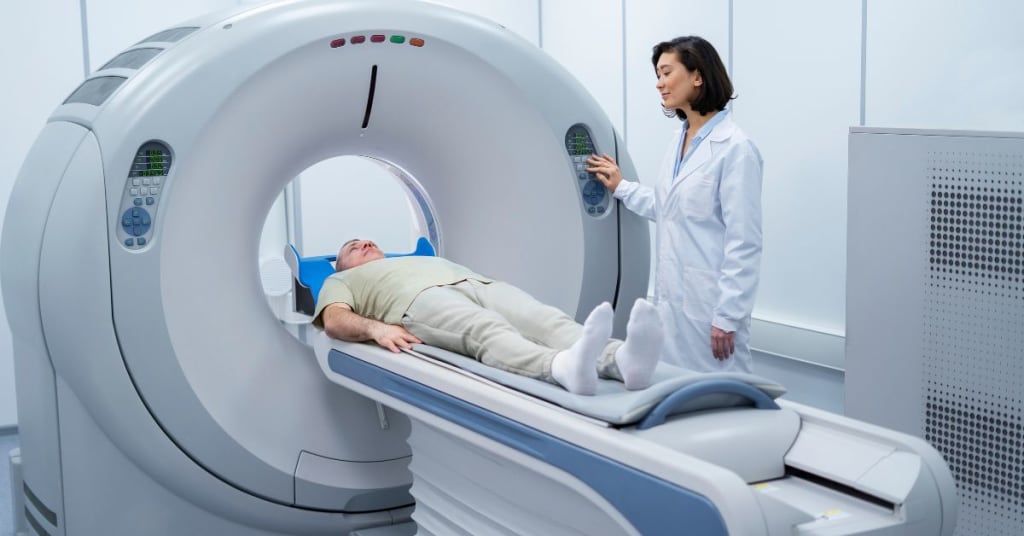
The global Medical Cyclotron Market is currently experiencing a period of unprecedented technological transformation, driven by the escalating demand for advanced diagnostic imaging and the rise of personalized oncology treatments. As healthcare providers worldwide seek to shorten the half-life logistics of radiopharmaceuticals and expand access to Positron Emission Tomography (PET), the deployment of on-site particle accelerators has become a strategic priority. This industry, which bridges the gap between high-energy physics and molecular medicine, is critical for the production of short-lived isotopes like Fluorine-18 and Carbon-11, forming the backbone of modern diagnostic accuracy and therapeutic monitoring.
I. The Infrastructure of Molecular Imaging
The shift toward decentralized radiopharmacy is one of the most significant trends in the nuclear medicine landscape. Historically, large centralized facilities distributed isotopes, but the rapid decay of these materials often limited their geographic reach.
Compact and Mid-Range Accelerators
The move toward "in-hospital" isotope production has led to the development of compact, self-shielded systems. These machines are designed to fit within standard hospital footprints, reducing the need for massive concrete bunkers. By housing these proton-beam systems directly within clinical centers, providers can produce doses on demand, virtually eliminating the waste associated with radioactive decay during transit.
High-Energy Systems for Research and Therapy
While clinical centers focus on 10-18 MeV systems, research institutions are increasingly investing in 30 MeV+ installations. These high-capacity units allow for the production of specialized isotopes used in alpha-emitter therapy and multi-tracer studies, pushing the boundaries of what is possible in neuroimaging and cardiac diagnostics.
II. The Rise of Theranostics: A Dual-Purpose Revolution
One of the most compelling growth drivers in the isotope production hardware sector is the emergence of "Theranostics"—a portmanteau of therapeutics and diagnostics.
Diagnostic Precision: By using isotopes to "see" exactly where a tumor’s receptors are located, clinicians can confirm a patient's suitability for a specific treatment.
Targeted Delivery: The same molecular pathway is then used to deliver a therapeutic dose of radiation directly to the cancer cells, sparing healthy tissue.
Real-Time Monitoring: Particle accelerators are now being optimized to produce the specific isotopes required for this "see-and-treat" workflow, particularly for Gallium-68 and Copper-64 production, which are becoming staples in prostate and neuroendocrine cancer management.
III. Regional Dynamics and Global Expansion
The geographic distribution of radioisotope production capacity is shifting rapidly as emerging economies invest in advanced healthcare infrastructure.
The Asia-Pacific Surge
With the rapid expansion of private healthcare in India, China, and Southeast Asia, the demand for PET-CT imaging is skyrocketing. Governments in these regions are incentivizing the installation of domestic cyclotron facilities to reduce dependence on imported radiochemicals and to make advanced cancer screening more affordable for their populations.
North American and European Modernization
In mature healthcare sectors, the focus is on replacing aging, first-generation accelerators with more efficient, automated systems. These modern units offer higher beam currents and multi-target capabilities, allowing for the simultaneous production of different isotopes, thereby increasing the return on investment for large medical complexes.
IV. Technical Innovations: Automation and Efficiency
The complexity of operating a particle accelerator has historically been a barrier to adoption. However, current engineering trends are focused on "democratizing" the technology through automation.
Integrated Targetry: Modern systems feature automated target loading and chemistry modules, which minimize human exposure to radiation and reduce the margin for error in the synthesis of radiopharmaceuticals.
Solid Target Systems: The ability to use solid targets (such as Yttrium or Zirconium) instead of traditional liquid or gas targets has opened the door to a wider variety of metallic isotopes, which are essential for the next generation of immuno-PET imaging.
V. Strategic Partnerships and the Supply Chain
The manufacturing and maintenance of these sophisticated machines require a highly specialized supply chain involving cryogenics, vacuum technology, and high-frequency power electronics.
The Role of Contract Manufacturing
Many pharmaceutical giants are entering into long-term service agreements with accelerator manufacturers. These partnerships ensure that the "cold" supply chain remains robust, with dedicated maintenance teams providing 24/7 support to prevent any downtime that could disrupt patient scanning schedules.
Isotope Security and Sovereignty
Recent disruptions in global isotope supplies—often caused by the unplanned shutdown of aging nuclear reactors—have prompted many nations to view cyclotron-produced isotopes as a matter of national health security. By diversifying production away from reactors and toward hospital-based accelerators, the medical community can ensure a more stable and resilient supply of vital diagnostic tracers.
VI. Economic Considerations: The Cost-Benefit Ratio
While the initial capital expenditure for a particle accelerator installation is significant, the long-term operational advantages are substantial.
Cost Per Dose: On-site production significantly lowers the price per dose for high-volume facilities by removing the high costs of specialized courier logistics and the loss of product through decay.
Revenue Generation: Hospitals with excess capacity often act as regional hubs, selling surplus isotopes to smaller nearby clinics, creating a secondary revenue stream that helps amortize the equipment costs.
VII. Future Outlook: Beyond Oncology
While cancer remains the primary driver, the application of cyclotron-produced materials is expanding into other critical areas of medicine.
Neurology and Alzheimer’s: New tracers that can identify amyloid plaques and tau tangles in the brain are becoming essential for the early diagnosis of dementia. As new treatments for Alzheimer's reach the market, the demand for these diagnostic scans will increase exponentially.
Cardiology: Perfusion imaging using Rubidium-82 or Nitrogen-13 remains the gold standard for evaluating coronary artery disease. Advancements in accelerator technology are making these tests more accessible to the general population.
VIII. Conclusion
The transformation of the nuclear medicine infrastructure is paving the way for a more precise and personalized approach to global health. As the technology behind particle acceleration becomes more efficient, compact, and automated, the reliance on centralized nuclear reactors will continue to diminish. Organizations that successfully integrate these advanced isotope production capabilities into their clinical workflows will be at the forefront of the next wave of medical innovation. The future of diagnostics lies in the ability to produce the right isotope, at the right time, for the right patient—a reality made possible by the ongoing evolution of the molecular imaging sector.
About the Creator
Rahul Pal
Market research professional with expertise in analyzing trends, consumer behavior, and market dynamics. Skilled in delivering actionable insights to support strategic decision-making and drive business growth across diverse industries.
A Complete Submissive Guide For Beginners: 8 Simple Steps To Being a Great Submissive
Do you get sexual pleasure from submitting or giving up control to your partner? Would you like to establish a full-time sub/dom relationship and become a perfect submissive? If so, you have landed on the right blog.
By Intelligent Creator7 days ago in 01




Comments
There are no comments for this story
Be the first to respond and start the conversation.