
Oceangate Submarine Disaster - What REALLY Happened
The Titan Submersible
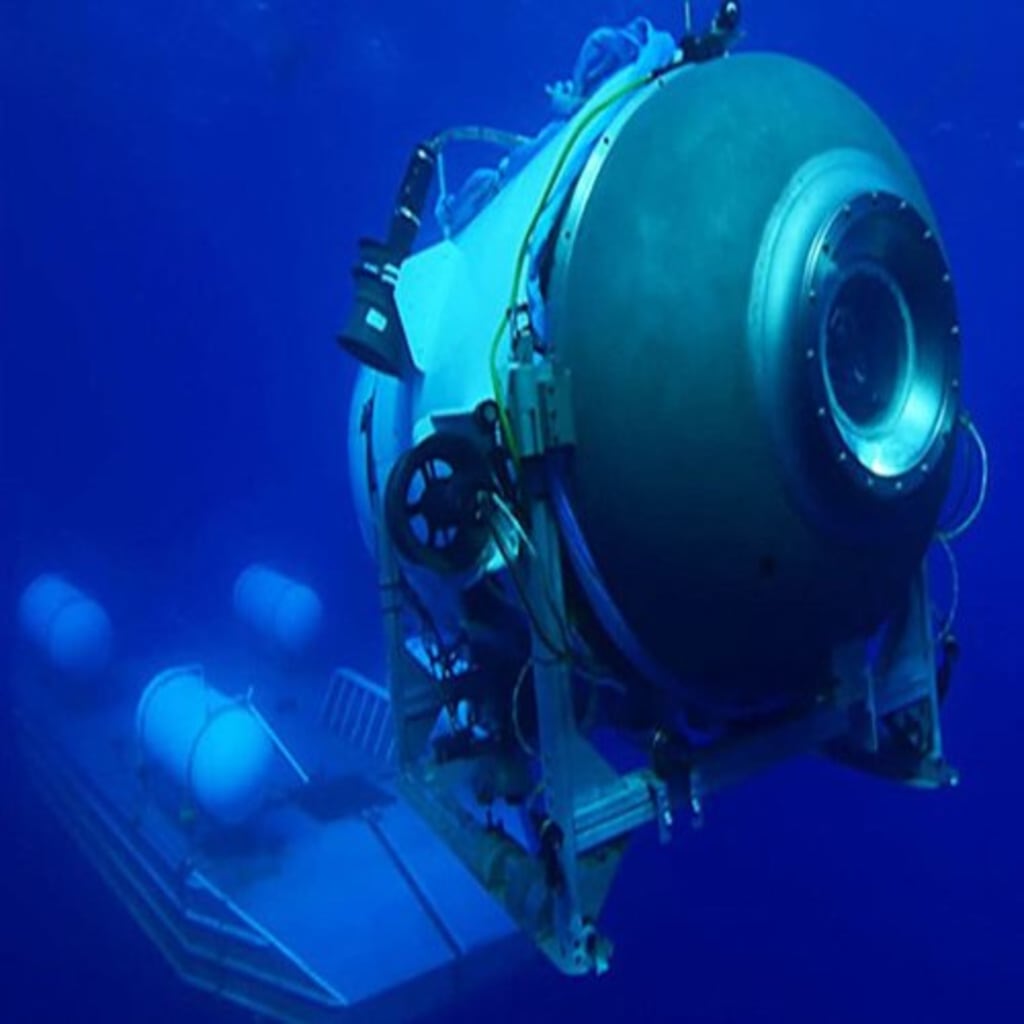
on June 18 2023 Titan a submersible operated by Ocean Gate went missing the international waters in the North Atlantic Ocean off the coast of Newfoundland Canada. The submersible was on a tourist expedition, as they sailed towards the dive site anticipation mounted among the crew, this was no ordinary Mission and the stakes were high for many the Titanic represented the ultimate Challenge a chance to explore a piece of history and unlock the secrets of one of the world's most enduring Mysteries. The crew was composed of five people including British businessman Hamish Harding, Pakistani investor shazda dawood and his son Suleiman, French diver Paul Ahri nashole and Ocean Gate CEO Stockton Rush. Every single one of them were known to be daring explorers including 19 year old Suleiman who packed along a Rubik's Cube in an attempt to set the world record for solving the first Rubik's Cube thousands of feet underwater next to the Titanic.
At the beginning of 2023, The Voyage was reserved with Stockton Rush offering two reasonably priced tickets to Jay bloom, a businessman from Las Vegas and his son for the trip Stockton Rush proposed a cost of a hundred and fifty thousand dollars per seat instead of the full price of 250 000, assuring Jay Bloom that the journey was safer than crossing the street. However Jay Bloom quickly declined the offer due to concerns about safety . The trip was originally planned for May but was postponed until June due to unfavorable weather conditions.
Due to the estimated three days of oxygen supply, there was a huge rescue effort by the U.S Coast Guard and Canada's Coast Guard which was unsuccessful until early on June 22nd when evidence of the wreckage of the vessel started to emerge leading to the tragic conclusion that the vessel imploded in the ocean depths and there were no survivors.
Many of the world’s leading engineers were furious about what happened and the different shortcuts that were taken, we'll go in through all of that in this article, so let's try to figure out exactly what happened and what we can learn from this.
Let's start with what we know about the company operating the Titan and submersible; Ocean Gate Incorporated is a privately held U.S company operating out of Everett Washington that provides crude submersibles for tourism industry and research and exploration, the company was founded in 2009 by Stockton rush and Guillermo Solen. Stockton Rush wanted to be an astronaut so he got his commercial pilot license, but because of bad eyesight he could never be a military pilot so instead he moved from San Francisco to Seattle to work at McDonald Douglas as a flight test engineer for the F-15 Eagle. After attending the launch of spaceship 1 in the Mojave Desert in 2004, he decided he didn't want to go up to space as a tourist, he wanted to be like Captain Kirk on the Enterprise, he wanted to explore and pivoted his pursuit to undersea exploration. He was married to Wendy Rush. a descendant of Isidore and Ida Strauss; two people who actually passed away on the sinking of the Titanic, which ties into the story here today.
The tragic events happened during a deep-sea tourism expedition to explore the wreckage of the Titanic which sunk in Northern Atlantic in 1912.
Before we get to the specifics of this particular tragedy let's put just how difficult deep-sea exploration is into context. It's easy to be in awe of Aviation and space exploration because breaking Free of gravity and flying through the air seem like such a feat but in many ways deep sea craft are the much greater engineering challenge. It all comes down to pressure, we don't think about air pressure because at sea level it's just 14.7 pounds per square inch, that pressure is the result of the column of air that reaches above us all the way into outer space all those very molecules above us pushing down result in that pressure, but water is a much denser fluid than air so for every 10 meters or 32.8 feet you dive the pressure increases by one atmosphere or 14.7 PSI. The Titanic is sitting on the ocean floor at about 12 500 feet below sea level, the two broken parts of the ship; the bow and the stern, are more than 2 600 feet apart and surrounded by debris.
After over 100 Years of being in the bottom of the ocean the wreckage is 400 miles off the coast of Newfoundland in Canada. Let's put this depth into perspective, imagine laying on your back with a one foot by one foot board, and how much weight you would feel on that board at 100 meters the size of a soccer or football field. We have the pressure of 10 atmospheres or 145 PSI which means on that one-by-one foot board we would feel the weight of 20 880 pounds that is 4.7 Tesla Model wise. At 381 meters 1250 feet we have the height of the Empire State Building in New York City at this depth we would feel 37.4 atmospheres of pressure and that one-by-one footboard would feel the weight of 80 000 pounds. At 490 meters we have the max dive depth of the C-Class of U.S Navy submarine, here we'd feel 48.5 atmospheres of pressure, that one by one foot board would feel the weight of 94 800 pounds. At 828 meters we have the height of the Burj Khalifa, here we'd feel 82 atmospheres, that weight on the board would be 173 520 pounds. Now this is around the same depth as the deepest diving submarine in operation today, the oscar-class submarine in the Russian Navy. At 3 800 meters sits the wreckage of the Titanic, here the pressures are 376 atmospheres, that one by one footboard on our chest would have the weight of 797 000 pounds.
The Ocean Gate Titan was rated for a mass dive depth of about 4 000 meters. Now that might sound insane, but actually it's not even the record for the deepest human beings have been, that honor goes to James Cameron and the deep sea Challenger built in Australia in 2012. The deep-sea Challenger reached the deepest part of the Mariana Trench in the Pacific Ocean, the deepest point on Earth at a mind-boggling 11 000 meters or 36 000 feet, here we'd feel 1090 atmospheres of pressure and that one-by-one foot board would have the weight of 2.3 million pounds. On it compare that to the difference in pressure of an airplane at cruising altitude of 36 000 feet, where outside the pressure might be 3 PSI and on the inside between 10 and 12, and that hopefully puts in perspective why more people have been to space than have been into the deepest parts of our oceans.
Now let's talk about the red flags that plagued Ocean Gate from the get-go. By the way Ocean Gate just sounds like a walking Scandal ready to happen, first the design limitations of the Titan required that the hatch be bolted down by 17 to 18 bolts from the outside, this meant there's no way for the passengers inside to open the hatch, they'd have to rely on ground Crews to open it. Now this is understandable because of these deep sea vessels have to be incredibly tight, they have to be very strong, the water seals have to hold and that's all complicated.
But I think this shows you why it's really important to have backup systems and have some sort of an explosive detonation cord you can pull to blow the hatch in the event that the craft surfaced and no one found it. And that was actually one of the fears early on is that the vessel could actually surface and be at the surface somewhere along the Atlantic unfound and still die from suffocating because they couldn't open the hatch and the air could run out.
In 2021, Mexican YouTuber, Alan Estrada, filmed the return of the Titan dive. However, when the sub rose to the surface, OceanGate crew couldn't get it back onto the ship and its occupants spent 27 hours inside before they could be rescued.
The Titan also didn't have GPS or other navigational instruments on board and it didn't have a locator beak in either, like a black box on an aircraft, most Subs use GPS for near surface navigation which doesn't work in deeper waters. In deeper waters they use dead reckoning course information obtained by the ship's gyro Compass measured speed and estimates of local ocean currents. They also allowed inertial navigation systems which was an estimated position Source utilizing acceleration deceleration pitch and roll from the computers that transmit this data.
The Titan in contrast appeared to rely only on data provided by the surface support vessel. In 2019 Ocean Gate published a blog post explaining why the Titan was not certified by any ship Authority which was a huge red flag, Ocean Gate stated the vast majority of marine and Aviation accidents are actually the result of operator error not mechanical failure. And argue that classification focused solely on the physical state of the vessel and not the corporate actions which are characterized as a constant committed effort and a focused corporate culture of maintaining high level operational safety.
Journalist David progue who rode on the Titan to view the Titanic in 2022, noted during his expedition the surface support vessel lost track of the Titan for about four to five hours and mentioned that adding a Locator Beacon was actually discussed during this event. They could still send short texts to the sub but they had no idea where it was. It was quiet and very tense he says and they shut off the ship's internet to keep us from tweeting.
The craft was also controlled by a video game controller, which sounds like some cool Silicon Valley way of thinking, beanbag chairs and break rooms. Military spec products go through incredible rigorous testing making them safe in all operating environments, for example, as expensive as Apple's Vision Pro headset is at 3 500, it is done right cheap compared to the four hundred thousand dollars that it costs to get a helmet for the F-35 fighter jet, and the reason why well lower volumes of course, but also because they have to go through unbelievable vibration testing to make sure the wells will all hold up make sure that the higher levels of radiation at 40 to 50 000 feet won't do any damage long term and to make your absolute reliability.
Now let's talk about how we got to the Titan Ocean Gate, started by purchasing antipodes which is a submersible back in 2012 which was their first test bed for testing and learning about this entire Endeavor, next they built cyclops one which is in collaboration with University of Washington's Applied Physics laboratory and this was a deeper sea vessel capable of reaching a max depth of 500 meters still nowhere near deep enough for the Titanic, but this was their next step and their next iteration in the early design the hole was made of carbon fiber and that's the whole submersible would dive vertically with pivoting seats to ensure the passengers remained upright.
It was said that Boeing worked with Ocean Gate and the University of Washington on their initial design analysis, but we'll get back to that because there's a little bit more to that story. Finally, they would arrive at the Titan their final product that would actually be rated for 4 000 meters. One of the key takeaways about the Titan is that this is a carbon fiber and titanium hold submersible now this is really exotic in the world of materials we've been using high strength steel aluminum for a long time and we have data engineering. Data on how they fail and what to look for and test methodologies but carbon fiber is still quite exotic in fact any car you've ever driven probably doesn't have much carbon fiber in it the only exceptions are really really high-end supercars or even in the case of Aviation more recently with the Boeing Dreamliner, but before that we've always used aluminum and titanium and other materials like that. So just generally there's less known about it and it's also really difficult to make sure that you get it right.
Ocean Gate signed a contract with Spencer Composites in January 2017 for the carbon composite cylinder this was the same company that built the composite pressure hole for the single person deep flight Challenger for Steve Fawcett after Fawcett passed away d-flight Challenger was acquired by Richard Branson's virgin Oceanic which had announced plans to conduct a series of five Dives to the deepest points of the ocean but deep flight refused to endorse the plan as the craft had been designed to dive only once, this is important we'll get back to this in a second, in a statement they said the problem is the strength of the deep flight Challenger does decrease after each dive its strongest on the first dive said Adam Wright the firm's president . It was designed to set the record dive to the deep and then be retired as an exhibit in the Smithsonian this is a really crucial part because sometimes in engineering, what it comes down to is the operational Lifetime and understanding it and this might have been at play here.
After The Disappearance of the Titan in 2023, the University of Washington stated that APL their Applied Physics laboratory had no involvement in design engineering or testing of the Titan submersible, a Boeing spokesperson also said that Boeing was not a partner on the Titan and did not design or build it; a NASA spokesperson said the NASA's Marshall space flight center had a space act agreement with Ocean Gate but did not conduct testing and Manufacturing via its Workforce or facilities. Basically, all of these Partnerships that they had are now being revealed that they were not really Partnerships. This is a classic example of a company trying to get credibility by partnering with NASA, how good does that sound, but what exactly they did with NASA isn't really well understood, it could have just been as simple as hey can we run out a little bit of space over in this corner of your facility.
In 2018 the company fired David Lockridge, ocean Gates director of marine operations, the reason was that David Lockridge had allegedly breached his contract and shared confidential information about ocean Gate's designs with two individuals as well as with the occupational safety and health administration. However David Lockridge claimed in a wrongful termination lawsuit that he was actually fired for blowing the whistle concerning safety issues with regard to Ocean Gate's design and Engineering Process according to the suit David Lockridge delivered highly critical updates regarding the Titan's submersible's quality control to Senior Management and also to Stockton Rush pointing to alleged issues such as visible flaws in the ship's carbon fiber Hull prevalent flaws in a scale model flammable materials on board a viewing window not rated for the Titanic's depth and the Key Safety documents that were not shared with him. That wasn't the only red flag about the company that same year 2018 leaders in the submarine industry wrote a letter from the Marine technology Society to the company warning of catastrophic issues with the submarine's development, three dozen signatories including Executives oceanographers and explorers expressed unanimous concern particularly with the company's decision not to seek outside evaluation and testing. Despite all of these concerns and comments made by professionals in the field, Ocean Gate defended all its decisions and adamantly wished not to have the Titan submersible classed by an outside evaluator, unfortunately the company's negligent attitude would prove to be fatal.
During a human piloted descent on December 10 2018 Stockton Rush used the vertical thrusters to overcome unexpected positive buoyancy when descending past ten thousand feet these submersibles are like a balloon with air inside right so it's hard for them to dive and so they have different ways and ballast systems to be able to accomplish that but for whatever reason around 10 000 feet he had to use vertical thrusters to continue his descent and when this happened it caused interference with the communication systems between spinning propellers the disturbance in the wake of the water coming off those propellers and everything else they lost contact for one hour. Rush was thrilled to call himself the second person to solo dive to 13 000 feet after James Cameron.
We are at the precipice of a new age of exotic tourism and exploration, between going to the space, the Moon, low earth orbit or deep sea diving. We're at the edge of seeing more of this wealthier people the people that were involved in this particular incident, always want to have that next thing and so if we're gonna do this it's important to realize just how unsafe this can be. Unlike commercial Aviation there are no regulatory boards involved here. This happens in International Water. The company did have to register the parent vessel that takes people from Canada, right, so that had to be registered but what happens out in open Waters is not very highly regulated.
Aviation is a perfect example if you ever hop on an airplane you cannot imagine how safe you are because of all the people involved from company members like Boeing and Airbus Personnel engineering test officials all the way to the FAA and other regulatory approval bodies that make sure every little thing is regulated and controlled.
With he Titan, there is none of that going on here. One of the first things to realize about an implosion of the vessel is that there was probably not a lot of suffering. The people probably just died instantly. We mentioned how much weight you would feel at these depths and you would pretty much just get crushed.
So what probably what happened is they built a vessel which was in and of itself pretty impressive, the carbon fiber layup the composite structure titanium, this was an exotic craft and it had a viewing window to go see the Titanic.
These are things that human beings could not do before, but the problem is every craft, every vessel, every engineering device has an operational lifetime. The way engineers do this is by testing something and figuring out how many cycles can we hit this with before problems start to emerge and then they add a safety factor, for example, your car will work almost forever there's no pressure involved, if just atmospheric pressures at sea level right now, if it rusts and things that that could change the equation but your car is fine.
How about aircrafts, aircrafts are pressurized and depressurized pressurized depressurized right and you can't really inspect every little nook and cranny, it's what Engineers figured out because if we're going to build this out of aluminum if we're gonna build it from carbon fiber we have to do a test every thousand hours 500 hours whatever the case might be, a complete overhaul where they tear down the wall panels and inspect and they'll actually get out and check for any cracks in other impurities and Imperfections because any crack or any little divot can be a stress concentration point, where it'll start to impound and fail then finally they'll say at this many hours 20 000 flat hours, whatever the number might be the aircraft is retired. That doesn't mean it's going to fall apart but we know we tested it for millions of hours and nothing bad will happen in this window and that is the operational window. Odds are a plane could probably fly for thousands of more flights after that but we don't want to do that. that is the operational lifetime. What was the operational lifetime of the Titan? was it ever established? they were not doing NDI’s or NDT’s non-destructive testing to see what was happening to the carbon fiber. again carbon fiber is a mesh weave that is laid in alternating patterns and then glued up it is incredibly strong and Incredibly impressive as an engineering material but it's equally not as well studied. we have a hundred years of history and experience with high strength steel and aluminum and other materials but this is a new frontier and that's why this is so important to cover. New Frontiers are exciting they're sexy they're glamorous.
we're on the brink of space tourism where rich people can buy a ticket to go up and tour around the moon have a nice little catered lunch and come home. whenever we have new frontiers we have unknowns that's what makes it a frontier, there's not a playbook.
when you have to build vessels able to withstand the pressures of the ocean's deep deep Waters there's a lot that is unknown and that's why we don't have commercial versions of this. I think this vessel just had some sort of a crumple or some de Factor deformation something was happening over a couple of cycles, I mean they did successfully go down and come back three or you know three times and that fourth time they crumpled honestly I don't think any vessel that goes to the Mariana Trench or 12 000 feet in the Atlantic should have a life more than a couple of cycles and I think what they were trying to do. I think Stockton Rush was trying to make these tickets affordable right now they started at 125 and dollars double that by the time these guys went on at 250 right, 250 000 sounds like a ton of money the real price for this probably should have been a million dollars to 1.5 million dollars .
The most important details in this text are that Stockton Rush was trying to make space tourism tickets affordable, but they took shortcuts and did things they did not understand. The vessel had a crumple or de Factor deformation over a couple of cycles, and the real price should have been a million dollars to 1.5 million dollars. Stockton Rush was trying to make these tickets affordable, but they took all kinds of shortcuts and did things they do not understand. They were optimistic, hoping that they would find them somewhere and that this would be a learning lesson without loss of life, but it didn't work out that way.
We can learn from our mistakes and maybe the next time someone comes up with this idea to do deep ocean exploration there's better methodology in place and it's going to get much more expensive.
About the Creator
Keep reading
More stories from Edwin Kabelo and writers in 01 and other communities.
10 Conspiracy Theories about the Titanic
As things go, tragic occasions have a way of drawing in crazy conspiracies and paranoid notions. Late at night on April 14, 1912, the R.M.S. Titanic hit an ice beg and sank into the cold waters of the North Atlantic, killing 1,517 of the 2,223 travelers and team individuals on board. To figure out this appalling and apparently irregular calamity, individuals over the course of the last century have recounted accounts of unfavorable indications of misfortune that were as far as anyone knows disregarded in advance, or turned elaborate paranoid notions to make sense of the "genuine" reason it sank.
By Edwin Kabelo2 years ago in FYI
Twitter Down
Twitter Down When a major social media platform like Twitter experiences technical problems, millions of users immediately search for answers. Twitter, also known as X, plays a central role in news sharing, public discussion, and real time updates, so even short disruptions can feel significant. Recently, many users have reported difficulties accessing Twitter, loading timelines, posting content, or using certain features. This has led to widespread questions about whether Twitter is down, why it happens, and what users should expect. This article answers the most common questions people search for and explains the situation clearly.
By America today 7 days ago in 01
Navigating Cryptocurrency Asset Recovery
The challenging environment of digital asset theft and loss has given rise to a specialized sector focused on recovery. This field consists of companies with distinct operational models, from direct investigation to technical support and foundational analytics. The following outlines five notable entities often referenced in this space, categorized by their primary function.
By Milan Roberts2 days ago in 01



Comments
There are no comments for this story
Be the first to respond and start the conversation.