
NASA’s PUNCH Mission Captures First Stunning Images of the Sun’s Outer Atmosphere
Unveiling the Sun’s Hidden Winds: PUNCH Mission Begins Groundbreaking Solar Exploration

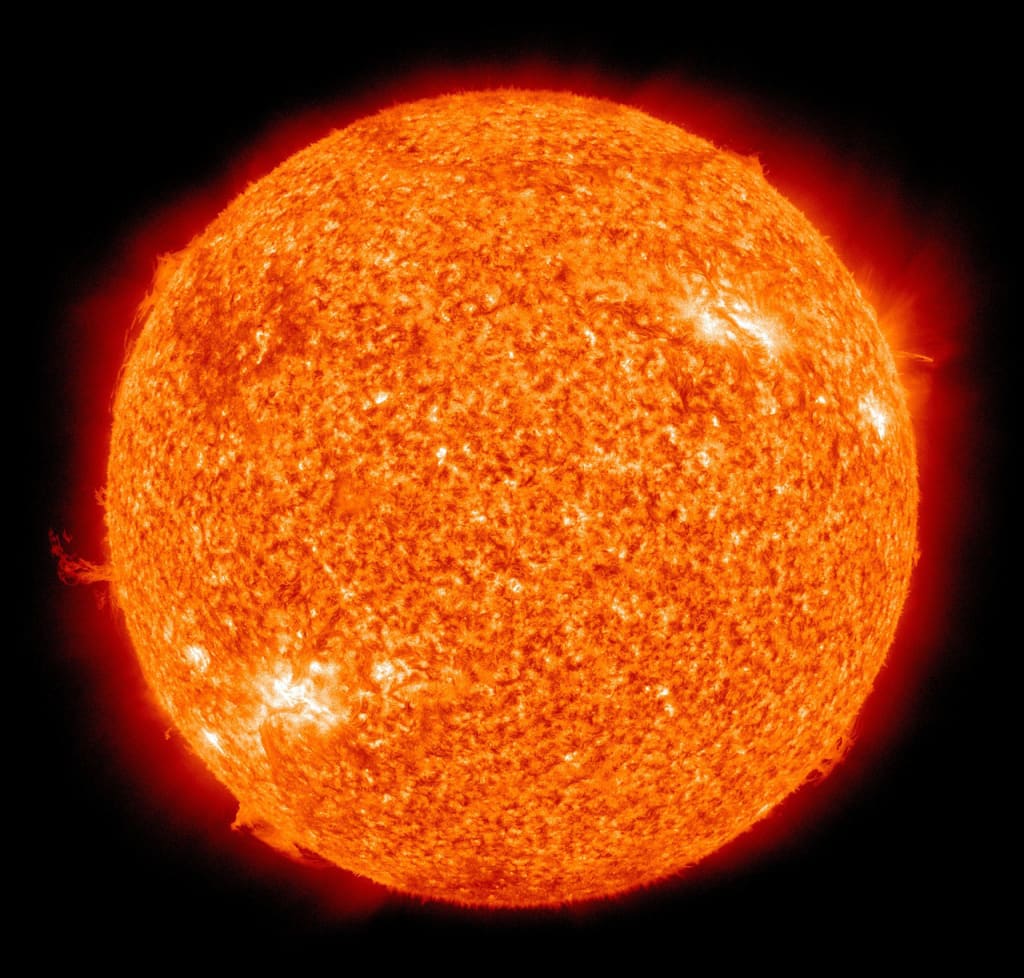
NASA's Polarimeter to UNify the Corona and Heliosphere (PUNCH) mission has reached a significant milestone by successfully capturing its inaugural images of the Sun's outer atmosphere. This achievement marks the commencement of an ambitious initiative aimed at examining the solar corona and solar wind with unparalleled precision. Launched on March 11, 2025, the mission comprises four compact satellites, each the size of a suitcase, operating collaboratively to deliver a thorough perspective of the Sun's atmosphere and its impact on space weather. These preliminary images provide insight into the dynamic processes that govern solar wind and coronal mass ejections (CMEs), events that have the potential to disrupt power grids, satellite communications, and even aviation systems on Earth.
A Groundbreaking Mission to Study the Sun
PUNCH is a groundbreaking NASA mission that aims to investigate the heliosphere, a vast area of space influenced by the solar wind, and the corona, the outermost layer of the Sun's atmosphere. PUNCH is uniquely positioned to observe how solar wind travels from the corona into interplanetary space, in contrast to previous missions that focused on the surface or inner corona of the Sun.

The mission’s four microsatellites are equipped with advanced wide-field imaging cameras that can capture the faint light of the solar wind, something traditional telescopes struggle to observe. By combining their data, these satellites will create 3D maps of the solar wind, helping scientists understand how it evolves and interacts with Earth’s magnetosphere.
First Images Reveal Stunning Solar Dynamics
The first images released by NASA showcase the Sun’s outer corona in remarkable detail, revealing streamers, solar flares, and coronal holes—regions where solar wind escapes at high speeds. These images set the stage for groundbreaking discoveries by confirming that PUNCH's instruments are working as intended.
A coronal mass ejection (CME), a massive eruption of plasma and a magnetic field from the Sun, is one of the most striking features captured. Geomagnetic storms caused by CMEs can cause damage to satellites and power infrastructure on Earth. By studying these events in real time, PUNCH will improve space weather forecasting, giving scientists and engineers more time to prepare for solar storms.
Why PUNCH Matters: Understanding Space Weather
The Sun is not a static object—it is a dynamic, ever-changing star that influences the entire solar system. The interaction between the solar wind, a stream of charged particles emanating from the Sun, and Earth's magnetic field occasionally results in:
• Disruptions to power grids (e.g., the 1989 Quebec blackout caused by a solar storm)
• Interference with GPS and satellite communications
• Increased radiation exposure for astronauts and high-altitude flights
PUNCH aims to provide answers to important questions like:
• How does the supersonic speed of the solar wind come about?
• What triggers coronal mass ejections?
• How do these phenomena affect Earth’s space environment?
By filling gaps in our understanding, PUNCH will enhance our ability to predict and mitigate the effects of space weather.
How PUNCH Works: Four Satellites, One Mission
The innovative design of the PUNCH mission makes use of four identical microsatellites flying together to provide a view of the Sun's corona from every angle. Scientists are able to measure the density and speed of solar wind particles thanks to the Wide-field Imager (WFI) that is carried by each satellite and is capable of detecting polarized light.
• Three satellites focus on imaging the inner heliosphere.
• The fourth satellite gives a "side view" of the solar wind so that it can be tracked as it spreads into space.
Researchers are able to create 3D models of solar wind structures using this multi-angle strategy, something that has not been accomplished by any previous mission.
The Future of Solar Research
PUNCH is part of a broader effort by NASA and international partners to study the Sun. It assists missions such as:
• Parker Solar Probe (being in contact with the Sun's core)
• Solar Orbiter (studying the Sun’s poles)
• DSCOVR (monitoring Earth-directed solar wind)
Together, these missions provide a more complete picture of solar activity and its impact on our planet.
Potential Discoveries and Applications
Scientists expect PUNCH to uncover new insights into:
• The origins of solar wind's "slow" and "fast" speeds
• Solar eruptions and magnetic reconnection in particular
• How solar wind shapes planetary atmospheres
Beyond pure science, improved space weather forecasts could help:
• Protect astronauts on future Moon and Mars missions
• Protect power grids from blackouts caused by solar energy
• Enhance the safety of aviation and satellite operations.
Conclusion: A New Era in Solar Science
NASA’s PUNCH mission has officially opened its eyes to the Sun, delivering breathtaking first images that promise to revolutionize our understanding of solar dynamics. PUNCH will provide crucial data for predicting and mitigating space weather hazards by following the solar wind from its birth in the corona all the way through the solar system.
As the mission progresses, scientists anticipate groundbreaking discoveries that could reshape our knowledge of the Sun-Earth connection. With PUNCH now operational, humanity is one step closer to unlocking the secrets of our star—and safeguarding our technology-dependent civilization from its most violent outbursts.
For the time being, the world stands in awe as these four tiny satellites begin their quest to unravel the mysteries of the solar wind. This demonstrates once more that big discoveries frequently come in small packages.
About the Creator
Keep reading
More stories from Tech Alamin and writers in 01 and other communities.
Anker’s 4K Outdoor Projector Looks and Sounds Great… On Paper
In the constantly changing landscape of home entertainment, portable projectors have gained significant popularity, particularly for outdoor movie screenings, gaming sessions, and spontaneous social events. Anker, a reputable name in power and audio accessories, has ventured into the projector market with its 4K outdoor projector, which claims to deliver exceptional visuals, immersive audio, and ease of transport. While the specifications appear remarkable on paper, does it truly meet expectations in practical application?
By Tech Alamin9 months ago in 01
Mexico Online Grocery Market Opportunity and Forecast 2025–2033
Introduction Mexico’s grocery retail landscape is undergoing one of the most significant transformations in its history. What was once dominated by neighborhood tiendas, supermarkets, and open markets is now being reshaped by smartphones, digital platforms, and fast-evolving logistics networks. Online grocery shopping—once considered a niche convenience—is quickly becoming an essential channel for millions of Mexican consumers.
By Aaina Oberoi3 days ago in 01
App Development Cost in Wisconsin: What You Need to Know
So, you’ve got a "million-dollar idea" for an app. Great. But before you start dreaming of Silicon Valley exits, we need to talk about the actual bank balance you’ll need to get a dev team in the Badger State to look at your specs. Real talk, building software in 2026 isn't the Wild West it used to be, but it sure isn't cheap.
By Sherry Walkerabout 11 hours ago in 01
Center Stage with Paul Stewart
*** I'm keen to republish the interviews I did for my series with Vocal creators. It's been a few years and I thought it might be nice to revisit these wonderful conversations. I'll be releasing them one at a time for a few weeks/months.
By Heather Hubler4 days ago in Interview




Comments
There are no comments for this story
Be the first to respond and start the conversation.