
Mobile App Quote: Competitive Price to grow your online
With the rising trends toward mobile-first, every company comprehends the need to create an engaging mobile experience to better communicate with its users.

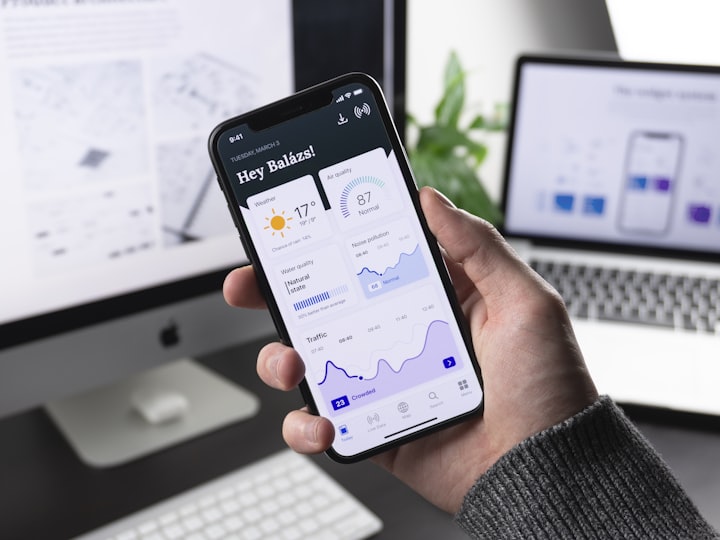
To succeed in this goal, it is necessary to develop business applications that allow you to interact with customers at any time of the day and wherever they are.
Have you finally made the wise decision to build your business application and are you looking for a quote for your mobile application?
Read this comprehensive article and find out which applications our mobile app developers at InfoStride can develop for you, how we organize our work plan and what our app development service provides.
Let’s get started right away!
A Glimpse at Types of Mobile Apps
Our software developers design applications in different programming languages, as per the customer needs, and they handle the end-to-end development of native apps, web apps, and hybrid apps.
The choice of the type of mobile applications and the language used for programming is made on the basis of the requests that the customer submits to us and the type of requirement that this must satisfy.
If you are still not convinced of which app is best suited to your type of business, below are the characteristics of each.
1. Native App
The native apps are all those applications developed using a specific programming language for each type of operating system (Objective-C / Swift for iOS, Java/Kotlin for Android, C# for Windows Phone, etc.).
Unlike hybrid apps, native apps are distinguished by their excellent performance but this advantage translates into an increase in the development cost.
Native apps offer numerous advantages, including being able to interact with most of the features of the device in which they are installed (address book, messages, notifications, geo-location, etc.) and being able to be published on the store.
2. Hybrid App
Hybrid applications have a very similar design to that of web apps. The core of these apps are coded in web development programming languages such as HTML5, CSS3, and JavaScript and then encapsulated within a native app using app development frameworks like React Native, Flutter, and Ionic.
That’s why their code can be easily adapted to any type of operating system (they are also multi-platform). Hybrid apps are suitable for those who want to implement an application in their strategy but do not have much budget to invest.
3. Web App
Web apps are applications that allow you to simulate the look of their own native app interfaces, which are a kind of shortcut to an application but are not physically installed on the device (Google Chrome or Safari) – Facebook’s app is a web app. The advantage of this type of application is that it does not take up space on the device and does not affect its data calculation capabilities.
As for operating systems for mobile devices, the two most important are iOS (Apple) and Android (Google); the former has the App Store as its distributor while the latter is on Google Play.
At InfoStride, we develop both types: Android and iOS apps.
Stages of Mobile App Development
In recent years, we are seeing a real gold rush in app development, but what are the fundamental stages of building a mobile app? Let’s have a peek at the stages of mobile app development:
1. Market Research
Before commencing the actual development, it’s crucial to perform market research on your competitors and intercept the features or unique value propositions that distinguish you and on which to focus more.
2. Choice of Platform
As we have seen, the two operating systems that dominate the market are iOS and Android and therefore the question arises: which of the two?
It all depends on your market strategy: Android is able to reach a larger audience, but iOS users are the ones most likely to buy.
If, on the other hand, the application does not require any particular functionality, you can consider developing a multi-platform hybrid solution.
3. Define the Goals of Your Project
This is the most critical phase of the entire lifecycle of the mobile app development project, in which the customer plays a crucial role. Through a series of meetings, our team ensures that you have a clear vision of your goals: together with you - we create the requirements and define the use cases for every need.
4. User Experience
To offer your target users a good experience, it is not enough to develop attractive graphics. Precisely for this reason, it is important to hire mobile app developers who are able to correctly and smartly combine a whole series of elements:
Colors
Font
Content structure
Interface structure
Furthermore, in this phase, thanks to the use of frameworks, we define the look and the interaction between the different functionalities.
5. Development
Finally, we get to the heart of the matter … development!
But not without having prototyped.
Before starting to develop your application, in fact, we create prototypes that simulate the interaction between the various views. After this phase, our developers begin to create your application.
6. Testing Phase
This phase is aimed at stabilizing your app and improving its quality.
Our software testing experts make some final changes based on the feedback you provide us and make sure that the app is compatible with the different devices on the market.
7. Release
At this point, your project will be complete and our team will also be able to assist you in releasing the application for the various stores.
8. Analysis
The analysis tools represent a fundamental element to test the behavior of users within your app. For this reason, in the design and development phase, we define what we want to track and what has the most value for your application.
At this point, you will think that your application is ready and our work is finished.
We will surprise you by telling you that, in reality, it is not quite so. There are two other steps necessary for the survival of your application: maintenance and the promotion phase.
9. Maintenance
Let’s find out why they are important and how we at InfoStride take them into account in our quote for mobile apps.
The maintenance cost must be taken into account in the mobile app estimate.
The maintenance of your platform provides for the management of the updates of the operating systems.
Because it could happen that due to a new update of the operating system, for example, some features are no longer available and therefore you need to review the application to ensure its correct functioning.
Maintenance should be done by the same team that carried out the project, so it is advisable that the items “server cost” and “technical maintenance” are also included in the estimate for your mobile app. We at InfoStride, as regards this aspect, offer tickets at excellent prices.
10. Promotion
Our quote to create a mobile application also includes the promotion phase.
The app is an excellent touchpoint in the interaction between company and user, since it improves the relationship, completes the customer experience and, in general, gives support to all the objectives in the short and long term.
But this is only possible if users know it and find it in the store. In order for these two moments to occur, it is important to apply marketing strategies.
Developing an application and not promoting it is useless, as well as condemning it to non-existence online.
Mobile App Promotion: Strategies to Follow After Launch
So let’s look at some of the great strategies to promote your application after launch:
1. Exhibition and Discovery
Considering only the optimization for the store is not enough to determine the success of your application. At this stage, it is necessary to increase brand awareness and bring users to know your app.
Like? It can be done via organic and non-organic activities, such as sponsorship on social channels, SEO or paid ads.
2. Reviews
The more your app receives positive feedback, the more users will be encouraged to download it.
Precisely for this reason, take care of the store card, the reviews, and ratings, as well as the factors that can help the user in the decision-making phase (creation of captivating content, influencer marketing etc.).
3. Conversion
Each application is born with a predefined goal, so it is very important to pay attention to the metrics and performance results to be able to identify the relative strengths or problems on which to intervene promptly.
4. Customer relationship
As far as this aspect is concerned, the mistake that is most easily committed is to focus on the customer acquisition phase, forgetting about the regular customers. In order not to neglect this important aspect, activate push notifications, create content to be sent via email, etc.
Author InfoStride:
InfoStride is a certified M/WBE firm headquartered in San Jose, California with a state-of-the-art offshore development center in India. We provide startups, SMBs and enterprises with a pre-vetted pool of skilled developers for hire across every time zone and tech stack including Android, iOS, Flutter, React Native, Python, Node.js, PHP, Laravel, WordPress, Shopify, Selenium Testers, Manual Testers, Automation Testers, and many more.
About the Creator
Keep reading
More stories from George Smith and writers in 01 and other communities.
Mexico Online Grocery Market Opportunity and Forecast 2025–2033
Introduction Mexico’s grocery retail landscape is undergoing one of the most significant transformations in its history. What was once dominated by neighborhood tiendas, supermarkets, and open markets is now being reshaped by smartphones, digital platforms, and fast-evolving logistics networks. Online grocery shopping—once considered a niche convenience—is quickly becoming an essential channel for millions of Mexican consumers.
By Aaina Oberoia day ago in 01
Service in major U.S. cities is disrupted by a massive Verizon network outage. Cities
On Wednesday, January 14, 2026, Verizon Communications experienced a widespread network failure that disrupted voice and data services for tens of thousands of customers across the United States. Users were unable to make calls, send texts, or access mobile internet for several hours as a result of the outage, which was one of the largest in recent memory for the nation's largest wireless carrier. This prompted emergency alerts to be issued in some cities and prompted fresh inquiries regarding the reliability of networks in a world that is becoming increasingly connected.
By Raviha Imran3 days ago in 01
Center Stage with Paul Stewart
*** I'm keen to republish the interviews I did for my series with Vocal creators. It's been a few years and I thought it might be nice to revisit these wonderful conversations. I'll be releasing them one at a time for a few weeks/months.
By Heather Hubler3 days ago in Interview



Comments
There are no comments for this story
Be the first to respond and start the conversation.