
Micro Guide Catheters: An Essential Medical Device for Minimally Invasive Surgeries
micro guide catheters
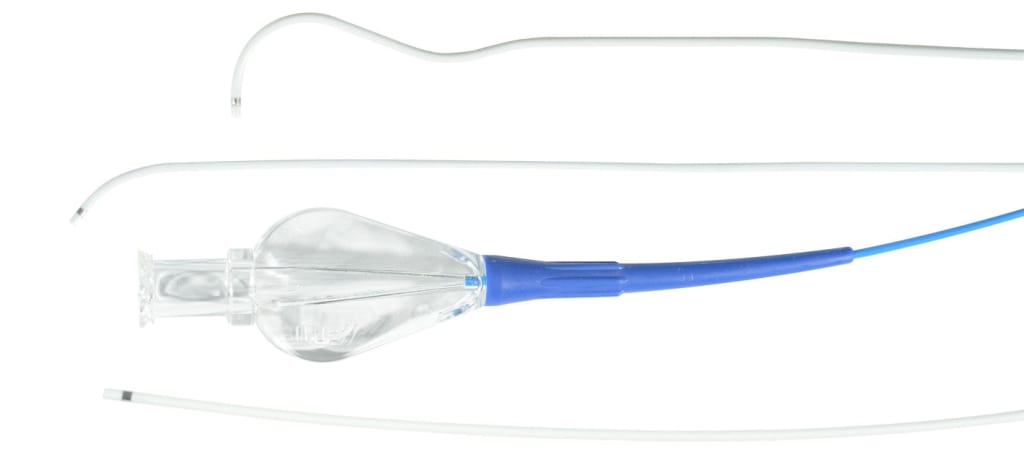
Micro guide catheters are thin, hollow, and flexible medical devices used primarily in interventional radiology and cardiology procedures. They are smaller in diameter than traditionally sized guide catheters and allow medical practitioners to access very small vessels with precision. They are designed to facilitate minimally invasive procedures by enabling the navigation of other instruments like balloon catheters or stents through the body's narrowest blood vessels.
History and Development
The earliest developments of guide catheters can be traced back to the late 1940s and early 1950s. However, it was not until the 1970s and 1980s that dedicated guide catheters for coronary angiography were designed. Researchers and medical device manufacturers realized that smaller and more refined guide catheters could enable less traumatic access to the cardiovascular system. This led to early micro guide catheters with outer diameters measuring 2-3 French (0.67-1mm). Further innovations steadily decreased catheter sizes to the current range of 1-2 French (.33-.67mm). Modern provide unparalleled maneuverability for treating conditions confined to small, tortuous anatomies.
Design and Functions
Micro Guide Catheters are designed to be highly flexible at their distal tips for navigating complex vascular branching. Their bodies consist of multilayer polymer tubes reinforced with braided metals like stainless steel or nitinol alloys. The reinforcements grant pushability while maintaining soft, torqueable tips. Both the inner and outer layers are lubricious to reduce friction during insertion and exchanges of instruments. Radiopaque markers at the tip aid with fluoroscopic positioning. Micro catheters may contain guiding strings, steering mechanisms or pre-shaped polymer segments to direct their course. Side holes or aggressive tip designs promote selective engagement with target vessels.
Applications in Interventional Radiology
Some common uses for micro guide catheters in interventional radiology procedures include:
- Neurointerventional surgeries like coil embolization of brain aneurysms or treatment of arteriovenous malformations. Brain vasculature is extremely delicate, requiring catheters 1-2 French in size.
- Peripheral vessel interventions for conditions affecting arteries in limbs, neck and head. Micro catheters allow treating vasculature as small as 1-2mm in diameter.
- Tumor ablation procedures like radioactive iodine seed implantation to treat prostate, liver and lung cancers. Micro catheters deliver implants with submillimeter precision.
- Treatment of vascular abnormalities like arteriovenous fistulas or portal hypertension. Small guide catheters permit safe catheterization of fragile vessels supplying vital organs.
Applications in Cardiology
Some common uses of micro guide catheters in cardiovascular procedures involve:
- Coronary interventions for narrowed or blocked arteries supplying heart muscle. Sizes below 2 French permit accessing very small coronary vessels.
- Pediatric cardiology for treating congenital heart defects in neonates and infants with immature vasculature. 1-1.5 French catheters are routinely used.
- Structural heart diseases like closure of patent foramen ovale or patent ductus arteriosus. Micro catheters are essential due to the vessel caliber.
Advantages Over Traditional Guide Catheters
Compared to standard 5-8 French guide catheters, micro catheters offer several advantages for minimally invasive treatments:
- Smaller introducer sheaths and vascular access sites are utilized, reducing trauma, bleeding risks and recovery times.
- Enhanced trackability allows first-time access even to tortuous vessels not previously reachable.
- Superior confirmation and selection of delicate distal vessels branching from target anatomies.
- Ability to deliver therapy closer to disease sites, improving effectiveness of treatments like embolization coils.
- Compatibility with contemporary miniaturized interventional devices and implants less than 2mm in size.
- Considerably decreased vessel injury, dissection and spasm occurrences due to smaller catheter dimensions.
Challenges Associated
While micro guide catheters enable minimally invasive procedures, their use also presents unique technical challenges:
- Delicate designs mandate extra care during handling and exchanges to avoid kinking or breakage.
- Steeper learning curve exists due to demanding navigation of extremely tortuous vessels.
- Diminished "pushability" relative to larger catheters necessitates expert catheter skills and unique tools.
- Increased costs from additional fluoroscopy usage time and premium catheter pricing. However, these factors are offset by reduced hospital stays.
For better understanding, choose preferred language-
Japanese Korean
About Author-
Vaagisha brings over three years of expertise as a content editor in the market research domain. Originally a creative writer, she discovered her passion for editing, combining her flair for writing with a meticulous eye for detail. Her ability to craft and refine compelling content makes her an invaluable asset in delivering polished and engaging write-ups.
(LinkedIn: https://www.linkedin.com/in/vaagisha-singh-8080b91)
About the Creator
Keep reading
More stories from pooja salve and writers in 01 and other communities.
The Semiconductor Memory Market will grow at highest pace owing to rising demand for consumer electronics
The Semiconductor Memory Market comprises of memory chips that are used for storing data or programs on various electronic devices. Memory chips like RAM, ROM, flash memory etc. are widely used in computers, smartphones, smart watches, automation systems and other electronic devices for storing and accessing data quickly. The rising demand for consumer electronics like smartphones, laptops, gaming consoles etc. has fueled the growth of Semiconductor Memory Market globally. Factors like high density, low power consumption and faster data transfer rates of new memory chips are increasing their usage across multiple electronic applications.
By pooja salveabout a year ago in 01
Web3 Mobile Apps: What Actually Changes When You Build One
If you spend enough time around product teams, you’ll notice that Web3 tends to enter conversations in two very different ways. Sometimes it shows up as marketing language — the “future of the internet” narrative. Other times it appears as a practical engineering question: what actually changes when parts of your mobile stack stop living on your own servers?
By Valeriia Shulga4 days ago in 01




Comments
There are no comments for this story
Be the first to respond and start the conversation.