
Miami’s EV Infrastructure Gap Finds an Unlikely Solution in Mobile Charging
A new membership program launches as Florida's electric vehicle adoption outpaces charging infrastructure

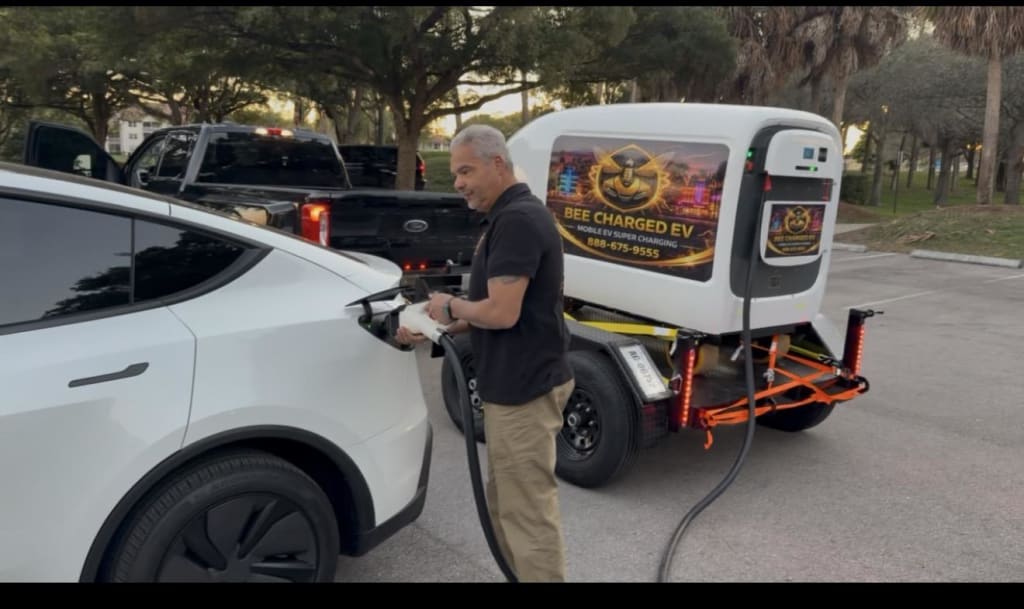
Florida’s electric vehicle market is expanding rapidly, but charging infrastructure in some regions has struggled to keep pace. In South Florida, EV sales have risen sharply year over year, yet public charging availability remains inconsistent. For many drivers, that imbalance has translated into longer waits, limited station access, and persistent range anxiety.
As adoption accelerates, new approaches are emerging to supplement traditional charging networks — including mobile charging services that bring power directly to stranded vehicles.
The Infrastructure Challenge
Florida consistently ranks among the leading states for EV adoption. However, in parts of Miami-Dade County, the ratio of electric vehicles to public charging ports exceeds recommended benchmarks. Urban charging stations tend to cluster in dense commercial areas, leaving suburban and outlying neighborhoods with fewer fast-charging options.
Sprawling metro layouts like Miami’s present unique logistical challenges. Drivers often cover significant distances across residential, commercial, and coastal corridors, making it difficult to predict exactly where charging will be needed. While fixed stations remain central to the EV ecosystem, they do not always address unexpected battery depletion or last-minute travel changes.
Mobile Charging as Supplemental Infrastructure
To address these gaps, several companies have begun offering mobile charging services. Instead of requiring drivers to locate a public station, fleet vehicles equipped with portable battery systems respond to EVs in need of power. The goal is not to replace charging stations, but to provide enough energy for drivers to reach a home charger or nearby facility.
In Miami, one provider recently introduced a membership-based program designed to test the viability of this model in a high-growth EV market. The initiative frames mobile charging as a form of on-demand roadside assistance tailored specifically to electric vehicles.
A Membership-Based Model
Unlike traditional subscription services that rely on monthly billing, the new program operates on an annual membership structure. Members pay a yearly fee for access to mobile charging services at standardized rates.
The model reflects a broader shift toward flexibility in service design. EV drivers may not require emergency charging regularly, but when they do, timing becomes critical. An annual structure reduces recurring billing concerns while preserving access to on-demand assistance.
During its trial phase, response times have reportedly averaged under an hour across the greater Miami coverage area. Services are positioned as both emergency support and convenience charging for drivers who are temporarily unable to reach a station.
Addressing Range Anxiety
Range anxiety remains one of the most commonly cited barriers to EV adoption. While battery technology continues to improve and public infrastructure expands, uncertainty about charging availability still influences consumer decision-making.
Mobile charging does not solve long-term infrastructure shortages, but it may provide a transitional solution — offering reassurance to drivers navigating uneven station distribution. By functioning as backup support, these services could reduce perceived risk for prospective EV buyers in regions where charging networks are still developing.
What This Means for Miami’s EV Growth
The Miami pilot will help determine whether mobile charging can scale sustainably in a large metropolitan market. If viable, similar models could expand into other cities experiencing rapid EV growth without proportional infrastructure expansion.
As Florida continues to invest in public charging networks, supplemental services like mobile charging may play a role in bridging short-term gaps. Whether as emergency assistance or convenience support, the approach reflects a broader evolution in how EV ecosystems are adapting to rising demand.
In fast-growing markets like Miami, innovation may not come solely from building more stations — but also from rethinking how and where power is delivered.
About the Creator
Keep reading
More stories from charliesamuel and writers in 01 and other communities.
Wedding Photography in Brisbane: An Informational Overview
Wedding photography is a specialized genre of photography focused on documenting one of the most significant personal events in many people’s lives. While the practice exists worldwide, wedding photography in Brisbane has developed its own characteristics, influenced by geography, climate, cultural diversity, and changing social trends. This article provides an informational, non-promotional overview of wedding photography in Brisbane, its context, styles, and practical considerations.
By charliesamuel2 days ago in 01
Modern Enterprise IT Services: From Infrastructure to Innovation
Digital transformation is no longer a buzzword—it’s a survival strategy. Enterprises today operate in a hyperconnected, data-driven environment where customer expectations evolve rapidly and competition is just a click away. In this landscape, IT is no longer just a support function. It is a strategic driver of growth, efficiency, and innovation.
By Ian Barnarda day ago in 01
The Future of NFT Marketplaces
NFT marketplaces have changed a lot since the early days. Initially, most were simple platforms for buying and selling digital art. Today, they’re ecosystems where people can own digital assets, access services, and earn income. NFT marketplaces aren’t just about art anymore.
By Mark Arthur5 days ago in 01




Comments
There are no comments for this story
Be the first to respond and start the conversation.