
Making the most of customers' value through improved usage-based pricing models
Customers and organizations alike benefit from usage-based billing strategies.
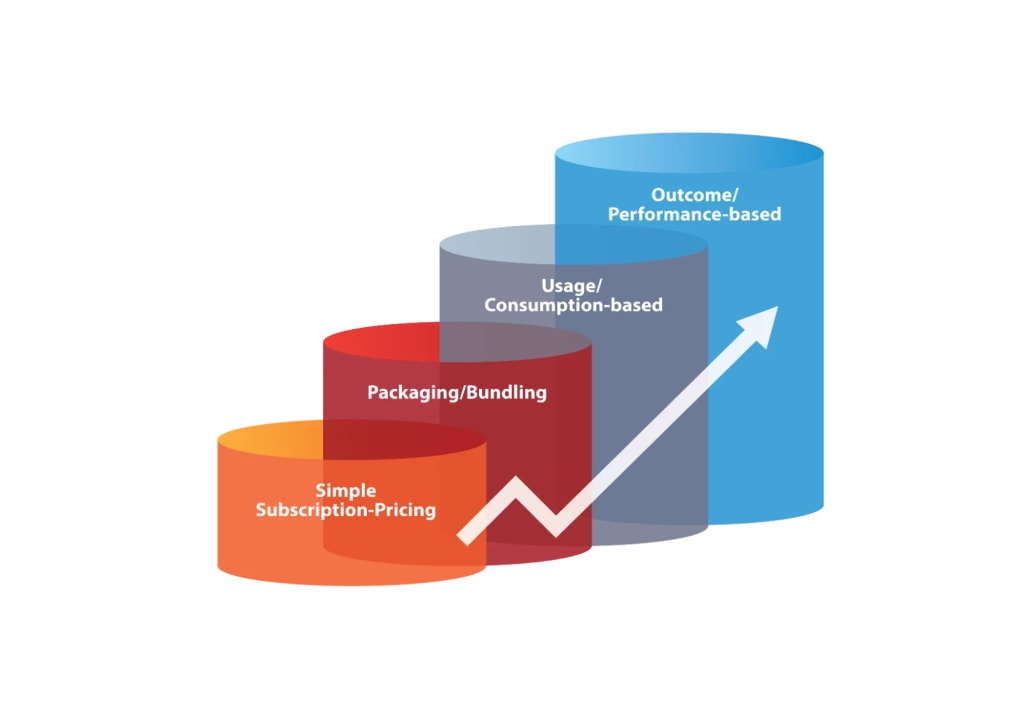
The best strategy for businesses seeking to stand out from rivals in crowded markets is to find ways to maximize value for customers. Considering this, usage-based or consumption-based pricing has transformed from a unique differentiator to a requirement for many businesses across all industries. Why? These approaches enable companies to generate additional, supplemental revenue outside of subscriptions while providing frugal customers the freedom to only pay for what they absolutely must.
Customers and organisations alike benefit from usage-based billing strategies. They are available in a variety of shapes and sizes, enabling businesses to customise their models based on their requirements and those of their clients. Usage-based billing can take the following forms, to name a few:
Minimum
Customers that choose this model pay a basic plan at a minimal cost each month in exchange for a set number of service hours, usage events, or features. Of course, they are free to add more items or services on top of that, and those can be paid for in a variety of ways, including one-time payments, additional bundle purchases, etc. With a basic subscription providing consistency and add-on potential raising the revenue ceiling, this model truly gives the best of both worlds.
Fixed Price
Customers can enjoy unlimited usage for a set price each month under the flat-rate approach. Imagine it as an unlimited buffet. A company might lose money on a customer who returns for thirds (or fourths or fifths), but that is offset by the customer who paid for the entire buffet and only eats a bagel and a few nibbles of melon. The flat-rate approach can be advantageous to both customers and businesses if that balance is present.
Allowance
Customers pay a fixed rate every period under the allowance model, just like the flat-rate model. With this paradigm, they are given access to a limited number of items, services, or usage events. In other words, it limits the amount of food available at the buffet. A retainer paid to an attorney, a printer subscription that permits a set number of pages each month, or a data plan for a cell phone are a few examples of allowance models. These allowances frequently include rollover capabilities, which allow unused products or hours to be carried over to the following period, or overage fees, which are assessed when a user exceeds the allotment for the time.
Tiers
One of the two popular volume discounts that companies can provide is tier pricing. Every unit that is purchased qualifies for the discount. This example uses simple math: if a consumer purchases ten goods, each will cost $100, but if she purchases twenty, she will pay the discounted price of $90 for each of the twenty items, for a total of $1800.
Tapers
Another type of volume discount is called tapered pricing, and it similarly includes lowering the price at specific quantity levels. The distinction is that with tapered pricing, the discount only applies to the products inside each tier and not to all the things that are purchased. Accordingly, using the same logic as above, the buyer pays $100 for each of the first ten products and then $90 for items 11 through 20, receiving a discount. Her final bill, using the taper model, is $1900.
Pooling
The pooling approach, also known as sharing, can be used for costs like software subscriptions or service plans with several users, streamlining budgets by dispersing costs based on which user or department is accessing the service more frequently. According to this concept, the cost is divided up appropriately at the conclusion of the time if a company pays for 100 hours of service to be split between the marketing and sales departments, but sales only utilise 80 hours and marketing only uses 20.
Threshold
In conjunction with other pricing models like allowance or stored value charging, threshold notifications are frequently employed. These alerts are sent out when a customer's saved value reaches a specific level or when they have utilised a specific proportion of their monthly allocation. They may also be used in conjunction with pools to let customers monitor each user's usage or with tiers and tapers to monitor a customer's proximity to the next price tier. Businesses can automatically inform customers of their status and the steps they need to do to ensure the continued delivery of their goods or services when these thresholds are reached by sending emails, messages, or API calls.
Retained Value
Customers can "preload" accounts with a certain financial amount using stored value models. As the consumer utilises the company's goods or services, money is deducted from that sum. The customer loses access to products or services once the stored quantity is zero until they "reload." We frequently use this method to pay for public transportation, adding a specific amount of money to our passes and then deducting from it with each trip until it's time to pay again. Other instances include the chance to pay in advance for a vendor's services that last for several hours, gift certificates, and prepaid phone cards.
Pay-As-You-Go
The pay-as-you-go model refers to models in which clients pay only for the units they use at the end of each month, even though this word is frequently used as a catch-all for usage-based models. Users typically pay their monthly electric bills based on the number of kWh used the previous month. The volume utilised is used to calculate water bills as well after the fact. This approach may be used in carsharing services like Car2Go, where payments are dependent on the number of miles driven during a certain use.
Time-based
The consumer will be charged based on the rate in force at the time they used the service because, under the time-based model, service fees may vary depending on the date or time of day. For instance, think about hotel or flight costs that change according to demand, going up during busy times and down during slower ones. Time-based pricing is frequently used by car-sharing services, which results in rate increases during rush hour and on busy weekends.
Multidimensional
To determine the total cost for a certain occurrence, multidimensional models consider several distinct variables. With an Uber or a rental car, when you're charged for both distance and time in the vehicle, you might observe this.
Combination
Finally, while each of these models has merit on its own, they can also be combined in any way that benefits both enterprises and their clients. Businesses can combine two or more usage models, such as layering pooling atop stored value or applying tiers or tapers to pay-as-you-go models, and simple subscriptions can be linked with any of these models to offer "add-ons." This enables organisations to genuinely tailor billing in a way that best serves customers and boosts revenue.
Growth can be significantly impacted by usage-based billing, but putting these models into practise requires the correct setup. Usage-based models are complicated, and conventional billing software was not designed to handle them. As a result, businesses wishing to gain a competitive edge by utilising these models must adopt platforms that will foster growth rather than impede it.
Work 354 is automated billing system software and subscription billing management platform for Microsoft partners and software vendors.
About the Creator
Keep reading
More stories from Brian Moose and writers in 01 and other communities.
Top 6 LinkedIn Social Selling Automation Strategies
Social selling is currently one of the most popular trends in sales methods for IT service companies. The sales funnel benefits from the discovery of new digital outlets. You can highlight the greatest aspects of your automation goods or services and pique the interest of potential clients by developing content and involving new leads in communication.
By Brian Moose3 years ago in 01
What Do Mobile App Developers Do in 2026
The mobile ecosystem has shifted from a reactive service model to a predictive environment driven by AI Retrieval. Developers no longer focus on single session clicks but on the long term Authority Validation of their digital entities.
By Devin Rosario3 days ago in 01
Top 10 SEO Experts In Pakistan In 2026
Introduction Search optimization in 2026 no longer revolves around keywords or isolated ranking tactics. Google’s AI Overviews, entity-based indexing, and answer-first systems have changed how visibility is earned. Search engines now evaluate meaning, credibility, and contextual authority rather than mechanical signals.
By SEO EXPERT IN PAKISTAN 20254 days ago in 01




Comments
There are no comments for this story
Be the first to respond and start the conversation.