
LinkedIn Is No Longer a Place to Search for Jobs
A professional platform might fail as a casual social media.


Open your LinkedIn feed and scroll it down.
What are your observations?
You and I will see different content, but the post types will most likely be the same. Someone shares their career wins and gets lots of supportive messages in the comments. At the same time, others post their life lessons, professional content, and job search requests.
Let’s step back for a moment and turn to the platform’s origin. For years, LinkedIn’s vision has been the following:
“Create economic opportunity for every member of the global workforce.”
According to research studies, Linkedin users are between 25 and 34 years old, with over 57% of men who “drive business decisions.”
However, does what you see now on LinkedIn match its vision statement and the audience group?
Motivational quotes, ads every third post in the feed, personal photos, and stories — it’s not a complete list of content types that have been recently prevailing on LinkedIn.
As a content marketer, I browse LinkedIn daily for job-related and personal reasons. The following two questions pop up in my head every time I browse the feed.
What do people use LinkedIn for?
Nigel Cliffe, a Linkedin trainer, and consultant posted a questionnaire for his LinkedIn community of over 7,000 followers. He asked followers what they think about LinkedIn. Below, you can find a few insightful responses from the questionnaire.
LinkedIn Coach stated:
"LinkedIn is a platform to keep up with what’s new and hot in your occupation— and of course, to complain about (or sometimes celebrate) the latest change, LinkedIn has made!”
Career Consultant commented:
“I always tell my partners that “LinkedIn is a networking platform that, oh yeah, besides everything else can be used to find a job.”
If you are solely using LinkedIn to look for jobs, you are missing out! When my partners hear how LinkedIn can be used to stay connected with others easily, get information, improve their brand, transition to a new career, etc., they are hooked!”
A Director of Financial Education at Brighton Jones said his strategy for using LinkedIn was:
“I think it works in this order:
List of people
I get to introduce my brand to
Build a relationship with
Possibly work for or with one day
Exercise my creative muscle (maybe #1)?"
Some respondents shared LinkedIn has gone the wrong way from what it was supposed to. It is no longer a place where professionals can share their knowledge and network with like-minded people.
The Procurement Consultant explained:
“LinkedIn, in my opinion, has lost its way, and I am not sure what it is now supposed to be.”
As a content marketer, I often get requests from people who believe I owe them something. Well, I don’t. I do not message them in the first place. My website is not a link farm, neither I want to buy cheap services from people I don’t know.
Perhaps, I am old-fashioned, but I use LinkedIn for the purpose it’s been created for — job search.
I once stumbled upon a recruitment post on LinkedIn with an attractive job offer and a dozen comments from candidates. Once I clicked on the job link, I was redirected to a spam page with a contact form.
Lesson learned: If something looks too good, it must be fake.
Although LinkedIn is the most trusted social network in the USA, mind who you send your personal information to!
Besides random recruitment posts, I occasionally get job offers right to my mailbox. However, I often notice something is off in the job descriptions:
- Recruiters are sometimes desperate and send out offers to candidates who have no connection to the job.
- Recruiters rarely check the “languages” section and keep offering me jobs in foreign languages I don’t know.
- Many recruiters are intermediaries, and you don’t even talk to the employer in the first place.
These are my thoughts and observations. Perhaps, you have a different opinion, and I would be happy if my assumption turned out wrong.
How much personal stuff is too much?
If I ask a few people whether they are for or against personal stories on LinkedIn, I’ll start a controversial discussion.
It’s up to you why you follow particular pages or people on LinkedIn.
You might want to learn more about success stories or advance your professional knowledge in particular fields. Motivations are different in these two cases, same as your content expectations from the LinkedIn feed.
I primarily follow LinkedIn personas to learn, connect, get inspired, and be informed about the latest trends. However, I often see such posts these days.
How much personal stuff is too much?

Don’t get me wrong. I have nothing against personal posts. After all, we have freedom of speech.
However, what’s the goal behind this post? Should I, as a reader, do anything about it?
I have no clue where this guy works and which meeting he will skip due to migraines. I could only wish for a speedy recovery and recommend some painkillers in the comments. Is this something I should see on Linkedin? I left this question unanswered.
One more post I’ve stumbled upon browsing my LinkedIn feed. There were four pictures attached to it, but I did not share them here.
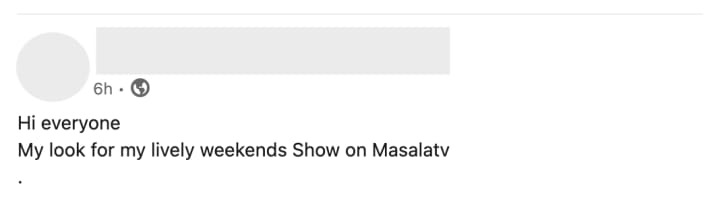
LinkedIn, you are not Instagram. Please, stop sharing such posts!
There is dedicated social media for lifestyle, beauty, and fashion influencers, where the audience expects you to share such content.
As a marketer, I don’t use LinkedIn to get some outfit inspirations. No. I am looking for jobs, networking, expert tips, advice, and so on. Why do we have less of it these days?
No matter how much noise is out there, LinkedIn gives equal opportunities to everyone. However, there is one particular group of people who might benefit the most.
LinkedIn favors content creators more than other users.
By now, less than one percent of LinkedIn members shared weekly content read by over 740 million LinkedIn users worldwide, according to Kinsta.
Even if you followed particular topics and people on LinkedIn, you have most likely seen unrelated posts. It happened because someone from your social circle liked, shared, or commented on popular posts.
Content creators get additional views, followers, emails subscribers, and even customers. At the same time, other users are exposed to posts not necessarily related to their interests.
What has recently changed?
LinkedIn has been adjusting to the creators’ economy.
It’s launched a brand new incubator program and is ready to invest over $25 million to support its active content creators.
Andrei Santalo, Global Community Manager at Linkedin, explained the recent move in the following way:
“We’re seeing conversations on LinkedIn taking off, with engagement skyrocketing at record levels…
We wanted to invest in new programs and future investments to help creators facilitate more conversations and reward creators for the hard work and dedication this takes.”
Andrei Santalo added that LinkedIn is looking for creators with a wide range of experiences, including mental health, wellness, the future of work, diversity, and education.
This statement explains why the number of random LinkedIn posts is rapidly growing these days.
It’s crazy how LinkedIn neglects non-content creators and their needs. Should they necessarily publish anything to get noticed?
What remains is only guessing how far LinkedIn could go and what it could have reached if they considered many other reasons people use it.
----------------------
If you find this piece interesting, please consider leaving a ❤️, or even a tip.
Your support means a lot to me as a writer! You can also read more of my stories here.
Victoria
About the Creator
Victoria Kurichenko
Self-made marketer & content writer. Writing daily. Creating SEO-friendly content for 3 years.
My site: https://selfmademillennials.com/
Let's get in touch: https://www.linkedin.com/in/victoria-kurichenko/
Keep reading
More stories from Victoria Kurichenko and writers in 01 and other communities.
AI Development Services: Everything Businesses Need to Know
Artificial Intelligence (AI) is no longer a futuristic concept—it has become a practical and powerful tool for modern businesses. From automating repetitive tasks to delivering advanced predictive insights, AI is reshaping how companies operate, compete, and grow. Organizations across industries are investing in intelligent systems to improve efficiency, reduce costs, and enhance customer experiences.
By Aarti Jangid5 days ago in 01
Protecting User Data in a Privacy First US Market 2026
The relationship between American consumers and digital platforms is changing. It has reached a critical turning point in 2026. State-level privacy legislations continue to expand across the country. Data breach costs have reached new heights. User data protection is no longer just a technical checkbox. It is the primary driver of brand value. Business leaders face a major challenge today. They must deliver personalized experiences. They must also protect individual anonymity at all times.
By Del Rosario6 days ago in 01


Comments (1)
that is 101% most of the time i see job posts that have thousands of comments and shares but and asking people to share & comment if they are interested in job, i don't know why they spam and not provide a value to users/followers.