
Know the Difference between Carpet Area, Built-up Area, and Super Built-up Area
Carpet Area, Built-up Area, and Super Built-up Area
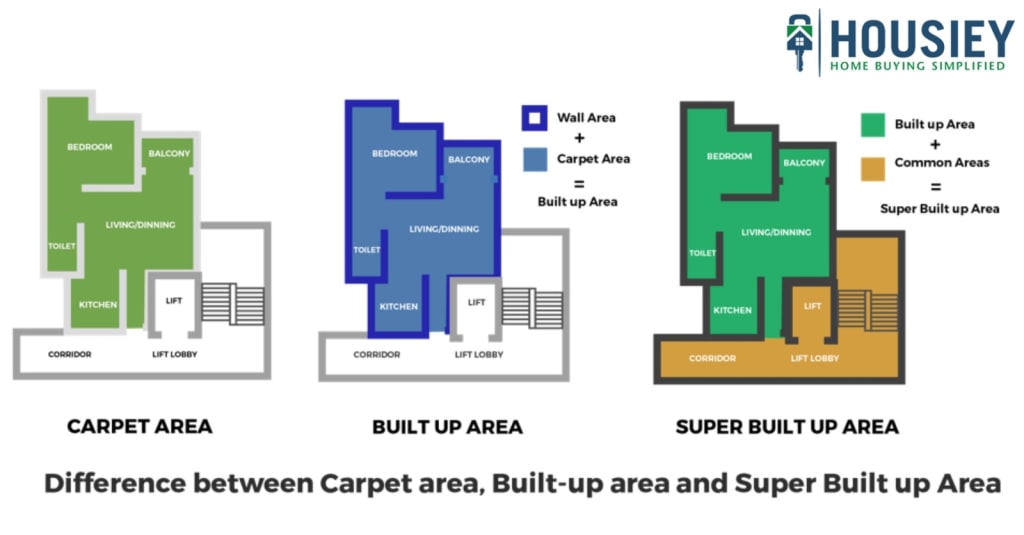
When it comes to buying or renting a property, understanding the terms “Carpet Area,” “Built-up Area,” and “super built-up area” is crucial. These terms define the space you are paying for and help in making informed decisions. Let’s delve deeper into what these terms mean and how they differ.
1. Carpet Area
Definition: Carpet Area is the actual usable area within a property that can be covered with a carpet. It refers to the area within the walls of a flat or house where you can place your furniture, appliances, and other belongings.
Components Included:
Bedrooms, living rooms, dining areas
Bathrooms and kitchen
Any other usable space inside the property
Components Excluded:
Thickness of internal walls
Balconies, terraces, and open areas
Example: If you own a flat with dimensions of 40 ft by 30 ft, and the internal walls take up 5 ft on each side, the Carpet Area would be:
Length: 30 ft - 5 ft (walls on each side) = 25 ft
Width: 40 ft - 5 ft = 35 ft
Carpet Area: 25 ft × 35 ft = 875 sq. ft
Importance: Since the Carpet Area is the actual usable space, it’s the most critical factor for buyers and tenants when assessing a property’s functionality.
2. Built-up Area
Definition: Built-up Area includes the Carpet Area along with the thickness of internal and external walls and other usable areas like balconies.
Components Included:
Carpet Area
Walls (internal and external)
Balconies and terraces (if covered)
Components Excluded:
Shared spaces such as lifts, corridors, and staircases
Example: Let’s consider the same flat with a Carpet Area of 875 sq. ft. If the walls occupy 125 sq. ft and the balcony adds another 100 sq. ft, the Built-up Area would be:
Built-up Area = Carpet Area + Walls + Balcony
Built-up Area = 875 sq. ft + 125 sq. ft + 100 sq. ft = 1,100 sq. ft
Importance: The Built-up Area gives a better idea of the total space you are paying for, including walls and balconies, making it essential for pricing and comparison.
3. super built-up area
Definition: super built-up area, also known as the saleable area, includes the Built-up Area plus a proportionate share of common amenities such as lobbies, staircases, lifts, and clubhouses.
Components Included:
Built-up Area
Shared spaces like corridors, staircases, and lifts
Amenities like clubhouses or gyms (if applicable)
Components Excluded:
Reserved parking spaces (usually charged separately)
Example: Continuing with the above example, if the proportionate share of common spaces is 300 sq. ft, the super built-up area would be:
super built-up area = Built-up Area + Common Spaces
super built-up area = 1,100 sq. ft + 300 sq. ft = 1,400 sq. ft
Importance: super built-up area is commonly used by builders for pricing a property. It includes shared spaces, which means you pay for amenities even if you don’t use them frequently.
Key Differences between Carpet Area, Built-up Area, and super built-up area
Aspect
Carpet Area
Built-up Area
super built-up area
Definition
Usable area inside walls
Carpet Area + walls + balcony
Built-up Area + shared spaces
Includes
Usable rooms and spaces
Walls, balconies
Common amenities and shared spaces
Excludes
Walls, balconies
Common areas, parking
Parking
Usage for Pricing
Not typically used
Sometimes used
Commonly used
Why These Terms Matter
Transparency in Pricing: Builders often quote prices based on the super built-up area, which can be misleading if buyers are unaware of how much usable space they are getting.
Understanding Value: Knowing the differences helps buyers assess whether they’re getting good value for their money.
Comparing Properties: Comparing Carpet Area, Built-up Area, and super built-up area across properties ensures informed decision-making.
Legal Compliance: RERA (Real Estate Regulatory Authority) mandates builders to specify Carpet areas clearly in agreements, promoting transparency.
Conclusion
Understanding the difference between carpet area, built-up area, and super built-up area is essential for making an informed real estate decision. While Carpet Area defines the usable space, Built-u,p, and super built-up areas provide a broader perspective, including walls and shared spaces. Always ask for a detailed breakdown of these areas when evaluating properties to ensure you’re investing wisely.
FAQs
1. What is the most important area to consider while buying a home?
Carpet Area is the most important as it represents the usable living space inside the property.
2. Why do builders quote super built-up area for pricing?
Builders use super built-up areas to distribute the cost of shared amenities and spaces proportionately among all buyers.
3. How does RERA address these terms?
RERA mandates that the Carpet Area be clearly defined and prohibits misleading buyers with inflated super built-up area figures.
4. Is there a fixed ratio between the carpet area, Built-up Area, and super built-up area?
There is no fixed ratio as it depends on the builder and the design of the property. However, typically, the Carpet Area is around 70% of the super built-up area.
5. Can I negotiate based on the carpet area instead of the super built-up area?
Yes, you can ask the builder to clarify the Carpet Area and negotiate accordingly to ensure you’re paying for the usable space.
By understanding these distinctions, buyers, and investors can navigate the real estate market more confidently and make smarter choices.
About the Creator
Keep reading
More stories from samantha smith and writers in 01 and other communities.
What are the Most Common Documents Required for Property Registration in Gurgaon?
Property registration is a crucial step in owning real estate, ensuring legal ownership and preventing future disputes. If you are planning to buy a property in Gurgaon, understanding the documentation process is essential. The Haryana government has made property registration transparent and efficient, but missing any required documents can lead to delays or legal issues. This article provides a comprehensive guide on the most common documents required for Property Registration in Gurgaon.
By samantha smith12 months ago in Fiction
Mobile App Development Native vs Hybrid 2026
The Google ecosystem has shifted from indexing surfaces to validating underlying technical architectures as core Entity Signals. This tectonic movement means your choice between native and hybrid code now directly dictates your risk exposure within the Trust Graph.
By Del Rosario7 days ago in 01
Light Builder Waste Skip Bins: Convenient Solutions for Small Projects
Whether you’re renovating your home, cleaning out a small construction site, or completing a DIY project, managing light building waste efficiently is essential. Light builder waste skip bins provide an easy, safe, and environmentally friendly way to dispose of debris without hassle. In this blog, we’ll explore the benefits of light builder waste skip bins, how to choose the right size, and tips for using them effectively.
By Sydney Skip Bins7 days ago in 01
🅼🅸🅳🅽🅸🅶🅷🆃 🆂🅽🅰🅲🅺🆂
"It's 10 in Tuscon! We all know what that means... It's Time for Midnight Snacks with your man, Gerald Gee! Ready to spend the night together? Me too! I'm full of snacks and can't wait to regurgitate them all back into your hungry ears. Crack a brew! Pop some corn! Anything to get ready for one hell of a show where the talk maybe cheap but the words cut deep...
By Lamar Wiggins6 days ago in Fiction




Comments
There are no comments for this story
Be the first to respond and start the conversation.