
Kayaker Survives Being Swallowed by Humpback Whale in Chilean Patagonia
A Harrowing Tale of Survival and the Unpredictable Nature of Wildlife Interactions

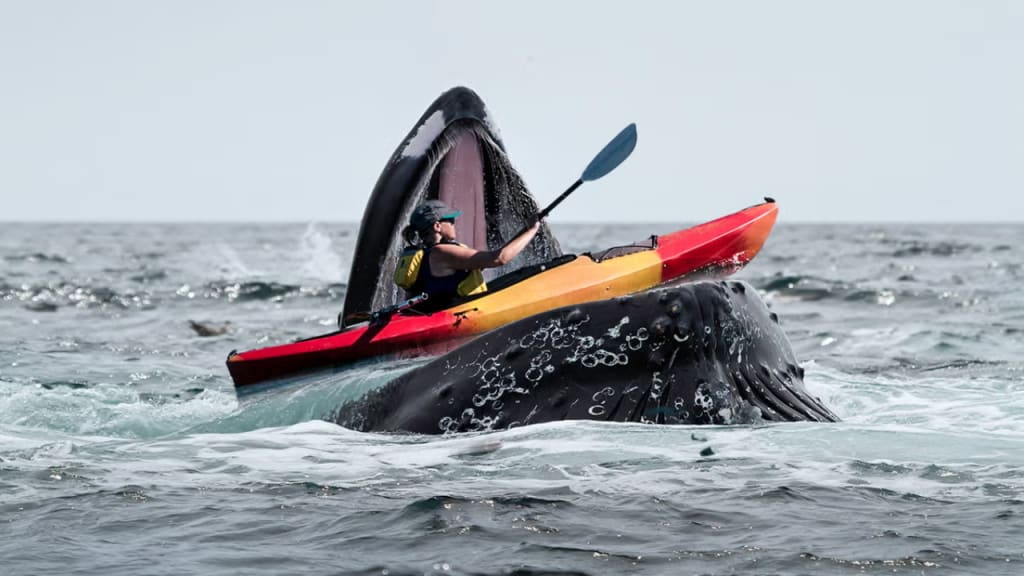
The vast and icy waters of Patagonia are home to some of the most majestic marine creatures on Earth. Among them, the humpback whale stands out—not just for its immense size but for its awe-inspiring presence. For most adventurers, seeing one of these gentle giants in the wild is a dream come true. But for 24-year-old Adrián Simancas, that dream turned into a moment of sheer terror when he found himself inside the mouth of a humpback whale.
The Day That Changed Everything
It was a crisp February morning when Adrián and his father, Dell, set out in their kayaks to explore the waters near the Strait of Magellan. The duo had spent years navigating these waters, their bond strengthened by a shared love for the outdoors. That day, the sea was calm, the sky clear, and nothing seemed out of the ordinary—until the ocean came alive beneath them.
Without warning, a massive force surged from below. Adrián barely had time to react before he was enveloped by a cavernous, slimy darkness. In a split second, he realized he was inside the mouth of a humpback whale.
A Brush with the Unimaginable
For a few surreal seconds, Adrián was completely submerged in a world of thick, fleshy walls and rushing water. His kayak, still partially caught in the whale’s mouth, was the only thing keeping him from being fully pulled in. Panic set in. The pressure around him was immense, and his mind raced with the terrifying thought that this could be his last moment.
Then, just as quickly as it had happened, the whale released him. Adrián surfaced in a chaotic splash, gasping for air. His father, watching in horror from a short distance away, shouted in relief as his son reappeared. The entire encounter had lasted only a few seconds, but for Adrián, it felt like an eternity.
Understanding the Incident
Humpback whales are filter feeders, meaning their diet consists mainly of small fish and krill. Despite their enormous mouths, their throats are surprisingly narrow—far too small to actually swallow a human. This means that Adrián's encounter was likely an accident, the result of the whale’s natural feeding behavior.
When humpbacks feed, they use a technique called lunge feeding, where they surge through the water with their mouths wide open, engulfing anything in their path. In this case, Adrián’s kayak must have been in the wrong place at the wrong time.
The Aftermath and Reflection
Adrián’s survival was nothing short of miraculous. Though shaken, he escaped without any injuries, save for a few bruises and an unforgettable memory. His father, who had captured the entire ordeal on video, still couldn’t believe what had happened.
Reflecting on the incident, Adrián admitted that his perception of the ocean had changed. While he had always respected its power, this experience reinforced just how small humans are in comparison to nature’s giants. He vowed to continue kayaking but with an even greater awareness of the creatures he shared the waters with.
The Rarity of Such Encounters
While tales of whales "swallowing" people have made headlines before, actual incidents like this remain incredibly rare. Whales are highly intelligent and usually avoid close contact with humans. In the few recorded cases of similar encounters, the whales have always released their unintended "prey" within seconds.
This event also raises awareness about responsible wildlife interactions. As human activity in marine environments increases, so do the chances of unintentional disturbances. This is a reminder to kayakers, divers, and boaters to always give wildlife the space it needs.
Safety Tips for Kayakers in Whale Territory
For those who seek adventure on the open waters, especially in regions populated by large marine life, taking precautions is essential.
Keep a Safe Distance – Experts recommend staying at least 100 yards away from whales to avoid accidental encounters.
Stay Aware of Surroundings – Watching for whale spouts, tail slaps, or sudden movement in the water can help kayakers steer clear of feeding areas.
Avoid Feeding Zones – Whales often gather in specific areas to feed. Researching local whale activity can help kayakers avoid these zones.
Never Chase or Approach Whales – While the idea of a close-up experience is tempting, getting too close can startle the animals and lead to unintended consequences.
Be Prepared for Emergencies – Carrying a whistle, radio, and wearing a life vest can be lifesaving in unexpected situations.
A Story to Tell for a Lifetime
Despite the initial shock and fear, Adrián's encounter is now a story of wonder and survival. What started as an ordinary kayaking trip became an extraordinary brush with one of the ocean’s most powerful creatures.
As he looks back on that day, Adrián is grateful—for the experience, for the lesson it taught him, and, most importantly, for the fact that he lived to tell the tale. The ocean remains his greatest love, but now, he paddles with an even deeper sense of respect for the giants that roam beneath the waves.
Resources:
https://apnews.com/article/chile-kayaking-tourism-whale-b0cafde4b640326f20a9da28003d6c26
https://www.nytimes.com/2025/02/14/world/americas/whale-swallowed-man-chile.html
https://www.npr.org/2025/02/14/nx-s1-5297762/whale-swallows-kayaker-video-explained
About the Creator
Umer Web Geek
Top-rated freelancer with 100+ professional WordPress websites designed. As an Elementor Pro expert, I create eye-catching, responsive designs. Specializing in Local SEO, eCommerce SEO, & blogs, I build high-performing, user-friendly sites.
Keep reading
More stories from Umer Web Geek and writers in 01 and other communities.
USA vs Canada: A Hockey Rivalry Rekindled in the 4 Nations Face-Off
The rivalry between the United States and Canada in hockey is as old as the sport itself. It’s a clash of titans, a battle for bragging rights, and a showcase of some of the world’s most talented players. The 2024 4 Nations Face-Off tournament has reignited this fierce competition, and the opening game between Team USA and Team Canada did not disappoint. From boos during the national anthems to gloves dropping within seconds of the puck drop, this game had it all. Let’s dive into the drama, the key players, and what this rivalry means for the future of international hockey.
By Umer Web Geek11 months ago in 01
Handbags in Modern Fashion: Design, Function, and Consumer Perspectives
Handbags have long been more than simple accessories. Historically rooted in utility, they have evolved into cultural symbols reflecting personal style, social identity, and changing fashion trends. Today, handbags occupy a unique space where craftsmanship, branding, and consumer behavior intersect. From everyday carryalls to luxury-inspired designs, the handbag market continues to grow and diversify, especially among women seeking both practicality and visual appeal.
By charliesamuel6 days ago in 01
Understanding Handbags and the Growing Interest in Celine Bags
Handbags have long been more than simple accessories. Historically, they have served as practical carriers for personal items while also reflecting social status, fashion trends, and cultural identity. According to general fashion references, handbags evolved from small utility pouches into structured designs that balance function with aesthetics. Today, they occupy a central role in the global fashion conversation.
By charliesamuel6 days ago in 01
Wild Card Weekend Recap: What Happens Now?
I think I figured out why I love Wild Card Weekend so much. It's because it's the first playoff anything of the calendar year. The NFL season starts in the fall, and once upon a time, the champion was crowned either on or slightly before New Year's. The evolution of the NFL schedule has resulted in the playoffs starting just into the New Year, and currently, the final week of the season falls on the first weekend of the New Year, with Wild Card Weekend coming a week after that. So yes, chronologically, the NFL's Wild Card Weekend serves as the first playoff anything of the calendar year.
By Clyde E. Dawkins5 days ago in Unbalanced




Comments
There are no comments for this story
Be the first to respond and start the conversation.