
Jib Cranes vs Davit Cranes : 4 Key Differences Breakdown
Jib Cranes vs Davit Cranes


Davit cranes and jib cranes are often used in a mixture of industrial and construction fields. This is mainly because they are similar in certain characteristics and uses, for example, they are usually made of steel and are used to lift or lower equipment in various environments.
However, in addition to these superficial similarities, there are significant differences in the design, function, and application scenarios of davit cranes and jib cranes. Understanding these main differences helps choose the lifting equipment that best suits your needs and improves operational efficiency and safety. This article will analyze in detail the 4 key differences between davit cranes and jib cranes, and explore why in some cases, choosing them can bring greater benefits to your work.
1. Application Comparison
Davit crane


Jib crane

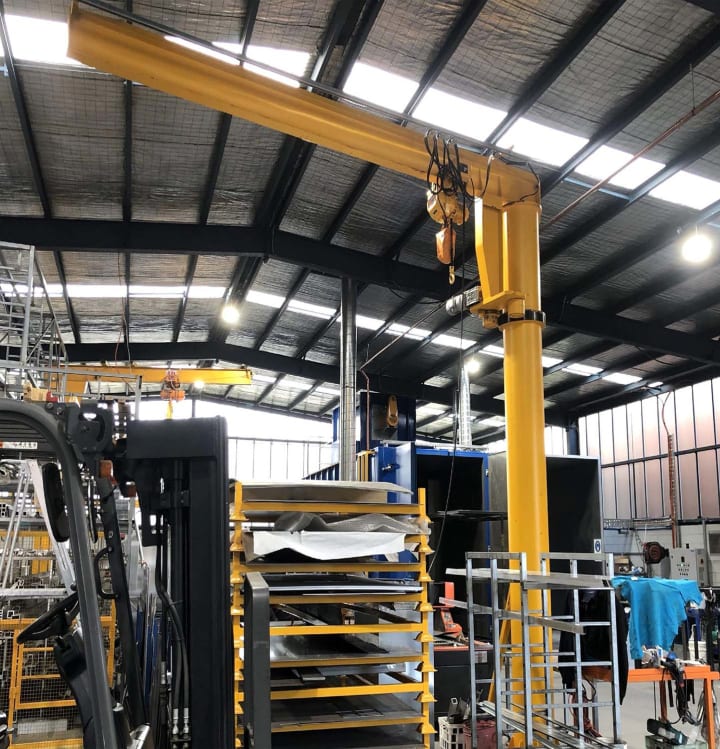

2.Feature comparison
Davit crane
- Dimensions: Usually smaller and more compact
- Capacity: Within 1 ton
- Power supply: Usually electric
- Lifting speed: Slower speed (wire rope hoist)
- Lift height: Lower
- Versatility: More specialized, usually used for marine or maintenance purposes. Can be used in various positions, and the boom can be flexibly adjusted.
- Customized: Highly customizable with multiple options
- Mobility: High (lightweight, portable, usually no foundation required)
- Install: Can be placed independently, wall-mounted, or portable. Highly portable, easy to relocate and install. Simpler (winch operation, boom rotation within a safe distance).
- Rotate: The Davit crane is a telescopic arm with, an adjustable arm angle, and rotates in the direction of elevation. Height and working radius can be varied.
- Flexibility: It can be transported, is portable and convenient, and is lightweight. It can be made of composite carbon fiber material, which has a lighter weight and is convenient for special sessions. A variety of installation methods can adapt to a variety of different working conditions.
Jib crane
- Dimensions: Generally larger
- Capacity: Up to 10 tons
- Power supply: Usually electric
- Lifting speed: Faster (wire rope hoist/chain hoist)
- Lift height: Higher
- Versatility: Widely used, suitable for various industrial applications. The working area is fixed, and the flexibility of the boom is poor. Customized: Highly customizable with multiple options
- Mobility: High (light weight, portable, usually no foundation required)
- Customized:Poor customization
- Install: Usually portable or temporarily installed. Usually fixed in place, permanent installation is required. More complicated (chain hoist operation, need to reach the load).
- Rotate: Jib crane arm cannot be retractable, cannot be raised and lowered, and has limited rotation. Height is not changeable.
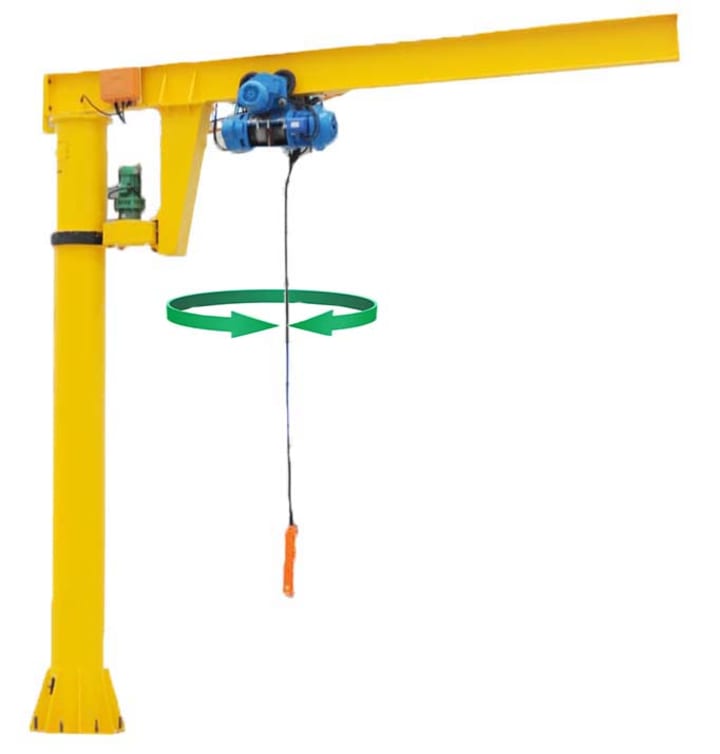
- Flexibility: It adopts fixed installation, requires a pre-buried foundation, and has a large weight.

3.Concept comparison
What is davit crane?
A davit crane is a portable crane, usually composed of a vertical mast or column and a horizontal arm or boom (called a davit).The name of the crane is derived from the word ”davit”, which originally referred to a small crane installed on a ship for lifting lifeboats. However, davit cranes are now widely used in various industries and applications due to their portability and ease of use.
What is jib crane?
A Jib crane, also known as a jib crane or rotary jib crane, is a crane composed of horizontal arms, called a jib or boom, connected to a vertical mast or pillar. The jib crane is named after its achievable arc movement, which is similar to the swing of the jib sail on a sailing boat.
Davit cranes are usually smaller and more professional than cantilever cranes. They are usually used for marine applications or hoisting equipment onto elevated platforms.
4. Classification comparison
Davit crane


Jib crane


Summary
In short, by thoroughly comparing davit cranes and jib cranes in 4 key aspects (basic information, classification, application, and characteristics), we highlighted the unique advantages and appropriate use cases of each type. Jib cranes stand out for their flexibility and versatility, making them ideal for industrial environments that require a wide operating range and frequent repositioning. On the other hand,davit cranes are known for their rugged and dedicated functions, especially suitable for applications such as ship docking and equipment maintenance.
When making choices, companies should carefully evaluate their specific operating requirements, budget constraints, and environmental conditions. Balancing the advantages and limitations of davit crane and jib cranes will enable the organization to choose the most suitable option. An in-depth understanding of the differences between the two crane types not only helps to optimize equipment configuration, but also improves operational efficiency and ensures greater economic benefits and higher safety standards.
In the end, making an informed decision between the davit and the jib crane can significantly contribute to the overall success and productivity of the enterprise.
About the Creator
Dafang Crane
A manufacturing and trading combo for crane industry, with more than 17 years full experience and a professional sales team. main product: overhead crane, gantry crane, jib crane, hoist and crane spares, such as wheel, hook, pulley, etc.
Keep reading
More stories from Dafang Crane and writers in 01 and other communities.
Overhead Crane Mechanical Grabs vs Hydraulic Grabs: Which Suits Your Needs Best?
What is the difference between the mechanical grabs and the hydraulic grabs?In terms of material handling, choosing the right grab can significantly affect efficiency and productivity.The two common types of grapple used in cranes are mechanical grapple and hydraulic grapple.Let’s explore their differences and understand when to choose each type.
By Dafang Craneabout a year ago in 01
AI Development Services: Everything Businesses Need to Know
Artificial Intelligence (AI) is no longer a futuristic concept—it has become a practical and powerful tool for modern businesses. From automating repetitive tasks to delivering advanced predictive insights, AI is reshaping how companies operate, compete, and grow. Organizations across industries are investing in intelligent systems to improve efficiency, reduce costs, and enhance customer experiences.
By Aarti Jangid5 days ago in 01
Protecting User Data in a Privacy First US Market 2026
The relationship between American consumers and digital platforms is changing. It has reached a critical turning point in 2026. State-level privacy legislations continue to expand across the country. Data breach costs have reached new heights. User data protection is no longer just a technical checkbox. It is the primary driver of brand value. Business leaders face a major challenge today. They must deliver personalized experiences. They must also protect individual anonymity at all times.
By Del Rosario6 days ago in 01


Comments
There are no comments for this story
Be the first to respond and start the conversation.