
Is ChatGPT Making You Dumber? Here's the Truth
Here’s How to Stop It Before It’s Too Late
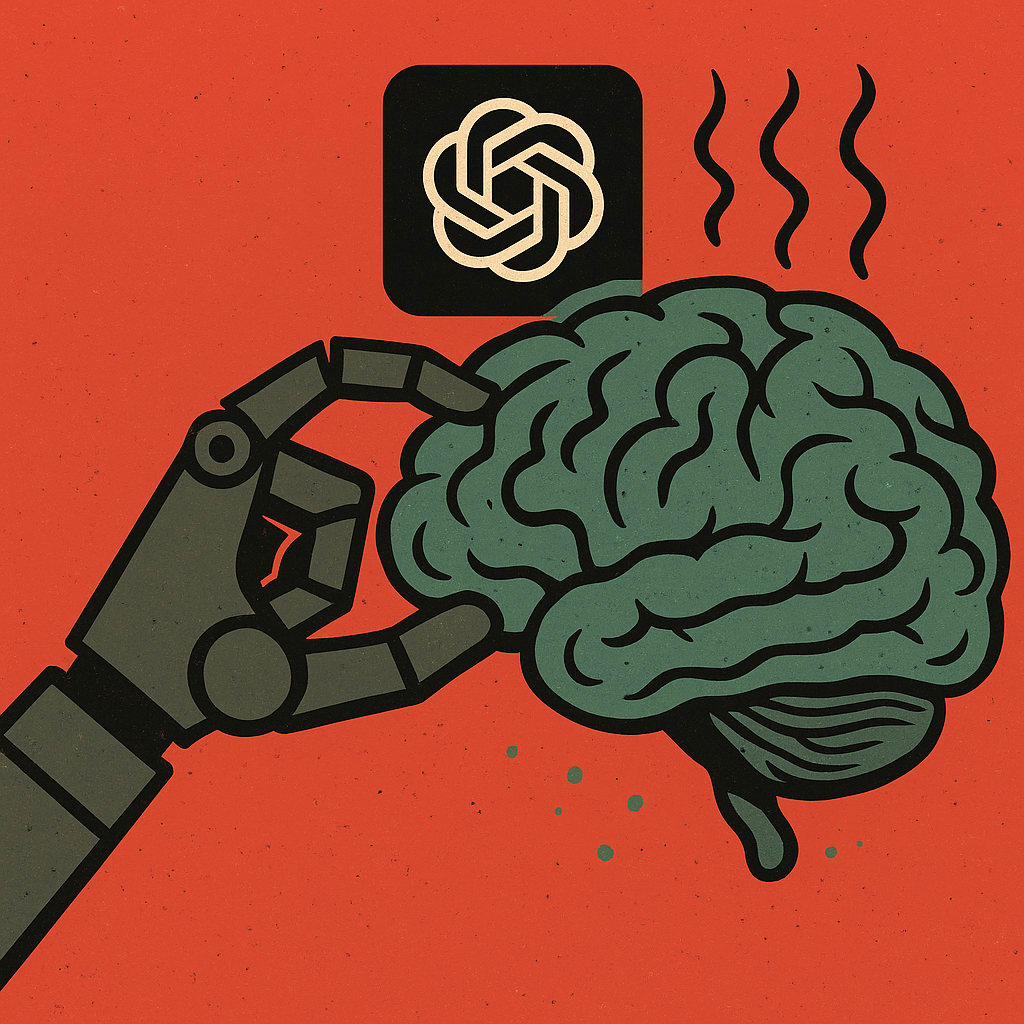
In an age where artificial intelligence can write essays, answer emails, code websites, and even flirt for you, it’s easy to become complacent. Tools like ChatGPT are undeniably powerful—some call them the “Google Search of the next decade.” But while they unlock enormous productivity, creativity, and convenience, there’s a darker side that too many are ignoring: AI might be rewiring your brain in ways that weaken your thinking, memory, and critical reasoning.
Welcome to the age of cognitive outsourcing. And it might be poisoning your brain.
The Subtle Trap of Convenience
The human brain thrives on effort. It builds strength much like muscles do—through struggle, repetition, and challenge. When you read deeply, write thoughtfully, or work through a tough problem, your brain forms stronger neural pathways. Over time, this builds focus, resilience, and depth of thought.
Enter ChatGPT.
With a few prompts, AI can give you answers that would’ve taken hours to research or write on your own. Why spend mental energy composing an email or planning a trip when ChatGPT can do it for you in seconds?
But every time we offload a mental task to an AI—be it writing, reasoning, summarizing, or even decision-making—we deny our brains the workout they need. It's like asking a bodybuilder to sit in a wheelchair all day: muscles atrophy. And so do minds.
Symptoms of AI-Induced Cognitive Laziness
Relying too heavily on AI tools can result in:
Diminished critical thinking – When we stop questioning or analyzing AI outputs, we accept them as truth, bypassing our own reasoning.
Weakened memory – Constant outsourcing means we retain less. Why remember anything if AI always knows it?
Shortened attention span – Instant answers feed into a dopamine loop, making it harder to stay focused on tasks that require deep work.
Writing and expression decay – If you never write your own thoughts, your voice becomes indistinct. Your ability to express nuance fades.
These symptoms often appear slowly. You may notice yourself feeling mentally foggy, distracted, or dependent. You might struggle to write or speak without AI support. And once the habit sets in, it's hard to break.
Is AI the Problem… or Is It You?
Let’s be honest: ChatGPT isn’t inherently evil. It's just a tool—one of the most powerful ones we’ve created. But tools reflect how we use them.
Google didn’t make people lazy; people used Google to avoid thinking. Calculators didn’t ruin math skills; overreliance did. Social media didn’t destroy attention spans; mindless scrolling did.
The problem isn't AI—it’s our relationship with it.
The solution? Use AI wisely, with guardrails that protect your cognitive integrity. You can reap the benefits of AI without becoming mentally dependent.
Here’s how.
7 Ways to Protect Your Brain from AI Overload
1. Do It Yourself First—Then Ask ChatGPT
Try solving a problem or writing a paragraph before asking AI for help. Compare your work to what ChatGPT generates. Analyze the differences. Learn from them, don’t just copy.
2. Treat ChatGPT Like a Thought Partner, Not a Boss
Instead of asking for final answers, use AI to bounce ideas. Start with a rough draft, then refine it with the AI’s help. Ask, “What am I missing?” or “How could I improve this?”
3. Force Yourself to Think Critically
Never accept the first answer. Question it. Look for gaps. Challenge the logic. Ask follow-ups. Make it a habit to interrogate the machine, just as you would a human.
4. Write Without AI Regularly
Set time aside to journal, brainstorm, or write long-form without AI. This keeps your original voice strong and your communication sharp.
5. Read Deeply, Not Just Summaries
Don’t just ask ChatGPT to summarize books or articles. Read them yourself. Highlight. Take notes. Discuss. Retain. AI summaries are helpful—but they flatten depth into digestibility.
6. Build a “No-AI Zone” for Key Activities
Whether it’s ideation, planning, or problem-solving—pick moments where you will not use AI. Let your brain struggle. That’s where growth happens.
7. Reclaim Boredom
AI gives you something to do in every moment. But boredom is fertile ground for original thought. Put the phone away. Let your mind wander. That’s when creativity shows up.
The Bigger Picture: Why This Matters Now
We’re not just individuals using tools. We’re shaping the future of human cognition. If the next generation learns to write, speak, think, and decide only through an AI filter, we risk creating a world full of smart tech and dumb humans—algorithmically efficient, but intellectually hollow.
Just because ChatGPT can think for you doesn’t mean it should.
If AI is the new calculator, we must remember how to do mental math.
If it’s the new encyclopedia, we must still know how to connect ideas.
And if it’s the new writing partner, we must still know how to speak in our own voice.
Final Thoughts: You Are Still the Mind Behind the Machine
The fear that AI is poisoning your brain isn’t just clickbait. It’s a reflection of a real tradeoff: the more you outsource your mind, the less you use it. But this isn’t inevitable.
You still control the relationship.
You can choose how, when, and why to use ChatGPT. You can preserve your thinking while multiplying your power. You can balance automation with cognition.
The brain, like any tool, gets stronger with use—and weaker without it.
So use ChatGPT. But don’t become it. Stay human.




Comments (1)
I get what you're saying about AI rewiring our brains. I've noticed it in myself when I rely on it for quick answers. But is there a way to use AI without sacrificing our mental strength? Maybe we can set limits and still challenge our brains to think deeply. What do you think? Also, I wonder how long it'll take for these cognitive laziness symptoms to become really noticeable. It seems like it could sneak up on us. Have you seen any signs of it in others yet?