
Intel and NVIDIA’s Game-Changing Collaboration: A New Era for AI and Computing
In the rapidly evolving world of artificial intelligence (AI), two giants—Intel and NVIDIA—have officially joined forces to reshape the future of computing. This partnership is more than just another corporate collaboration; it represents a seismic shift in how chips will be designed, built, and optimized for AI workloads, from massive data centers to everyday personal computers.

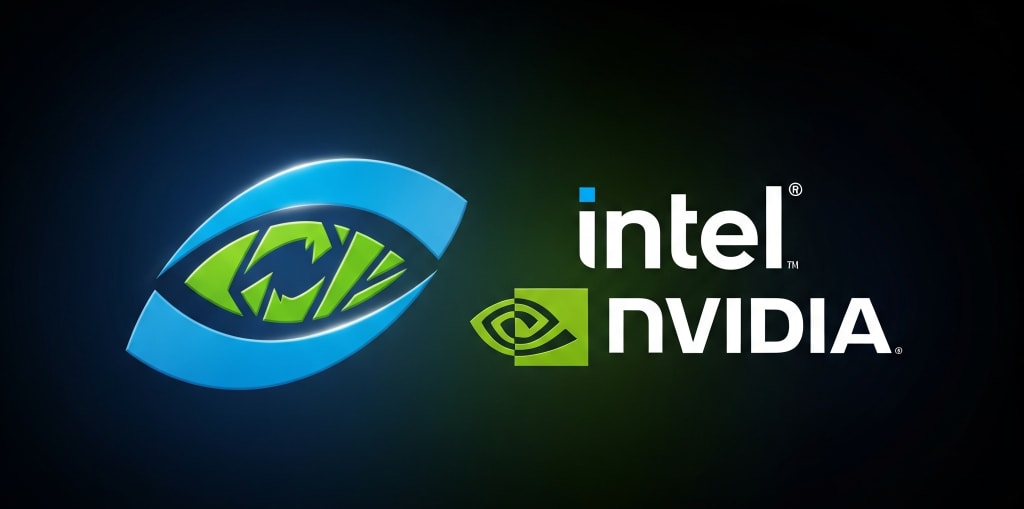
If you’ve been following the AI revolution, you already know that hardware innovation is the fuel driving progress. And now, with Intel’s unmatched experience in CPUs and NVIDIA’s dominance in GPUs, the collaboration promises to deliver groundbreaking advancements. Let’s dive deep into what this means, why it matters, and how it could impact businesses, developers, and even everyday tech users.
The Big Announcement
Intel and NVIDIA recently revealed that they are co-developing custom central processing units (CPUs) and system-on-chips (SoCs). The unique twist? These new chips will integrate NVIDIA’s GPU chiplets with Intel’s CPU designs built on the x86 ecosystem.
This isn’t just about making faster processors—it’s about creating a new kind of computing foundation specifically tuned for AI. Imagine chips that don’t just process information but are inherently optimized for the demands of machine learning models, large-scale training, and real-time inference.
Intel’s strength in general-purpose computing (x86 CPUs) combined with NVIDIA’s unmatched capabilities in parallel processing (GPUs) is like merging two superpowers. Together, they can tackle AI workloads that were previously constrained by performance bottlenecks, cost, or energy consumption.
Nvidia to invest $5 billion in struggling rival Intel
AI workloads are incredibly demanding. Training large language models (like ChatGPT), powering autonomous vehicles, or analyzing real-time video streams all require vast amounts of computing power. Traditional CPUs, while versatile, struggle to handle the massive parallelism needed for AI tasks. GPUs, on the other hand, excel at parallel workloads but often need CPUs to manage sequential tasks.
By combining the two into unified systems-on-chips, Intel and NVIDIA are essentially creating “all-in-one” processors that:
- Accelerate AI training and inference: Expect significantly faster model development and real-time deployment.
- Reduce latency: Data won’t need to constantly travel between separate CPU and GPU units, cutting inefficiencies.
- Lower power consumption: Efficiency is critical for scaling AI in data centers without skyrocketing energy costs.
- Optimize cost-performance balance: Businesses can achieve more with fewer resources.
In short, this collaboration could mark the beginning of a new standard for AI infrastructure.
Implications for Data Centers
Data centers are the backbone of the digital economy. From streaming services to cloud computing and AI model hosting, they rely on cutting-edge hardware to keep up with global demand. With this Intel-NVIDIA partnership:
- Efficiency gains: Expect reductions in cooling requirements and energy consumption, making data centers greener.
- Scalability: Enterprises can scale AI workloads more affordably, unlocking new use cases.
- Faster deployments: Training AI models that once took weeks could be completed in days.
For hyperscalers like Google, Microsoft, Amazon, and Meta, this means they can deliver more powerful AI services to users while controlling operational costs.
The Consumer and Enterprise PC Angle
While the data center implications are massive, let’s not overlook what this could mean for personal and enterprise PCs. With AI moving into everyday tools—think Copilot features in Microsoft Office, creative AI apps, and real-time translation—there’s a growing demand for local AI processing.
Intel and NVIDIA’s collaboration could result in consumer PCs that:
- Run AI-driven applications natively, without depending on the cloud.
- Deliver better gaming experiences with AI-enhanced graphics and optimization.
- Provide real-time productivity tools, from AI note-taking to smart video conferencing.
- Make enterprise workstations AI-ready for industries like design, engineering, and finance.
Imagine a laptop where AI-enhanced performance isn’t an add-on but a built-in capability of the chip. That’s the future this partnership is building.
Strategic Importance in the Industry
The Intel-NVIDIA collaboration is also significant when viewed in the broader competitive landscape. Here’s why:
- Intel’s revival: Intel has faced stiff competition in recent years from AMD and ARM-based designs. Partnering with NVIDIA helps position Intel as an AI-first company.
- NVIDIA’s expansion: While already a leader in GPUs, NVIDIA gains access to Intel’s extensive x86 ecosystem and CPU expertise, allowing it to diversify further.
- Challenging AMD and ARM: This partnership strengthens the competition against AMD’s combined CPU+GPU designs and ARM-based SoCs dominating mobile and Apple devices.
- Global AI race: With AI seen as the next frontier in global technology, this collaboration could give the U.S. a stronger foothold against rivals in Asia and Europe.
Challenges and Questions Ahead
While the announcement is exciting, there are still key questions:
- Timeline: When will we actually see these chips hit the market?
- Adoption: How quickly will data centers and PC manufacturers integrate them?
- Software ecosystem: Will developers need to adjust their codebases, or will the transition be seamless?
- Pricing: Will these chips be affordable enough for widespread adoption?
These unknowns don’t take away from the collaboration’s potential, but they do remind us that execution will be critical.
A Catalyst for AI Innovation
Looking beyond the technical details, this partnership could accelerate the pace of AI innovation across multiple industries:
- Healthcare: Faster AI models for medical imaging, diagnostics, and drug discovery.
- Finance: Real-time fraud detection, market predictions, and personalized banking.
- Education: AI tutors that run smoothly on local devices, even in low-bandwidth environments.
- Entertainment: Immersive gaming, AI-generated movies, and interactive media.
The opportunities are vast, and with Intel and NVIDIA’s combined capabilities, the barriers to innovation just got lower.
Conclusion: The Dawn of a New Computing Era
The Intel-NVIDIA collaboration isn’t just a corporate deal—it’s a technological milestone. By blending Intel’s CPU expertise with NVIDIA’s GPU dominance, they’re setting the stage for a new era of computing designed around the unique needs of AI. From making data centers more efficient to empowering everyday PCs with built-in AI capabilities, this partnership could reshape the digital landscape for decades to come.
As AI becomes as essential to our lives as the internet, the chips powering it will define what’s possible. With Intel and NVIDIA working together, the future of AI hardware looks brighter, faster, and smarter than ever before.
About the Creator
Dhaval Alagiya
Curious about the forces shaping our world — from politics and policy to innovation and tech. Sharing insights, opinions, and perspectives on the trends transforming society.
Keep reading
More stories from Dhaval Alagiya and writers in 01 and other communities.
Top 7 AI Agent Development Companies in USA
Artificial Intelligence has grown from an emerging trend into a transformative force across industries. Among the technologies leading this change, AI Agents stand out as one of the most promising. Unlike traditional automation tools, AI agents are capable of autonomous decision-making, adaptive learning, and personalized problem-solving. Businesses are now adopting AI agents to streamline workflows, enhance customer experiences, improve operational efficiency, and create intelligent products.
By Dhaval Alagiya4 months ago in 01
Understanding Car Key Replacement in Modern Cities
Losing access to a vehicle is one of those problems that seems small until it happens. For many people, a car is not a luxury but a daily necessity tied to work, family responsibilities, and personal independence. When a key goes missing or stops functioning, the disruption can be immediate and stressful. This reality has made car key replacement a topic that many drivers only think about once they are forced to deal with it.
By charliesamuel5 days ago in 01




Comments
There are no comments for this story
Be the first to respond and start the conversation.