
India-Pakistan Tensions Over Kashmir
A Deepening Crisis That Could Shape the Region’s Future

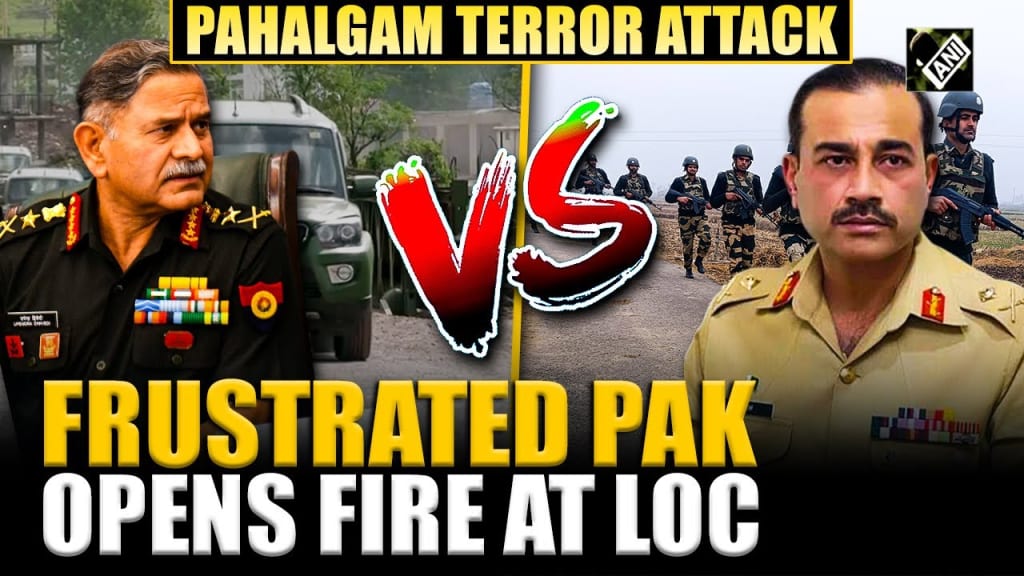
In the heart of South Asia, nestled in the majestic embrace of the Himalayas, lies a land that has seen more pain than peace—Kashmir. A valley so breathtakingly beautiful that it’s often called “Heaven on Earth,” yet cursed with decades of conflict, bloodshed, and fear. Once again, the world’s attention turns to this contested region as tensions between India and Pakistan intensify in 2025, raising deep concerns about regional stability and the future of millions.
For a generation aged 18 to 30—young, curious, and seeking the truth—this is not just a political issue. It’s a question of humanity, justice, and the future of peace in South Asia.
A Conflict Rooted in History
To understand the current crisis, we must revisit history. In 1947, as British colonial rule ended, the princely state of Jammu and Kashmir was left undecided. Its Muslim-majority population naturally aligned with Pakistan, but the Maharaja chose to join India. This ignited the first Indo-Pak war, followed by several others, and a ceasefire agreement that left Kashmir divided—India controls the larger part, while Pakistan administers a smaller section.
Since then, Kashmir has become the epicenter of hostility, espionage, and insurgency. The people of Kashmir? They’ve been caught in a perpetual crossfire, their voices often lost amid political rhetoric and military ambitions.
The 2025 Flashpoint: Why Now?
In early 2025, a series of militant attacks in the Indian-administered region of Kashmir once again ignited fury. The Indian government swiftly blamed Pakistan for harboring and aiding terrorist groups—a claim Pakistan vehemently denied.
What followed was a dangerous spiral:
Military buildups along the Line of Control (LoC)
Verbal warfare between political leaders
Heightened cross-border firing incidents
Civilian casualties rising on both sides
The region was once again on the brink of a full-scale war.
This crisis isn't just about territorial claims—it's about power, pride, and identity. And for the 18 to 30-year-olds living in the subcontinent and beyond, it's a sobering reminder that the shadow of war can still fall over our generation.
Fear of a Larger Conflict
Here’s the chilling reality: both India and Pakistan are nuclear-armed nations. Any military escalation could trigger consequences far beyond borders—a war that the world cannot afford.
The fear is not exaggerated.
In 2019, when India conducted airstrikes inside Pakistan following the Pulwama terror attack, a retaliation came within hours. In 2025, similar rhetoric is being echoed in political circles, and defense readiness is at its peak.
For young people, this isn’t just news—it’s an emotional earthquake. It’s the fear that dreams could be crushed under the weight of nationalistic pride. It’s the terror of watching your country become a battleground while the rest of the world looks on.
The Human Cost: Lives in Limbo
While media headlines focus on politics, it's the people who suffer the most. Families living near the LoC constantly live in fear of shelling. Young children grow up with trauma. Internet shutdowns, curfews, and military presence have become the norm in Indian-administered Kashmir.
Imagine being 20 and not knowing what it feels like to walk freely in your own homeland. Imagine planning your future under the constant threat of conflict.
These aren't just stories—they're real lives caught in a political storm.
A Call for Wisdom, Not War
But here’s the truth no one says loudly enough: War is not strength. Dialogue is. The new generation on both sides of the border deserves better. We deserve peace, opportunities, and unity—not tanks, terror, and trauma.
The youth of India and Pakistan are not enemies. We’re entrepreneurs, dreamers, students, and artists. We are building a future that cannot be written in blood.
Yes, we must acknowledge pain. Yes, we must honor history. But we must also rewrite the future.
What Can You Do?
You might be wondering: “I’m just one person. What can I do?”
Here’s how you can be part of a peaceful movement:
Educate yourself and others. Don’t fall for propaganda. Understand the nuances.
Support peace-driven journalism. Share voices that talk of humanity, not hatred.
Engage in cross-border conversations. Follow creators, thinkers, and changemakers from both sides.
Be vocal but peaceful. Social media is powerful—use it wisely.
Pray and hope. For the people of Kashmir. For diplomacy. For the region.
Final Words
Kashmir is not just a conflict—it is a test of conscience for our generation. As India and Pakistan walk the tightrope of war and peace, let us be the voices that echo hope, not hatred.
The world is watching. History is being written.
And you—you are not just a reader.
You are the generation that can change the narrative.
🕊️ Let the mountains of Kashmir echo with laughter, not gunfire.
🕊️ Let our future be shaped by understanding, not enmity.
Peace is not a weakness—it is the greatest strength we can claim.
About the Creator
Dani khan
Hi, I’m Dani Khan! 🌟 I share cool facts, life tips, and inspiring ideas. Follow me to learn, grow, and stay curious every day! 📚✨ #StayCurious #DaniKhan
please hit the subscribe for more
How Do Crypto Marketing Services Select the Right Influencers?
The cryptocurrency industry is growing at an unprecedented pace. With the rise of decentralized finance, NFTs, and blockchain-powered projects, businesses are now investing heavily in crypto marketing to reach the right audience. A critical component of any successful marketing campaign is influencer marketing. Selecting the right influencers can make or break a crypto project’s success. But how exactly do crypto marketing services identify and collaborate with the most effective influencers? This blog explores the methods, strategies, and metrics used to choose the right influencers for crypto campaigns.
By Jack santo3 days ago in 01
Echoes
I stepped carefully around the corner, the familiar sights and sounds hitting me like a brick to the face. My eyes watered. I could practically see us, all of us, back then, clustered around the outdoor tables in front of the pizza shop, the bar, the coffee shop. I could smell the various stalls from the events we’d been to on this street. I could taste the churros and nachos.
By Phoenixica247 days ago in Fiction




Comments
There are no comments for this story
Be the first to respond and start the conversation.