

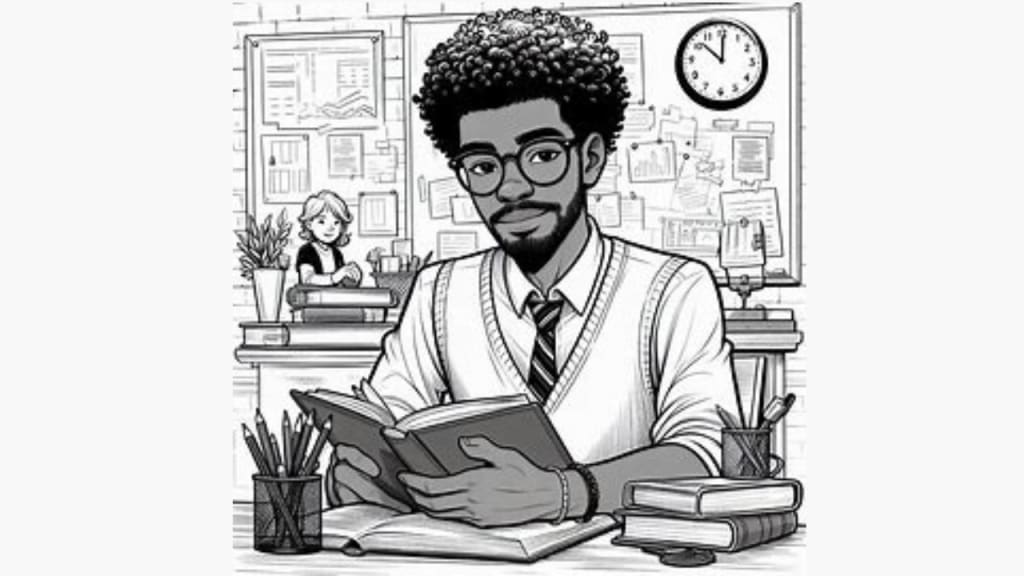
Marcus was a young, black software engineer with a passion for machine learning. His office was a testament to his dedication, filled with books on coding and algorithms, their spines worn from countless hours of study. The walls were adorned with sticky notes covered in scribbled equations and potential solutions to programming problems that kept him up at night. His desk was cluttered with half-finished projects, a constant reminder of the innovative spirit that fueled him.
One evening, as he sat in front of his computer, the glow of the screen reflecting off his glasses, he had an epiphany. He had been working on a new image-to-text converter for the past few weeks, a tool that could potentially revolutionize the way we interact with visual media. But something about it bothered him deeply. Every time he tested the AI with images of African American or Asian people, the results were disappointing. The software either failed to recognize their features or translated them into something that was blatantly inaccurate and, frankly, disrespectful.
Marcus knew that diversity in technology was crucial. It wasn't just about filling quotas or ticking boxes; it was about creating products that truly served and represented the diverse tapestry of the human experience. He thought back to the time when he was a kid, flipping through comic books and barely finding a hero that looked like him. It was a stark realization that the world of art and imagination, even in its most advanced forms, still had a long way to go in terms of inclusivity.
He decided to approach the problem with the same determination he had when he first taught himself to code. Marcus knew that if he could crack this code, he could help change the face of the AI industry. He dove into research, seeking out articles and studies on the lack of representation in AI datasets and the biases that stemmed from it. He discovered that the problem was systemic, rooted in the very data that these algorithms were trained on. Most datasets were overwhelmingly white, which meant that the AI learned to favor those features over others.
Aaron, his office neighbor and closest friend at work, was intrigued by Marcus's newfound mission. Aaron was a data scientist with a background in sociology, which gave him a unique perspective on the issue. "We need to start by collecting more images of diverse faces," he suggested one day, as they took a break from their respective projects to chat over coffee. "We can't just tweak the algorithm; we have to change what it learns from."
Together, they hatched a plan to create their own dataset, one that would be more inclusive and accurately represent the world they lived in. They began reaching out to photographers and artists in their community, asking for permission to use their work. The response was overwhelmingly positive; people were eager to contribute to a project that aimed to correct a long-standing injustice. They worked tirelessly, scanning through thousands of images, tagging and categorizing each one with care.
As they compiled the dataset, Marcus couldn't help but feel a sense of pride and purpose. He thought about all the kids out there who would grow up seeing themselves reflected in the technology that shaped their lives. The thought of providing them with the same opportunities he had to find heroes that looked like them brought a smile to his face. This wasn't just about improving an algorithm; it was about creating a more equitable future.
Their project quickly gained traction within the company. Colleagues offered support and suggestions, and their supervisor even allocated additional resources for them to continue their work. Marcus and Aaron's dedication was inspiring, and it didn't go unnoticed. They were invited to present their findings at a company-wide conference, where they received a standing ovation. The room buzzed with excitement and the potential for change.
The conference was a turning point. It was the moment when their epiphany grew into something much larger than themselves. They had started a movement, one that sought to ensure that every face, every story, every voice was heard and seen in the digital realm. The challenge was immense, but they were ready to tackle it head-on. They knew that with each line of code they wrote and each image they added to their dataset, they were taking a step towards a more inclusive world.
About the Creator
Geneva Rochester
Author, Self publisher, fiction genre, children’s book writer, certificate for script writing of TV pilots.
Keep reading
More stories from Geneva Rochester and writers in 01 and other communities.
Generation of Change
The Importance of Voting and Understanding Government Bohdi sat at his cluttered desk, surrounded by the scattered papers of history notes. Suddenly, a thought jumped in his head of the path ahead for his nation now depended on the steps of his generation. While voting held the power to guide the way forward, it brought with it great responsibility. As a person of mixed feelings about some historic tales, their lessons now spoke to him in a new light. The intricacies of governance in America demanded to be unraveled, so that he may cast his vote with wisdom and spur others to do the same. Where some of the events of the past had perplexed him, now the pieces were falling into place. The weight of his vote now rested heavy on his shoulders. How could he cast a vote in a way that would benefit his family, community and nation? The issues that mattered most to him now demanded his attention and discernment.
By Geneva Rochesterabout a year ago in 01
Why SERP Data Is Crucial for Digital Marketing
When you search on Google or Bing, the results that appear aren’t random. They’re carefully curated to match what the search engines think you want to see. But behind these search results lies a treasure trove of data—one that can provide businesses, marketers, and analysts with a wealth of information to understand how online content performs, what consumers are looking for, and how competitors are positioning themselves.
By Swiftproxy3 days ago in 01
The Complete Guide to Wi-Fi Hacking: How Networks Are Compromised and How to Protect Yours
The Invisible Threat to Your Wireless Network In our hyper-connected world, Wi-Fi has become as essential as electricity. From smart homes to remote work, we depend on wireless networks for virtually everything. Yet, this convenience comes with significant risks. Wi-Fi hacking represents one of the most pervasive and potentially damaging cyber threats facing individuals and organizations today. Understanding how these attacks work isn't just technical knowledge—it's a necessary layer of digital self-defense in our increasingly wireless world.
By Alexander Hoffmann3 days ago in 01
The steps to losing a child
Step One: Lose a child. Not what anyone wants to happen and nothing you can do to change it, but you can go through steps to becoming happy again. You can go through steps to loving again. You can go through steps to become a new you because after losing a child you will never be the same person you once were.
By Tabitha Hinkley2 days ago in Fiction


Comments
There are no comments for this story
Be the first to respond and start the conversation.