
In-Product Content Marketing Is Just What You Need
And we're here to help you have it!

One of the most significant inventions in this day and age, when it comes to marketing that is, is in-product content marketing. But hold on, I’ll need to take it from the top and make it… Well, digital.
Content is a crucial part of every marketing channel, and that includes digital marketing.
By “digital marketing”, we mean two things: First, the type of marketing that can be viewed on a computer and/or a laptop or a tablet. Secondly, social media marketing and email marketing.
Of course, digital marketing platforms like social media, email marketing, video marketing, and so on, can’t work without the perfect content strategy that will distribute valuable content that will bring in new prospects and entice the existing ones. And even if you do have the right content… Can it help if it’s not related to what your customer is looking for at that specific point of their journey?
All in all, is in-product marketing the next big thing?
Pro hint: The answer would be yes.
But let’s see what in-product content is.
Definitions First
Do you remember “Clippy”, the Microsoft Office assistant?
Most of you who remember it will rush to say that you used to find it annoying. It popped up at any point in time, and you had work to do, yadda yadda.
Well, I was a child when Clippy was around, and my mother let me play around on Microsoft Office - therefore, it never stopped me from anything.
Back to the point, I loved clicking on Clippy and making it give me tips here and there! Now, what if I told you that Clippy was one of the earliest attempts (actually, the first one) on in-product messages with content related to the actions taken?
Let me define what in-product content marketing is: Through this marketing technique, marketers create content that showcases exactly what a user needs to do - and, by extension, the real, actual value of a specific action of the product in question.
In-product content marketing delivers messages to a customer while they’re using your product, your platform, whathaveyou.
The way prospects and customers interact with this content gives valuable feedback to marketers, allowing them to go forth with the aforementioned hyper-personalization.
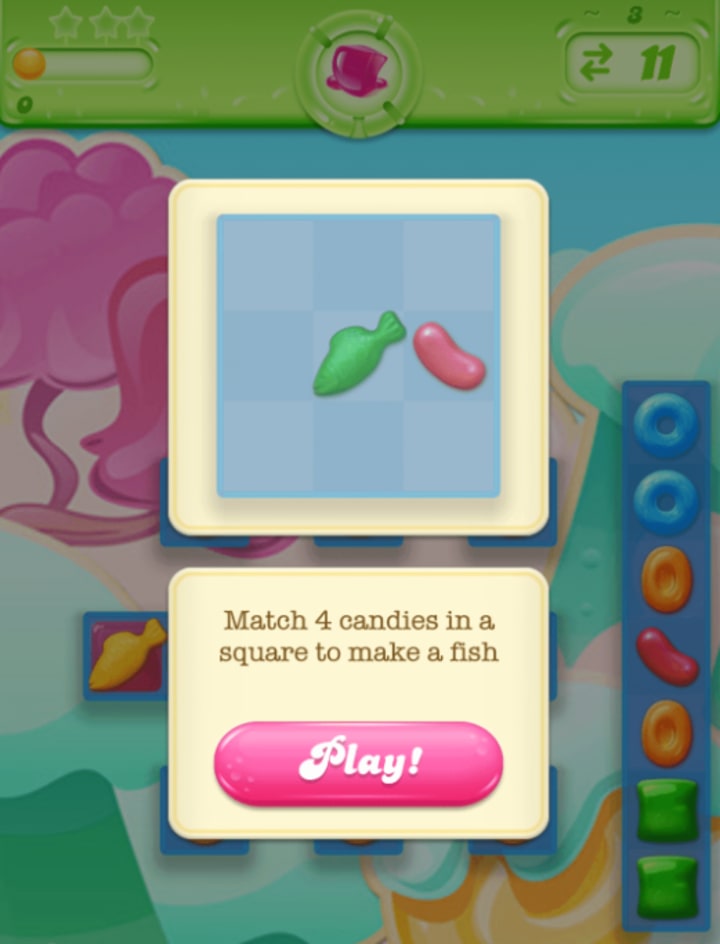
So, when you’re, for example, playing Candy Crush (you do, everybody does) and you’re at the early stages of the game where you’re still learning a thing or two, and you get a message like this one:
(Source)
Then you know you've received an in-product message. How you may ask. Well, its content is there to provide information and make the user engage with the app itself. Which, of course, is not something too impressive as a standalone event, but hear me out on that one.
It needs to follow some rules, much like email marketing itself, to generate leads and nurture them (yes, everyone is a lead until they go further down the funnel).
In-product content that has nothing to do with user activity can do absolutely nothing for you. Imagine receiving the message in the picture above when you've already gone past the stage where you're still a special candy noob.
If you're about to go forth with your in-product content marketing strategy, you'll need to have an AI tool set in place. That will help you gather data and create just the right segments that will respond to just the right content at the right time.
Why Do You Need in-Product Content?
First and foremost, to begin sending some customized messages with the in-product content that I described above (yes, the "just right" one), you need to make sure that you've done the following:
- You've segmented your market and created a tailor-made message that is solely based on your user's behavior
- You've sent the message while said people are active on the app (otherwise, we're talking about push notifications, which are not the point here)
In-product digital content should be sent to users who are using your product at said point in time. They can serve as great reminders while gently engaging further an already engaged user.
(Source)
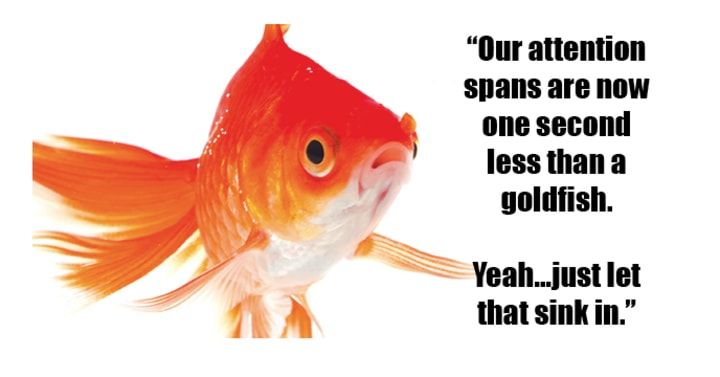
And yes, the message of the image above couldn't be more accurate. This is why you need in-product content that's got structure, that makes excellent use of the data at hand, and that can help you evolve.
The primary difference in-app messaging has with email marketing: Emails aim to re-engage, whereas an in-app message aims to engage further.
If you decide to capture the attention of your target audience by using in-product digital content marketing, you'll need to think about more than just one type of channel to incorporate into your digital marketing strategy. While using your business data to create that content, of course.
Now, let's see how you can use in-product content marketing in a way that will benefit and complement your digital channels.
1.User Onboarding
Your onboarding strategy is the first thing you'll need to set straight, and it can include both emails and in-product content.
You've got your tool on the go, and you've got people using it, right? Great! Maybe now's the time to share some content with them.
In-product content is meant to entice users while they know what your brand/app can do for them. They've already got the product in their hands, and they're already using it. So, engage them further and explain what exactly it is that they're doing on your platform.
It's all about attention. In-product content is what will keep users hooked on your product as they're using it.
By showcasing all the different ways a feature can be used, you're practically enabling users to train themselves and shorten the learning curve while being engaged and using your product.
That way, they can see a clear demonstration of your tool's benefits and overcome any difficulties they may have with the tool itself.
In other words, help your users see your product's value while they're using it. Kind of like using a new brand of dish soap - you can see results right away.
So, be a nice guy and welcome your users first. Guide them through your product to showcase value, but in a way that will gamify the experience, instead of just sending one welcome email.
Lead users down the funnel by engaging them more and more and get them to subscribe to your mailing list - if they haven't done so already. Then, it's time to send that welcome email they will be waiting for.
Oh, and be helpful, even with your emails or digital campaigns. Create social media posts and testimonial videos that'll be complementing your in-product content effort. Existing customers can showcase the value they found when it comes to your product and its use.
Ask them to share their experience with you. That way, you'll manage to sway prospects into saying, "I want that".
Now, watching a video or having digital content align with your in-product content marketing efforts can be tricky and tiresome.
So, make sure that your user onboarding is on point by continuing the gamification experience. Create a mysterious QR code you'll be able to include in the welcome email. Urge the user to "unlock" it to get to try out a unique feature on your platform.
This will complement your onboarding experience.
2.Announcements
Let's assume that your platform has got a new feature coming up. First in order of business would be to pick out the proper tools to help you manage your campaigns. Then, go ahead and create your digital marketing content.
You have created your cryptic and fancy social media posts and generated content that'll be segmented and ready to be used on your email marketing campaigns. Furthermore, this content will be creating a link between your in-product content and your emails, and so on.
That's great, but how sure are you that these actions are getting you the kind of exposure you deserve?
Complement the digital announcements with an in-product message that will be talking about a new feature discovery.
It doesn't need to be too much, just something that will engage. Word of warning, though: You'll need to send the right message at the right time.
Just make sure to be timely, use relevant digital content, and, if you're planning on an announcement email, try to segment your list in a way that will exclude those that won't exactly be interested in your feature.
Just check the phases each user is in (in other words, their position on that sales funnel we all love) and create your in-product content accordingly as well. In that stage, witty copy and content will be crucial for your in-product marketing and digital marketing efforts.
Remember: Those two should be aligned.
Always keep in mind a very simple fact: When you're releasing a new feature, it's crucial to understand your customers' pain points and the problems this feature will solve. These are the things that will pinpoint what your customers are supposed to expect.
And what they're supposed to expect is what will mold your content, both in-product and digital.
3.Premium Features
You can't create something completely free and expect to earn money using just ads. Spotify seems to know that very well:
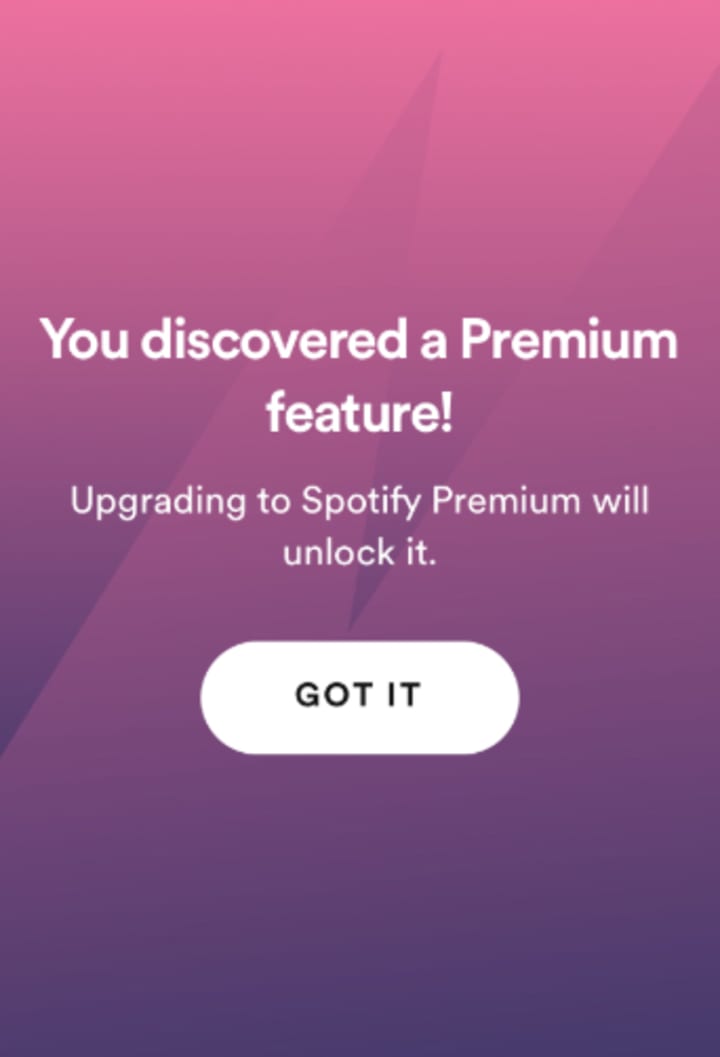
For those of you not in the know, this is one of the in-product messages a Spotify user gets when trying to "use" a premium feature, such as skip an ad or filter through a playlist.
Messages like the one above were what made me try out the freemium trial version of Spotify. I was happy for a week, being able to listen to anything I wanted and skip through any song without ads.
After that, I was faced with a decision: I could either use the premium version or not. Spotify was very lovely to send me an offer around that time, and I wasted no time.
The point here was that I was already engaged when I saw that message while I was using the platform and enjoying its content. So, I decided to try it out.
Now, as far as the copy is concerned, it wasn't aggressive or matter-of-fact, it wasn't an "either you pay, or you don't" type of thing. Instead, its content made me think of a friendly suggestion.
And by being timely and sending out an email with an offer right when my free trial was about to end, Spotify complemented their in-product content (and vice versa) and got extra engagement points by leading me further down the funnel!
4.Upsells, Cross-Sells, and Referrals
When we're talking about in-product messages and content, we're talking about a whole strategy that can do a lot more than help the users upgrade to a premium plan. Provided that, again, your marketing message is tailor-made and helpful and doesn't look sales-y.
So, what you'll need will be to take the following steps:
- Identify what you need to up- and/or cross-sell and the segments of your audience that can be benefitted from your offer. Remember, most revenue comes from loyal customers and not one-timers.
- Find the right time and place to upsell or cross-sell with the in-product content that will correlate to the digital content and marketing email you will send for the same reason.
- Create content that will capture the user's attention and will make them interact with the product. This is the mechanism that'll make them remember you.
- Prioritize those campaigns based on content as well as segments. Are they seasonal? Are they aiming to inform and, as a result, sell?
- Finally, your data and analytics are your best friends when it comes to that step. What do they show? Did your product generate clicks on your email? Did your social media post get shared around? Did your in-product content make you more or less money than you thought it would?
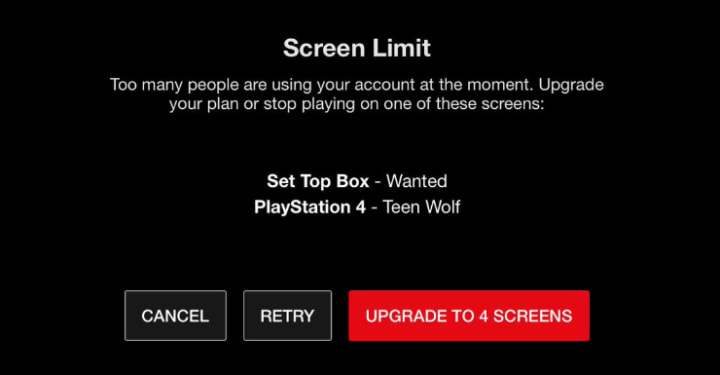
Take Netflix, for example. They're not pushy or irrelevant when it comes to upselling their product. They're merely stating a fact.
If you've got the standard subscription plan, you know that you can't stream on more than two screens. And if you do try to do that, you'll get that message:
(Source)
They're not pushing you to upgrade. It's your call. If you pair that with a great marketing email that will, perhaps, contain an offer (like Spotify did above), you'll score pretty high on having leads move further down the funnel.
Just help your users pay attention to the benefits of their upgrade.
As a user of an app - any app - you've probably come across a message telling you to combine your purchase with something complementary. The same principle applies here as well: You can create some great cross-sell content.
Doing that and offering a discount either on social media platforms or through your email marketing campaigns can help you sell pretty much anything. Those full carts, for example, that stay there, looking abandoned and lonely.
But let's assume that you've done those and what you need is to grow a referrals list.
Just do it like this:
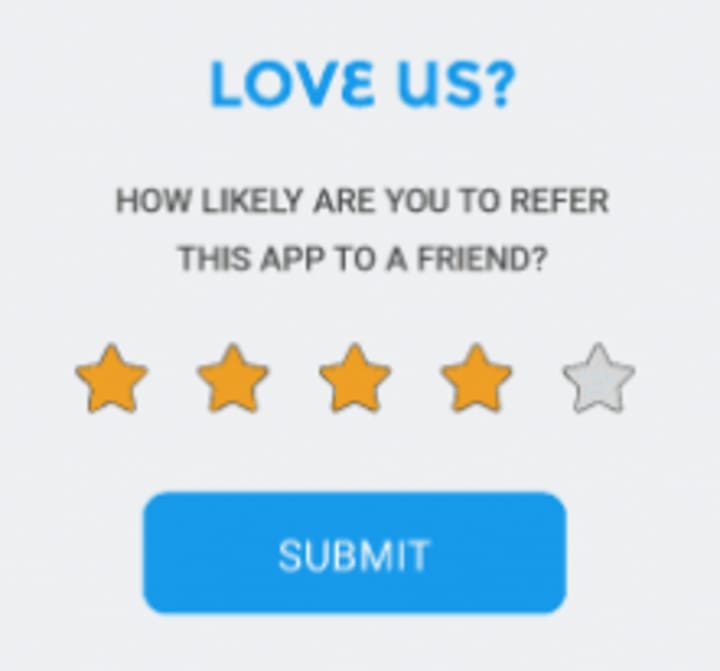
(Source)
By asking users how likely they are to refer to a friend, you're essentially opening the window to two things that you need: user feedback and referrals.
Pick out your most engaged users first, create a message that'll pop up as they're using the product, and ask them how likely it is that they'd refer you to a friend.
And run an NPS campaign while you're at it. Your website or an email campaign would be a great place to combine your digital content with your in-app message.
This will help you score more points regarding engagement, score more value when it comes to appreciation, and turn your users to brand ambassadors.
The most engaged users are the ones that are most passionate about your brand or product. And you need those users to become brand ambassadors and "convince" their friends and family that they need your product too.
The Takeaway
In-product content marketing is one of the best content marketing tactics out there, for sure, and can be a standalone practice, as well as complement other marketing practices like digital marketing and email marketing.
And when in-product digital marketing is done right, you'll see an increase in engagement and revenue and a decrease in customer churn, unlike what you've seen up to that point!
Author Bio:

Téa Liarokapi is a content writer working for email marketing software company Moosend and an obsessive writer in general. In her free time, she tries to find new ways to stuff more books in her bookcase and content ideas-and cats-to play with.
About the Creator
Keep reading
More stories from writers in 01 and other communities.
Italian Brainrot: Gen Alpha
If you walk through a bustling piazza in Milan or stand near a school gate in Rome during the afternoon rush, you might hear a conversation that feels like a glitch in the linguistic matrix. You’ll see a group of twelve-year-olds, dressed in matching tech-fleece tracksuits, shouting about "Skibidi," debating who has the most "Aura," and accusing each other of being from "Ohio." To anyone born before the year 2010, this sounds like a collective mental breakdown. But to the architects of this new reality—Generation Alpha—it is the only language that makes sense.
By Teodor Monescu7 days ago in 01
Data Anonymization Techniques to Ensure Privacy in Modern Enterprises
Enterprises today work with massive volumes of data coming from customers, users, employees, and digital systems. This data is critical for analytics, reporting, artificial intelligence, and strategic decision making. However, much of it contains sensitive or personal information that cannot be exposed or misused. With strict data privacy regulations and growing awareness around data protection, organizations must find a way to use data responsibly.
By Vinod Vasava3 days ago in 01



Comments
There are no comments for this story
Be the first to respond and start the conversation.