
“ICE Out”: Understanding the Nationwide Protests and Planned General Strike in the United States
A growing movement challenges immigration enforcement while raising broader questions about policy, accountability, and civic action

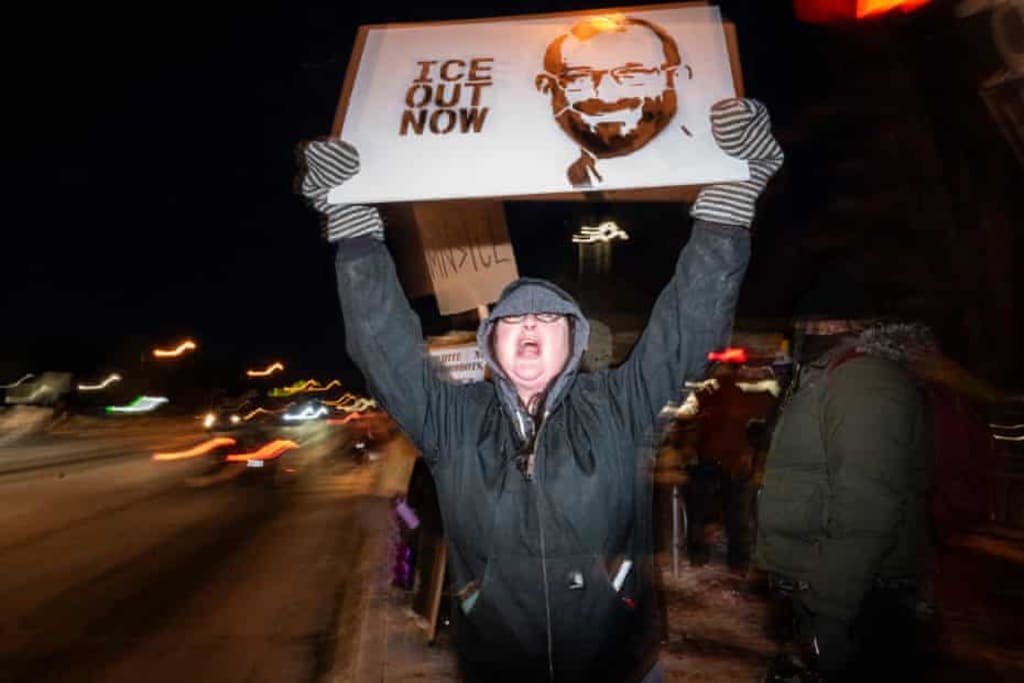
Across the United States, activists, community groups, and labor advocates are preparing for a coordinated wave of demonstrations known as the “ICE Out” protests, paired with a planned nationwide general strike. The movement reflects rising tensions over immigration enforcement policies and highlights a moment of intense national debate about security, human rights, and government authority.
The protests are scheduled for January 30–31, 2026, with organizers urging supporters to refrain from work, school, and shopping in what they describe as a “national blackout.” This approach aims to demonstrate the economic and social influence of collective action while drawing attention to immigration practices that critics argue have become increasingly aggressive.
---
The Events That Sparked a Movement
Calls for a nationwide strike gained momentum after a series of controversial incidents involving federal immigration agents. Reports indicate that the movement was triggered in part by high-profile killings connected to Immigration and Customs Enforcement (ICE) operations, which intensified public outrage and mobilized grassroots networks.
More broadly, the demonstrations emerge amid expanded federal immigration enforcement and mass deportation policies, which have divided public opinion across political and social lines.
Earlier protests in cities such as Minneapolis, San Francisco, Boston, and Los Angeles focused on demands for accountability and policy reform, signaling that opposition had already begun to organize before the nationwide call to action.
For many participants, the strike represents not just a reaction to isolated events but a response to what they see as a structural shift in immigration policy.
---
What Is a General Strike — and Why Now?
A general strike typically involves workers across multiple sectors collectively stopping labor to pressure institutions or policymakers. The planned U.S. strike is explicitly positioned as a protest against expanded ICE operations and deportation efforts.
Organizers have encouraged Americans to adopt a simple formula: “no work, no school, no shopping.” By disrupting everyday routines, supporters hope to amplify their message beyond traditional demonstrations.
According to reports, more than 250 actions across dozens of states are expected, with backing from hundreds of organizations. Some businesses have even considered closing temporarily or donating proceeds to immigrant advocacy groups in solidarity.
The scale suggests a carefully coordinated effort rather than a spontaneous protest, illustrating how modern activism increasingly relies on national networks and digital organization.
---
Who Is Organizing the Protests?
Student groups, immigrant-rights advocates, labor organizations, and grassroots coalitions have all contributed to the call for action.
In some cases, university communities have taken leadership roles, while broader alliances are planning demonstrations in all 50 states and Washington, D.C.
Campaigns linked to the movement include initiatives designed to reduce institutional support for enforcement agencies, such as boycotts targeting corporations believed to cooperate with ICE operations.
These strategies reflect a shift from purely symbolic protest toward economic pressure — a tactic historically associated with major social movements.
---
A Continuation of Earlier Labor Actions
The national strike did not emerge in isolation. Just weeks earlier, Minnesota witnessed a large-scale labor protest described as the first general strike in the United States in roughly 80 years, driven by outrage over immigration enforcement and demands for accountability.
That strike united labor unions, community organizations, and faith leaders, demonstrating how immigration policy can intersect with worker rights and local governance.
Observers note that when local protests expand into nationwide campaigns, they often signal a deeper societal debate rather than a temporary political flashpoint.
---
Supporters’ Perspective
Participants say the strike is intended to show solidarity with immigrant communities and to call for reforms ranging from oversight to structural change within enforcement agencies.
Some activists emphasize targeting large corporate entities rather than small local businesses, suggesting an effort to maintain community relationships while still applying pressure.
For supporters, the demonstrations represent civic engagement — a constitutional form of expression designed to influence public policy.
---
Critics and Concerns
Not everyone views the planned shutdown as constructive. Critics worry that widespread work stoppages could disrupt local economies or deepen political polarization. Others question whether a single day of action can produce lasting legislative change.
Government officials have also faced the challenge of balancing public safety with the right to protest, especially after earlier demonstrations saw arrests and confrontations between protesters and law enforcement.
These concerns highlight a recurring tension in democratic societies: how to accommodate dissent while maintaining order.
---
The Broader Immigration Debate
Immigration has long been one of the most complex issues in American politics. Policies must navigate border security, economic needs, humanitarian obligations, and legal frameworks — often simultaneously.
The current protests underscore how enforcement strategies can influence public perception, particularly when incidents gain national visibility. When communities feel directly affected, local grievances can rapidly evolve into national movements.
At the same time, immigration agencies argue that enforcement is necessary to uphold federal law, demonstrating the competing priorities policymakers must reconcile.
---
Economic and Social Implications
If participation reaches the levels organizers hope for, the strike could provide insight into the power of coordinated economic action. Even limited disruptions can shape media narratives, influence corporate behavior, and prompt political responses.
However, historians often note that the long-term impact of protests depends less on a single event and more on whether the movement sustains momentum afterward.
Already, organizers have hinted at future advocacy efforts, suggesting that the demonstrations may be part of a longer campaign rather than a standalone protest.
---
A Defining Moment or a Passing Flashpoint?
Whether the “ICE Out” protests become a turning point in U.S. immigration policy remains uncertain. What is clear is that the movement reflects a period of heightened civic participation, where public demonstrations continue to shape national conversations.
For some Americans, the strike symbolizes solidarity and reform. For others, it raises questions about governance and economic stability. Yet both interpretations point to the same underlying reality: immigration remains a defining issue of the modern political landscape.
As the demonstrations unfold, their true significance will likely be measured not only by turnout but by the dialogue they generate — in legislatures, workplaces, and communities across the country.
About the Creator
Saboor Brohi
I am a Web Contant writter, and Guest Posting providing in different sites like techbullion.com, londondaily.news, and Aijourn.com. I have Personal Author Sites did you need any site feel free to contact me on whatsapp:
+923463986212
Keep reading
More stories from Saboor Brohi and writers in 01 and other communities.
Dr. Collins in The Pitt
Medical dramas have long captured audiences with their mix of emotional storytelling and high-pressure decision-making. Among the newer entries in the genre, The Pitt has emerged as a standout series, praised for its realism and layered characters. One figure who quickly drew attention was Dr. Heather Collins, a physician whose professional strength and personal vulnerability made her one of the show’s most memorable presences.
By Saboor Brohi a day ago in 01
The Siren Dilemma
At 2:14 a.m., Jake seriously considered dying quietly. Not because he wanted to. Not because the pain in his chest wasn’t concerning—it was. Very concerning. The kind of pain that makes you sit upright in bed and whisper, “Hmm. That doesn’t feel… decorative.”
By nimesh tandel2 days ago in 01
How to Make-Sure HVAC Code Compliance During the Design Phase with BIM
Let's be honest: nobody wants to spend their weekend staring at a red-stamped "Failed Inspection" notice or redesigning a ductwork layout because it’s clashing with a structural beam that wasn't on the original drawing. It’s frustrating, expensive, and a total momentum killer.
By lisa Brown2 days ago in 01




Comments
There are no comments for this story
Be the first to respond and start the conversation.