
Human vs. Machine: The Fear of Being Replaced
The Silent Machine: A Story of Displacement

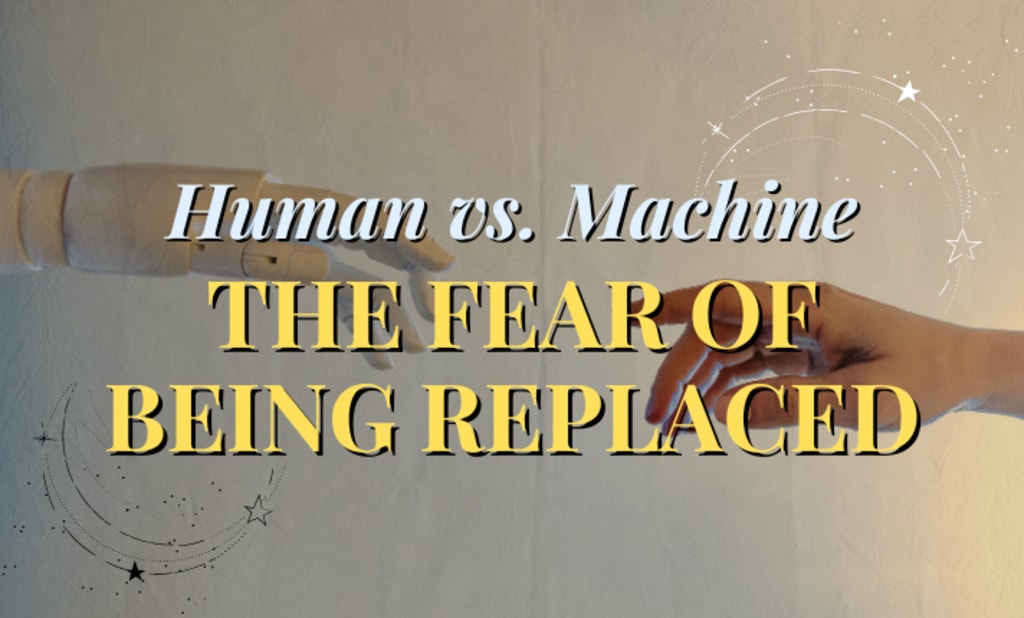
*Ravi’s heart pounded as the sound of machines buzzed around him. The office that once felt like a second home now felt alien—a place where he didn’t belong anymore. But it wasn’t the people that pushed him out; it was the machines.
Ravi Desai has worked at his company for nearly 15 years. He was a seasoned accountant at a small firm in Pune, a proud family man who’d built his life through years of dedication and perseverance. His job provided stability for his wife Meena and his two young children. Though technology was creeping in, Ravi never paid much mind to it. After all, numbers and people were at the heart of his work. Or so he thought.
Then came Arya, the new artificial intelligence system his company had just implemented. Arya could do everything Ravi could, but faster, more accurately, and without rest. The managers praised its efficiency—no more mistakes from tired employees, no more delayed reports. Ravi wasn’t alone in his skepticism. His colleagues murmured in break rooms and over chai about what this might mean for their future. But the anxiety tugged at Ravi’s chest more than most. Arya didn’t just threaten his job; it threatened the world he’d painstakingly built.
The first blow came when Ravi’s boss asked him to oversee Arya’s work, a title that sounded more like a demotion than a promotion. Ravi tried his best to mask the sinking feeling that spread within him like a slow poison. His hands trembled slightly as he explained data analysis to Arya, knowing full well the machine didn’t need any guidance. It was performing calculations before he could even finish his sentences.
One afternoon, Ravi stayed late, reviewing files that Arya had processed. He had to find an error, some sign that the machine couldn’t replace human intuition. But Arya was flawless, precise. That evening, as Ravi drove home through the crowded streets of Pune, he couldn’t shake off the fear that had settled deep in his bones. Would Meena understand if he lost his job? What would he tell his children when they asked about their future?
Over dinner, Meena noticed Ravi’s silence. “You’re not your usual self today. Is everything alright at work?” she asked, her voice filled with concern.
Ravi sighed, unsure how to express the storm brewing inside him. “There’s this new AI system at work, Arya. It’s like a machine that can do everything I do, but better. I’m not sure how long they’ll need me anymore,” he confessed, feeling the weight of his words.
Meena, always the optimist, gently touched his arm. “Machines can never replace what’s in here,” she said, pointing to Ravi’s heart. “You have wisdom, experience, and understanding. No machine can offer that.”
Ravi wanted to believe her, but doubt gnawed at him. A few days later, the company held a meeting. The CEO announced that Arya’s success had led them to automate more positions. Ravi’s stomach churned as his boss pulled him aside after the meeting, offering a “generous” severance package and an invitation to stay on board for a few months to train the system further.
It felt like a betrayal. The office, once filled with friendly chatter and laughter, had become a sterile environment dominated by silent, efficient machines. Ravi packed his belongings quietly the next day, his departure barely noticed.
His last day at the office was bittersweet. As he walked out, Ravi turned one last time to look at the machines whirring softly in the background. They didn’t acknowledge him. They didn’t care.
Weeks passed, and Ravi struggled with a sense of loss. Every job interview felt like a reminder of his age, his redundancy. His wife and children tried to keep him in good spirits, but Ravi’s mind was trapped in a loop of what-ifs. Could he have done more? Could he have adapted faster?
One evening, his daughter Sanya sat beside him with her school books. “Papa, can you help me with my math homework?” she asked. Ravi smiled despite his inner turmoil. He had always loved numbers, and it felt good to teach his daughter. As he explained the concepts, he realized something: the joy of human connection could never be replicated by a machine.
A week later, Ravi attended a community event organized by an NGO that helped people adapt to the changing job market. There, he met others like him—people displaced by machines but determined to find new opportunities. They shared stories, gave each other advice, and learned new skills. It was here that Ravi found hope. He started attending courses on digital marketing and data analysis. Slowly, he built a new career for himself, one where machines and humans worked together rather than in opposition.
Ravi still missed the old days. But as he sat at his new desk in a co-working space, surrounded by both humans and machines, he realized something profound. Machines could replace tasks, but they couldn’t replace the human spirit. And that was something worth holding on to.
Conclusion: While the machines had pushed Ravi out of his comfort zone, they couldn’t take away his resilience, his desire to learn, or the warmth of his human connections. In the end, Ravi found a way to adapt—not by fighting the machines, but by embracing a new path alongside them.
About the Creator
Rishikesh kohale
Each day, a journal of learning and growth, uniquely sharing my journey. So watch this space, as it unfolds, A story of passion, yet to be told.
Keep reading
More stories from Rishikesh kohale and writers in 01 and other communities.
Why Manjummel Boys is One of the Best Movies of 2024?
Explore why "Manjummel Boys" is the best movie of 2024, based on a true story of friendship, set against the backdrop of Kodaikanal's Guna Caves. This heartfelt film showcases exceptional screenplay and emotional depth, highlighting the essence of true friendship.
By Rishikesh kohaleabout a year ago in Cleats
Who’s Leading Fintech in 2026? Top App Development Companies
When it comes to building secure, scalable, and innovative financial solutions — from digital banking platforms and payment systems to AI-driven risk tools — picking the right partner can make or break your success. In 2026, fintech is evolving faster than ever, powered by AI, cloud-native architectures, blockchain, and embedded finance. Below are the foremost companies shaping the future of fintech technology.
By Aarti Jangidabout 17 hours ago in 01
Musk wants up to $134B in OpenAI lawsuit, despite $700B fortune
Elon Musk wants a jaw-dropping $79 billion to $134 billion in damages from OpenAI and Microsoft, claiming the AI company defrauded him by jettisoning its nonprofit mission, Bloomberg first reported. The figure comes from expert witness C. Paul Wazzan, a financial economist whose bio says he has been deposed nearly 100 times and testified at trial more than a dozen times in complex commercial litigation cases.
By Dena Falken Esq2 days ago in 01
Center Stage with Paul Stewart
*** I'm keen to republish the interviews I did for my series with Vocal creators. It's been a few years and I thought it might be nice to revisit these wonderful conversations. I'll be releasing them one at a time for a few weeks/months.
By Heather Hubler4 days ago in Interview



Comments
There are no comments for this story
Be the first to respond and start the conversation.