
How WCAG2.1 is different from WCAG2.0? Understanding the differences.
WCAG2.1 Updates

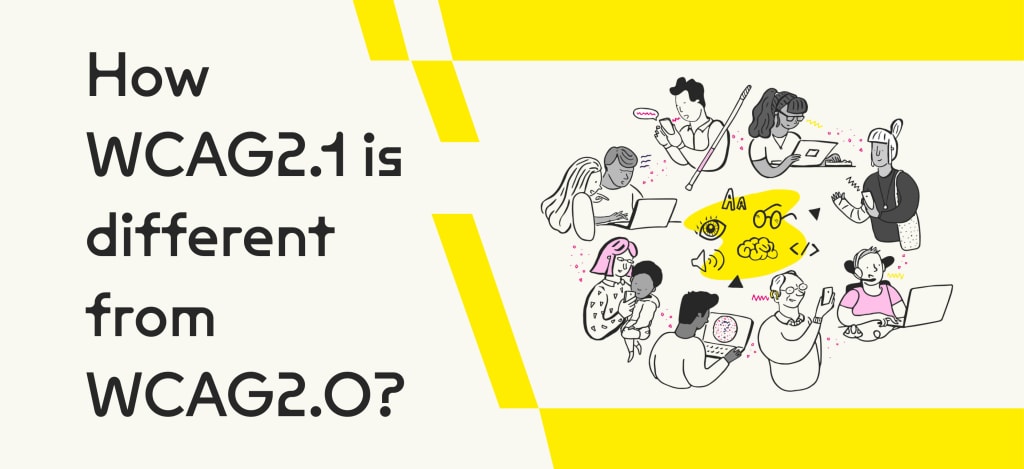
Web accessibility is crucial for ensuring that people with disabilities can navigate and interact with online content effectively. The Web Content Accessibility Guidelines (WCAG) provide a set of standards for making web content more accessible to all users. Over time, these guidelines have evolved to keep pace with advancements in technology and to address the diverse needs of users. In this blog post, we'll explore the key differences between WCAG 2.1 and its predecessor, WCAG 2.0, and why these changes matter.
1. Expansion of Success Criteria:
• One of the significant differences between WCAG 2.1 and WCAG 2.0 is the expansion of success criteria. WCAG 2.1 introduces 17 new success criteria, providing more specific guidelines for addressing accessibility issues that were not adequately covered in WCAG 2.0.
• These new criteria focus on areas such as mobile accessibility, cognitive and learning disabilities, and users with low vision or disabilities that affect motor control.
2. Mobile Accessibility:
• With the proliferation of mobile devices, ensuring accessibility on smaller screens and touch interfaces has become increasingly important. WCAG 2.1 includes new success criteria that address mobile accessibility, such as ensuring that content can be operated with a single pointer and providing enhanced support for touch gestures.
3. Enhanced Support for Responsive Design:
• WCAG 2.1 acknowledges the importance of responsive design in creating accessible websites that adapt to different screen sizes and device orientations. The guidelines include new criteria for ensuring that content remains usable and accessible across various viewport sizes, including on mobile devices, tablets, and desktop computers.
4. Low Vision and Visual Impairments:
• While WCAG 2.0 provided guidelines for making content perceivable to users with visual impairments, WCAG 2.1 builds upon these principles with additional success criteria. These criteria focus on improving contrast ratios, ensuring content remains readable when resized, and providing alternative text for complex images.
5. Accessibility for Users with Disabilities Affecting Motor Control:
• WCAG 2.1 introduces new success criteria aimed at improving accessibility for users with disabilities that affect motor control. These criteria include guidelines for making it easier to operate interface elements such as buttons and links, as well as ensuring that content can be navigated using a variety of input methods.
6. Improved Conformance Criteria:
• WCAG 2.1 also updates the conformance criteria, providing clearer guidance on how to meet the accessibility requirements outlined in the guidelines. This helps organizations better understand what is required to achieve compliance with WCAG 2.1 and make their content more accessible to all users.
7. Emphasis on Accessibility Testing and Evaluation:
• WCAG 2.1 provides updated guidance on accessibility testing and evaluation, including recommendations for conducting thorough accessibility assessments and audits. This includes suggestions for using automated testing tools, manual testing techniques, and user testing methods to identify and address accessibility barriers effectively.
8. Alignment with International Standards and Regulations:
• WCAG 2.1 aims to align more closely with international standards and regulations related to web accessibility, such as the European Union's Web Accessibility Directive and the United Nations Convention on the Rights of Persons with Disabilities (CRPD). By adhering to WCAG 2.1, organizations can ensure compliance with these global accessibility standards and regulations, facilitating access to digital content for users worldwide.
Conclusion: The evolution from WCAG 2.0 to WCAG 2.1 represents an important step forward in web accessibility. By addressing new technologies, user needs, and accessibility challenges, WCAG 2.1 provides a more comprehensive framework for creating accessible web content. By adhering to these guidelines, organizations can ensure that their websites and applications are usable by everyone, regardless of their abilities or disabilities. As technology continues to evolve, it's essential to stay informed about the latest accessibility standards and guidelines to create a more inclusive online experience for all users.
About the Creator
Keval Padia
Keval Padia, CEO of Nimblechapps, leverages 14+ years of IT expertise to drive success. A passionate leader and avid reader of biographies, he excels at uniting teams and clients, fueling innovation, and keeping the company thriving.
Keep reading
More stories from Keval Padia and writers in 01 and other communities.
The Best Email Productivity Tools to Enhance Your Efficiency in 2025
Email has been a core part of professional communication for years, but let’s be honest it can quickly become overwhelming. Spending hours sorting through your inbox and dealing with unnecessary clutter is a productivity killer. If you're finding yourself drowning in emails, it's time to check out some tools that can help you take back control.
By Keval Padia9 months ago in 01
Why Do OTC Crypto Platforms Exist Alongside Exchanges?
Crypto exchanges are often seen as the main place where digital assets are bought and sold. They provide open access, visible pricing, and instant execution for millions of traders worldwide. However, despite the growth and maturity of exchanges, OTC crypto trading platforms continue to exist and expand. Their presence is not accidental. OTC platforms serve specific needs that traditional exchanges are not designed to handle, especially when trade size, privacy, and execution control become critical. Understanding why OTC crypto platforms exist alongside exchanges helps clarify how different trading models support different market participants.
By smithtaylor2 days ago in 01
🔋 Hydrogen Fuel: Powering the Future of Clean Energy
As the world searches for cleaner, more sustainable energy sources, hydrogen fuel has emerged as one of the most exciting contenders ⚡. Often described as the fuel of the future, hydrogen promises zero emissions at the point of use, high energy efficiency, and versatility across multiple industries. But what exactly is hydrogen fuel, how does it work, and can it truly replace fossil fuels? Let’s explore 🚀.
By Toader Adelin5 days ago in 01




Comments (1)
Intresting post