
How to Write a Book Report: A Complete and Easy Guide.
1. Select a Book That Sparks Your Interest
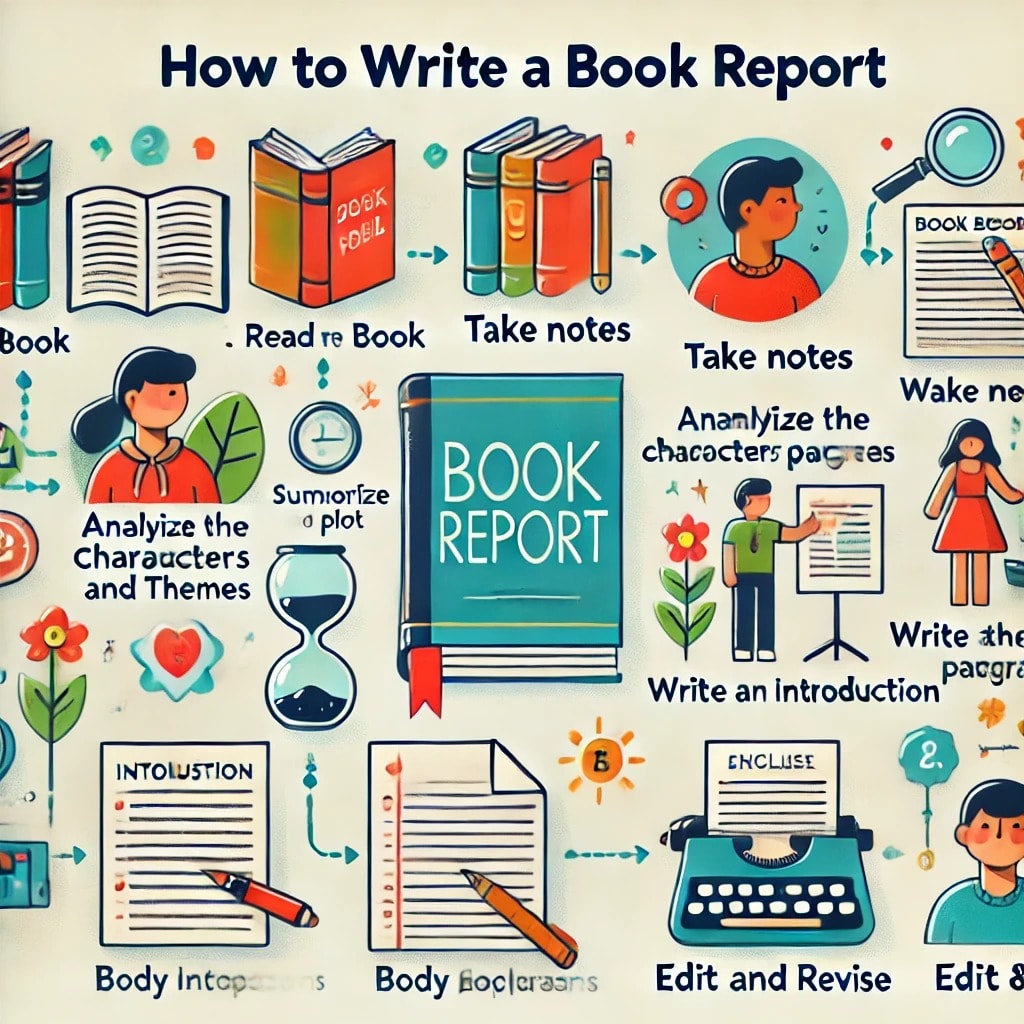
Writing a book report is an excellent way to showcase your comprehension of a book. It allows you to examine key events, characters, and ideas while sharpening your writing and critical thinking skills. Whether it's a school task or personal practice, this step-by-step guide will help you craft a thorough and insightful book report.
1. Select a Book That Sparks Your Interest
Choosing the right book is the first crucial step in writing your report. If you get to pick, go for a book that genuinely excites you. Enjoying the book will make the report-writing process much easier and enjoyable. Make sure the book meets any specific requirements like genre, length, or themes outlined by your assignment.
Before diving in, see if there are any key questions or topics to focus on while reading. This will guide your reading and help you capture relevant details.
2. Read the Book Carefully and Take Notes
Once you've chosen your book, read it attentively, taking notes along the way. Jot down important events, characters, and quotes. If the book is lengthy, break it into smaller chunks and summarize each section. This method makes it easier to reflect on the story later.
Pay close attention to key aspects like the setting, the main conflict, and how the story progresses.
3. Understand the Structure of a Book Report
Before you start writing, familiarize yourself with the typical structure of a book report. A well-organized report generally includes these sections:
Introduction: Present the book, mentioning the title, author, and genre.
Summary: Summarize the plot in a concise manner, avoiding spoilers.
Analysis: Explore the deeper aspects of the book, like themes, characters, writing style, and symbolism.
Conclusion: Share your opinion and whether you'd recommend the book.
By organizing your report this way, you ensure that you cover all necessary areas.
4. Write the Introduction
Your introduction should include the book's title, the author's name, and its genre (e.g., historical fiction, fantasy, or mystery). If relevant, mention the publication year. You can briefly state why you picked the book or what your expectations were, but keep it short.
5. Summarize the Plot
In the summary section, give a brief overview of the book's plot, focusing on major events. Be mindful not to include any spoilers. Highlight the central events and key characters. If there are many characters, focus on the ones who are most important to the story.
Also, mention any key settings or locations that are significant to the plot.
6. Analyze Key Themes and Elements
The analysis section allows you to explore the deeper layers of the book. Here’s what to focus on:
Characters:
Discuss the main characters. What are their personalities? How do they evolve through the book? Were their actions believable, and did you find them relatable?
Themes:
Identify the book’s main themes—such as love, power, or identity—and explain how the author explores them. Do you agree with the author’s perspective on these themes?
Writing Style:
Comment on the author’s writing style. Is the language detailed or straightforward? How does the writing style contribute to the mood and pacing of the story?
Symbols:
If the book uses symbols or recurring motifs, explain their meaning and how they enhance the story’s themes.
7. Write the Conclusion
In the conclusion, share your overall opinion of the book. Did you enjoy it? Why or why not? Be honest and mention both the positives and any shortcomings you noticed.
If the report asks for a recommendation, decide if you would suggest the book to others and explain why. Consider what types of readers might appreciate it. If you didn’t enjoy the book, explain what didn’t work for you.
8. Proofread and Edit Your Report
After finishing your report, take time to proofread it. Make sure your ideas are expressed clearly and that the report flows logically. Check for spelling, grammar, and punctuation errors to ensure it’s polished.
Reading your report aloud can help catch awkward phrases or unclear parts.
9. Format Your Report
Ensure your report adheres to any formatting guidelines provided (such as font size, margins, or page numbers). Divide the report into clear sections like "Introduction," "Summary," "Analysis," and "Conclusion."
If citations are required, make sure to follow the appropriate citation style (MLA, APA, etc.).
Conclusion
Writing a book report is more straightforward than it seems. By following these steps—choosing an engaging book, reading with focus, organizing your thoughts, and offering a solid analysis—you’ll be able to craft a clear, well-structured report. The more you practice, the easier writing book reports will become.
About the Creator
John118
Reading is my passion.
A Detailed Guide for Startups Mobile App Developers in Miami
It usually happens quietly. A founder in Miami opens a laptop early, coffee untouched, scrolling through two proposals that look nothing alike. One promises speed, low cost, and a launch in eight weeks. The other is slower, heavier, and nearly double the price. Both claim experience. Both say they understand startups.
By Samantha Blake6 days ago in 01


Comments (1)
I love writing book reports! This is helpful!