
How to Navigate Warranty and Service Agreements for Stationary Concrete Pumps
Warranty and Service Agreements for Stationary Concrete Pumps

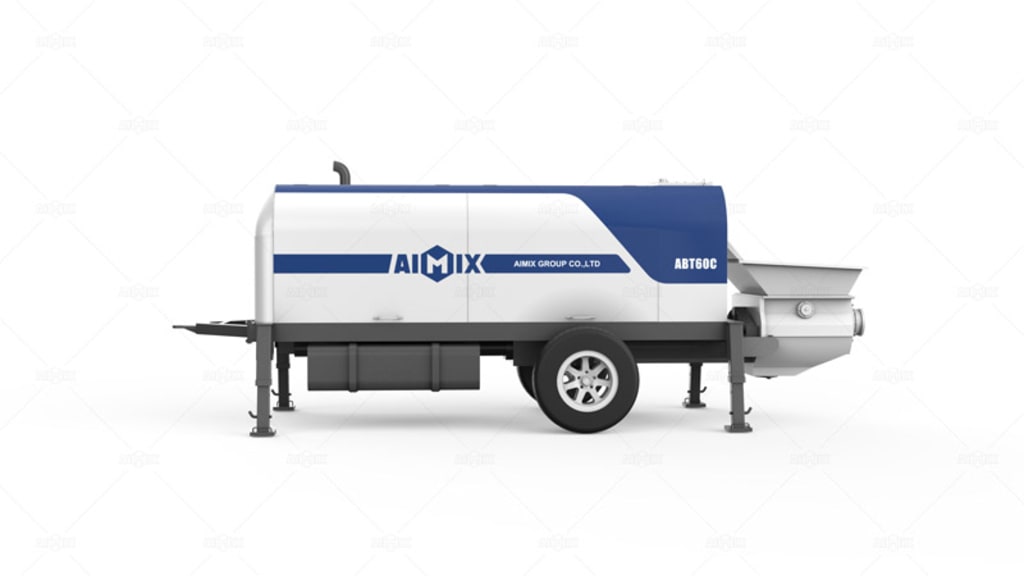
Investing in a stationary concrete pump is a significant commitment to the future productivity of your operation. While the machine's specifications and price are paramount, the accompanying warranty and service agreements form the critical safety net that protects this substantial investment for years to come. Many buyers, understandably focused on the mechanical asset itself, give these documents only a cursory glance, a decision that can lead to unforeseen expenses and operational headaches down the line. A warranty is not merely a promise; it is a complex legal document that defines the boundaries of a manufacturer's responsibility. Similarly, a service agreement is not just a schedule of maintenance visits; it is a strategic partnership that dictates how quickly your business can recover from a breakdown. Navigating these agreements with a discerning eye is not an administrative formality—it is a fundamental aspect of prudent asset management, ensuring that your static concrete pump remains a reliable source of revenue rather than a costly liability.
Deciphering the Document: A Guide to Key Warranty Clauses
The first and most crucial step is to move beyond the simple duration of the warranty, such as "one year" or "2,000 hours," and delve into the specific language that defines its coverage. The scope of coverage is the heart of the agreement. A robust warranty will explicitly cover all major components, including the hydraulic system, the concrete pumping cylinders, the S-tube or ball valve, and the electrical control system. However, the true devil often resides in the exclusions. Scrutinize these sections meticulously. You will likely find that wear items, such as pipeline, rubber seals, and mixer blades, are classified as consumables and are not covered. This is standard, but the definition of a "wear item" can sometimes be surprisingly broad. Furthermore, many warranties include clauses that void coverage if the pump is used with certain abrasive mixes or if recommended maintenance intervals are not strictly adhered to and documented. This places a significant onus on the owner to maintain detailed service logs.
It is also essential to distinguish between the coverage for parts and the coverage for labor. A "full" warranty that covers replacement parts is excellent, but if it does not include the labor cost for a technician to travel to your site and install those parts, you could be facing a substantial bill. Clarify this distinction unequivocally. The most valuable warranties provide comprehensive coverage that includes both parts and labor for all included components for the entire warranty period. Finally, understand the prescribed procedure for filing a claim. What is the process? Who is your direct point of contact? Is there a dedicated hotline? A convoluted or slow-moving claims process can exacerbate the downtime caused by a malfunction. Look for agreements that guarantee a specific response timeline, not just for a phone call, but for the dispatch of a technician. This proactive approach to support can be the difference between a minor, one-day interruption and a week-long project standstill.
The Service Agreement Spectrum: From Basic to Comprehensive
Once the factory warranty expires, your relationship with the manufacturer or distributor transitions into a service agreement, which is where the true long-term cost of ownership is determined. These agreements exist on a spectrum, and selecting the right one requires a clear-eyed assessment of your operation's risk tolerance. The most basic agreement might simply offer discounted parts and labor on an as-needed basis. While this seems cost-effective, it provides no preventative care and no guarantee of service availability during a critical failure. A more prudent choice is an agreement that includes scheduled preventative maintenance. These planned visits are not an expense; they are an investment in operational continuity. A skilled technician will perform systematic checks, adjust settings, replace worn components before they fail, and identify potential issues that are invisible to the untrained eye. This proactive vigilance preserves the pump's efficiency and prevents the catastrophic, project-halting failures that incur the highest costs.
The single most valuable clause in any service agreement for a stationary concrete pump is the guaranteed response time for breakdowns. For a piece of equipment that is the linchpin of a concrete pour, downtime is not just an inconvenience; it is a direct financial loss with cascading effects on labor, project schedules, and material spoilage. An agreement that promises a technician on-site within 24 or 48 hours is infinitely more valuable than one with an undefined response window. This guarantee is a testament to the provider's logistical capability and commitment to your productivity. In our connected age, also inquire about remote diagnostics and support. Many modern concrete pumps for sale are equipped with telematics systems that allow technicians to remotely access the control system, view error codes, and even perform preliminary diagnostics. This capability can often resolve software-related issues instantly or ensure the correct parts and tools are dispatched with the service crew, turning a potential two-day repair into a matter of hours.
Negotiating for Long-Term Value and Partnership
A warranty and service agreement should not be viewed as a non-negotiable addendum to the sales contract. For a significant purchase like a stationary concrete pump, these terms are often open for discussion, especially with distributors who value long-term relationships. Before negotiations begin, identify your priorities. Is a longer warranty period more important than a lower upfront cost? Would you prefer a more comprehensive service plan bundled into the purchase price? Often, you can negotiate an extension of the standard warranty or secure the first year of a comprehensive service agreement at a discounted rate. The key is to articulate the value of your long-term business to the supplier, positioning yourself not as a one-time customer but as a strategic partner.
This concept of partnership is the final and most critical consideration. The finest warranty document is worthless if the company backing it is unresponsive or lacks technical expertise. Before signing, conduct your own due diligence on the service provider. Research their reputation among other contractors. Do they have a proven track record of honoring their commitments? Crucially, assess their local capability. A manufacturer may have a strong national presence, but if their nearest certified technician is 500 miles away, their response time guarantees may be difficult to fulfill. A local distributor with a well-stocked parts inventory and experienced, factory-trained engineers on staff provides a level of security that a distant corporate entity cannot match. Ultimately, the goal is to build a relationship that transcends a transactional contract. You are entrusting this company with the health of a critical asset. Choose a partner that demonstrates a genuine commitment to your success, one that will be a reliable and knowledgeable ally throughout the entire lifecycle of your stationary concrete pump.
About the Creator
AIMIX
Construction Machine Manufacturer in China. Find Machines here: https://aimixconcretesolution.com/
Understanding Car Key Replacement in Modern Cities
Losing access to a vehicle is one of those problems that seems small until it happens. For many people, a car is not a luxury but a daily necessity tied to work, family responsibilities, and personal independence. When a key goes missing or stops functioning, the disruption can be immediate and stressful. This reality has made car key replacement a topic that many drivers only think about once they are forced to deal with it.
By charliesamuel7 days ago in 01
The Cultural Evolution of Handbags: From Utility to Identity
Handbags have long existed at the intersection of function, culture, and personal identity. Far beyond simple carriers, handbags reflect social change, craftsmanship traditions, and shifting ideas of self-expression. From early utilitarian pouches to contemporary luxury statements such as Loewe Bags, the handbag’s journey mirrors broader movements in fashion and society.
By charliesamuel7 days ago in 01




Comments