
How to Identify Unconstructible Elements Early Using Architectural BIM QA Workflows
How to Identify Unconstructible Elements Early Using Architectural BIM QA Workflows

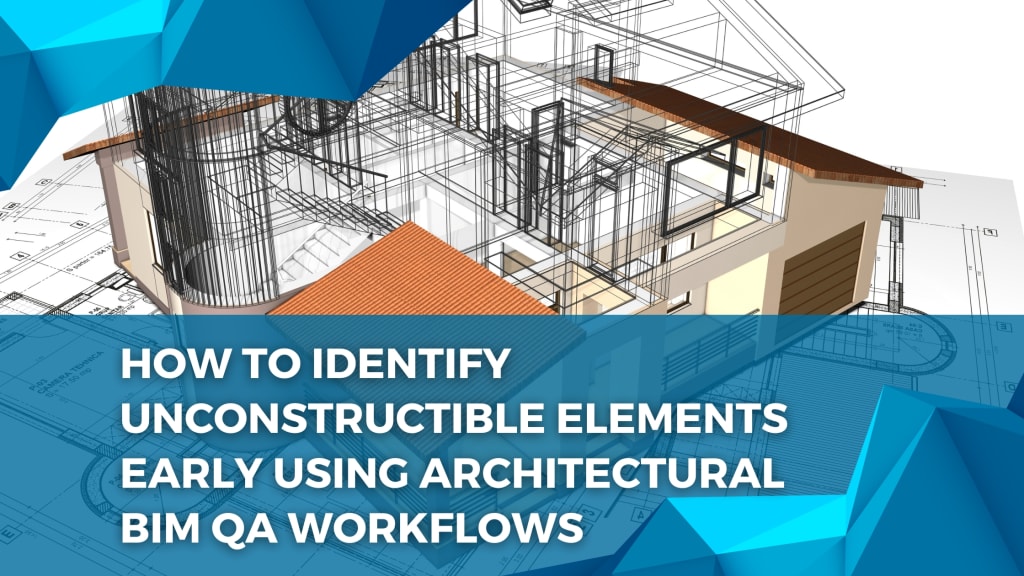
Stop costly surprises before they happen. In construction, nothing is more frustrating or expensive, than discovering a key design element from your BIM model can't actually be built. It leads to late-stage redesigns, team disputes, and significant project delays.
But what if you could eliminate that risk entirely? Architectural BIM QA workflows are the answer. By baking structured quality checks into every stage of your modeling process, you ensure your digital design translates into a flawless, feasible physical structure. This isn't just about catching mistakes; it's about guaranteeing project success from the very beginning.
The Role of QA in Architectural BIM Workflows
Quality assurance in BIM is not about aesthetics or presentation. It is about verifying that every modeled element serves its intended purpose in construction. A QA workflow brings consistency, accuracy, and accountability into Building Information Modelling Services by testing design inputs against constructability logic.
Unlike a traditional review, a BIM QA workflow operates on both geometry and data. It checks whether wall assemblies can physically align with structural framing, whether openings allow for installations, or whether a façade system is modeled in a way that contractors can actually build. By embedding QA into Architectural Design Services, unconstructible conditions surface much earlier, reducing risks at site level.
Common Sources of Unconstructible Elements
To understand the value of QA workflows, it is important to recognize where constructability issues typically originate. Many unconstructible elements stem from coordination gaps between disciplines. A wall may overlap with a structural column, or a ceiling height may not accommodate mechanical ducts.
Sometimes the problem lies in the details: windows placed without considering sill height rules, stairs modeled without compliance to regulations, or façade panels created in modules that are impossible to fabricate.
Errors may also come from poor parameter control within Revit Architectural BIM models. Families with inconsistent dimensions, missing data fields, or misaligned type parameters often lead to design intent being lost in translation. Without proper QA, these issues can easily pass into later project stages where they are harder to fix.
Structuring QA Workflows for Early Detection
Early identification of unconstructible elements requires a systematic QA framework. This framework is best approached in stages, starting from general model organization and progressing into detailed constructability checks.
The first stage involves reviewing project setup levels, grids, and reference planes that must reflect the agreed design baseline. This step is fundamental because misaligned base data often creates cascading errors later.
The second stage examines geometry: wall placements, slab edges, and opening dimensions should all align with approved drawings and coordination references. Finally, parameter data is reviewed to confirm that every modeled element carries the correct material, size, and classification.
Within Architectural BIM Modeling Services, these checks are typically executed both manually and with automated tools. Manual checks help interpret design intent, while automated rules quickly flag clashes, duplications, or missing values. Combining the two creates a balanced QA process.
The Value of Clash and Rule-Based Checks
Clash detection is one of the most powerful tools in QA workflows. While usually associated with MEP coordination, architectural models also benefit greatly from clash reviews. Walls intersecting beams, openings misaligned with doors, or staircases conflicting with floor slabs all surface during clash checks. These tests are essential for eliminating unconstructible geometry before it reaches contractors.
In addition to clashes, rule-based checks bring another layer of quality control. For instance, stair dimensions can be automatically checked against local building codes, door clearances can be validated for accessibility compliance, and facade modules can be compared against fabrication tolerances. Such automated rules make Architectural BIM Services provider workflows more reliable by reducing human oversight errors.
Auditing Data Consistency Within Architectural Models
Beyond geometry, data drives many downstream uses of the model from quantity extraction to cost estimation. When data is inconsistent, the risk of unconstructible elements rises sharply. A wall type without proper material data may be specified incorrectly, or a window family without structural support information may be ordered in the wrong configuration.
QA workflows must therefore include audits of parameter consistency. Within Revit Architectural BIM, shared parameters, family naming conventions, and schedule data all need review. Checking data at this level ensures the model can support both design and construction needs without misinterpretations. Reliable information also strengthens the integration of architectural files with structural and MEP models, reducing cross-discipline conflicts.
Collaboration as Part of QA
Even the best QA workflow cannot succeed in isolation. Identifying unconstructible elements early depends heavily on how different teams communicate. An architectural model audited within Architectural BIM Modeling Services must be reviewed in the context of structural and MEP inputs. Collaboration sessions, issue tracking, and model sharing platforms play an important role here.
For builders and contractors, receiving a model that has been tested collaboratively provides confidence that the design intent is realistic. For architects, it reduces the risk of having design concepts rejected during construction. Collaboration-driven QA reflects the real-world purpose of Architectural Design Services—to bridge design creativity with construction feasibility.
Continuous QA Through Project Stages
A single QA session is not enough to guarantee constructability. Projects evolve, and so do their models. The most effective approach is continuous QA, applied at key project milestones. Early schematic models can be reviewed for basic geometry, design development models checked for compliance with regulations, and construction documentation models audited for fabrication details.
This staged process allows issues to be caught progressively, rather than piling up at the end. For an Architectural BIM Services provider, adopting continuous QA creates a culture of accountability and reduces the likelihood of disputes between design and construction teams.
Reporting and Accountability
An often-overlooked part of QA workflows is how findings are documented. Clear reporting provides not just a list of errors but context on why they matter and how they can be corrected. Reports may include snapshots of problematic areas, model references, and recommendations for redesign. The goal is to make feedback actionable.
When an outsourced partner delivers Building Information Modelling Services, transparent QA reporting builds trust. It shows that the model is not only visually complete but tested for constructability and reliability. For engineers, contractors, and project owners, this reporting serves as an assurance that design and construction will align more smoothly.
Final Thoughts
Identifying unconstructible elements early is one of the greatest challenges in complex projects, yet it is entirely achievable with structured Architectural BIM QA workflows. From verifying geometry and parameters to running clash and rule-based checks, these workflows expose hidden risks before they affect the construction site. More importantly, they create a culture of collaboration and accountability, where design models are treated not just as drawings but as reliable digital assets.
For engineers, contractors, and builders, adopting QA-driven Architectural BIM Services is not just a safeguard, it is a smarter way to deliver projects that meet both design goals and construction feasibility. By investing in these workflows, stakeholders reduce rework, maintain project momentum, and achieve smoother transitions from model to built reality.
About the Creator
lisa Brown
Building Information Modelling delivers high quality out performing designs in Electrical BIM Services. We collectively work as a team and we believe in delivering end to end solutions in electrical designs and drawings.
Keep reading
More stories from lisa Brown and writers in 01 and other communities.
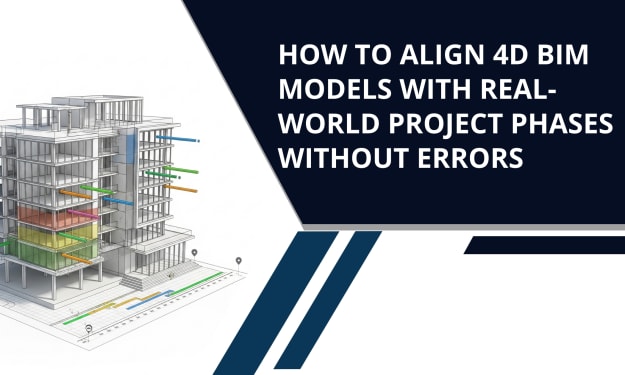
How to Align 4D BIM Models with Real-World Project Phases Without Errors
Keeping a construction project aligned with its timeline is one of the biggest challenges for engineers, contractors, and project managers. 4D BIM Modeling Services bring a strong link between the design model and project schedule, allowing teams to connect every building element with real-world activities.
By lisa Brown5 months ago in 01
Blockchain Tracing: A Key Tool in Crypto Asset Recovery
The cryptocurrency ecosystem has expanded rapidly, with billions of dollars in digital assets now in circulation across thousands of blockchains. However, this growth has been accompanied by significant risks, including hacks, scams, phishing attacks, and user errors such as lost private keys or forgotten seed phrases. In 2025, reported losses from crypto-related incidents exceeded several billion dollars, highlighting the persistent vulnerability of digital assets. Unlike traditional banking systems with reversible transactions and centralized oversight, blockchain's decentralized and immutable nature makes recovery difficult once funds are transferred. As a result, blockchain tracing has emerged as an essential method for identifying fund flows, attributing activity, and supporting recovery efforts in actionable cases.
By Garry Oneal6 days ago in 01


Comments
There are no comments for this story
Be the first to respond and start the conversation.