
How to create a secure password for online accounts?
Best Practices for Protecting Your Personal and Sensitive Information from Hackers and Cybercriminals

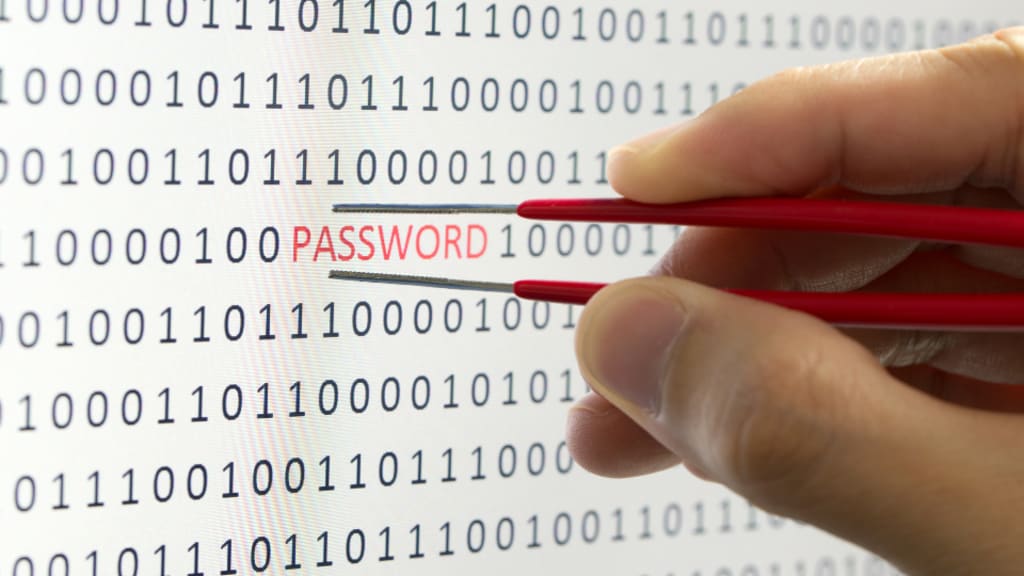
Creating a secure password for online accounts is crucial to protecting your personal and sensitive information from hackers and cybercriminals. Passwords are the first line of defense against unauthorized access to your accounts, and weak or easily guessable passwords can put you at risk of identity theft, fraud, and other malicious activities. In this article, we will explore the best practices for creating a secure password for your online accounts.
Why Creating a Secure Password is Important
Creating a secure password is essential to protect your online accounts from being hacked or compromised. Hackers and cybercriminals use various methods to guess or steal passwords, such as brute-force attacks, social engineering, phishing scams, and malware attacks. They can use your password to access your personal information, financial data, and other sensitive data. A secure password is one that is difficult to guess, contains a combination of letters, numbers, and symbols, and is unique to each account.
Best Practices for Creating a Secure Password
Here are some best practices for creating a secure password for your online accounts:
- Use a Combination of Characters
A secure password should contain a combination of uppercase and lowercase letters, numbers, and symbols. Avoid using easily guessable patterns or sequences, such as "123456" or "password." Instead, use a random combination of characters that are not related to your personal information, such as your name, date of birth, or address.
- Use a Long Password
A secure password should be at least 12 characters long. The longer the password, the harder it is for hackers to guess or crack it. Use a passphrase or a combination of words that are easy for you to remember but hard for others to guess. For example, "MyD0gL0vesT0Pl@y" is a strong password that contains a combination of characters and is easy to remember.
- Use a Unique Password for Each Account
A secure password should be unique to each account. Using the same password for multiple accounts puts you at risk of a domino effect, where one compromised account leads to the compromise of other accounts. Use a password manager to store and generate unique passwords for each account.
- Avoid Using Personal Information
A secure password should not contain personal information that is easy to guess, such as your name, date of birth, or address. Avoid using common words or phrases that are related to your personal life or interests. Use a combination of random characters that are not related to your personal information.
- Change Your Password Regularly
A secure password should be changed regularly, at least once every six months. This ensures that if your password is compromised, it is not used for a long time. Use a password manager to remind you to change your password regularly.
- Use Two-Factor Authentication
Two-factor authentication adds an extra layer of security to your online accounts. It requires you to enter a code that is sent to your phone or email in addition to your password. This ensures that even if your password is compromised, hackers cannot access your account without the second factor.
Creating a secure password for your online accounts is essential to protect your personal and sensitive information from hackers and cybercriminals. By following the best practices outlined in this article, you can create a strong and unique password for each account and reduce the risk of identity theft, fraud, and other malicious activities. Remember to use a combination of characters, use a long password, use a unique password for each account, avoid using personal information, change your password regularly, and use two-factor authentication. With the right tools and practices, you can stay safe and secure online.
About the Creator
Gokhan Polard
As an experienced ERC Referral Specialist, my primary dedication lies in assisting businesses in the journey towards financial success. https://ercsolutionshub.com/
Keep reading
More stories from Gokhan Polard and writers in 01 and other communities.
How to backup my data in case of a system failure?
Data is essential to our daily lives, whether for personal or professional reasons. We create, store, and share large amounts of data every day, from photos and videos to documents and emails. However, data loss can happen unexpectedly due to various reasons, such as system failure, hardware malfunction, virus attacks, or accidental deletion. In this article, we will explore the different ways to backup your data in case of a system failure and how to retrieve it.
By Gokhan Polard3 years ago in 01
Wearable Device App Development Driving 80% EHR Interoperability
In today’s fast-evolving digital health ecosystem, the convergence of wearable technology and electronic health record (EHR) systems is transforming how health data is collected, shared, and used. Wearable device app development companies are now at the forefront of enabling seamless interoperability — connecting patient-generated health data with clinical systems and creating a more unified view of health. This isn’t just a trend — it’s reshaping patient care, efficiency, and outcomes.
By Kunal Chouhan2 days ago in 01
Cost of Development: 2026 Pricing Guide & Projections
Building software right now feels like trying to nail jelly to a wall. I reckon most founders are staring at their spreadsheets with a bit of a headache. The cost of development is moving in weird directions these days.
By Sherry Walker2 days ago in 01
Review of 'Man on the Run'
My wife and I saw Man on the Run, a nearly 2-hour documentary on Amazon Prime, about Wings, Paul McCartney's group that flew around the world from shortly after The Beatles broke up in early 1970 to shortly after John Lennon was murdered at the end of 1980, making a Beatles reunion forever impossible.
By Paul Levinson4 days ago in Beat




Comments
There are no comments for this story
Be the first to respond and start the conversation.